
I Trip the Light Ekphrastic: An Autoimmune Journey
by Barbara Krasner
Not again. The round, red pus-filled lesions appear one by one on my chest, my arms, my back. I’ve been constantly checking my skin since my first diagnosis and bout with this rare, incurable autoimmune skin disease, bullous pemphigus vulgaris. That was in late 2021. Now it’s back, September 2024. I begin medications, first an antibiotic and then an immunosuppressant. I don’t think this treatment plan is working. My dermatologist wants me to have two infusions and advises me to get any vaccines ahead of this.
I make an appointment at the local drug store to get my flu shot, and the RSV and pneumococcal vaccines. I know I can’t get another COVID booster. But a few days later, I awake to find my arms covered in red rash. My skin has turned into bubble wrap. Panicked, I call every medical professional in my little black book, even though it’s a Saturday. There’s only one choice now: Prednisone. Lots of it. 100 mg of it daily.
The itching, oh the itching. Thousands of tiny daggers attacking my skin. For the first month, October, I cannot sleep for more than ninety minutes. I read. I write. I write a lot. But to art. Since the summer I’ve been engaging in art history webinars offered by Smithsonian Associates. I have signed up to earn a certificate in world art history. The windows and tiled floors of Vermeer, the angel faces of Caravaggio, the hidden pictures lurking in Brueghel, the melting clocks of Dali—these distract me from virulent scratching and applying the topical steroid clobetasol, and anti-itch moisturizer. I replace visions of red, oozing blisters with Van Gogh’s red vineyards and blue-green undergrowth.
I write. I enter ekphrastic writing challenges every two weeks. I look forward to the new images offered. I try my hand at pantoum, sestina, sonnet. I have nothing to lose. I constantly check my Kindle in bed to see whether my submission has been accepted. I measure time by whether it’s the week of image or the week of selection. Anticipation builds on Thursday nights, because Friday’s website will show the results. I have never felt so alive, so on fire.
Arrangements have been made by the biologics team at the dermatology practice for my Rituxamab infusions. I have found a place close to home to administer them. I schedule them for November. I tell myself I will finally get relief, get off prednisone, return to normal. The plan is set.
Until one Saturday night in early November. I am wracked with stomach convulsions that remind me of the gall bladder issues I had for a long time until a surgeon removed the organ in 2021. I thrash about the sheets, calling out to my dead mother. In my mind’s eye, I see Caravaggio’s The Lute Player. The crack in the lute. The forlorn look in the young man’s face, his unrequited love. I finally fall asleep. But I know something is horribly wrong. An ambulance rushes me to the nearest hospital, and I end up in the ICU. The medics repeat, “Good thing you came in when you did.” The diagnosis: Cholangitis and septic shock, a result of an infection that has built up in my bile duct. A result of the gall bladder surgery. My kidneys and liver begin to shut down until the antibiotics kick in. I leave the hospital four days later with a walker. I cannot climb stairs. My driving days are over. My body continues to swell with prednisone and my diabetes is completely out of whack, blood sugar registering up to 500. My fingers quiver. My infusions have to be rescheduled until after my antibiotics treatment for the E.coli infection has been completed.
I register for even more art history webinars. As I listen to the art history experts, I examine the images of the paintings. I focus on light and shadow, on horizontal and vertical lines, shapes, colors, tone. I want to pick up a pencil, charcoal, a paintbrush and create a more beautiful world than the one in which I found myself right now. Looking at each painting, I create story. I become obsessed with the work of two female artists. The first is abstract expressionist Lee Krasner. I select ten images of her art and write in response to them about our shared Yiddishkeit and our shared insomnia. In her painting Composition (1949), I see the white crusty rims of my pemphigus lesions. I write about how each lesion is a disk of genetic memory, because apparently pemphigus vulgaris afflicts descendants of eastern European Jewry. The second artist denied a label of surrealism, Frida Kahlo. In her work I see her grappling with her pain from long-ago injuries. Constant pain. I write about my pemphigus, “Illness casts colors,/creates new twinned self-portraits/and neither is me” as the haiku section of a haibun crafted in response to Two Fridas (1949). To learn more about Krasner and Kahlo, I order biographies, volumes about their work, watch documentaries and commercial films. I dip into ancestry.com to see if I’m related to Krasner. Probably not.
I learn about other female artists who paint their pain with precision palette. Artists like Russian emigre Maria Bashkirtseff, who died at age twenty-five of tuberculosis in 1884 in Paris, her paintings, In the Studio (1881) and Le Meeting (1884). Their degree of realism is a marvel. Like Remedios Vara and her Rheumatic Pain (1948). Their paintings become my mentor texts.
And I write even more. Since I’m in immunocompromised condition, I know I will have to spend the holidays alone. I curate images from The Hermitage in St. Petersburg, Russia, a place I once visited in 1990 for my own mini-retreat on Thanksgiving, I write poetry in response to an eclectic array of art: From the Flemish Renaissance, Brueghel. From the Dutch Golden Age and Baroque period, Rubens, Rembrandt, Snyder, Caravaggio, and Velásquez. From Neoclassicism, David. From Romanticism, Friedrich. From Realism: Millet. From the Impressionists, Matisse and Pissarro. From the Post-Impressionists, Vuillard. Then from the more modern Expressionists and Cubists, Kandinsky and Léger.
I write. I compose a poem for each painting. Sometimes I write about the painting itself, its subjects, objects, lighting, message. Sometimes the art reminds me of something in my own life like how Matisse’s The Dance (1910) reminds me of the fragile nature of Leningrad when I was there just before the collapse of the Soviet Union. How its decadence reminded me of an Impressionist painting where one can only see the images from a distance. Up close, one sees only brush strokes.
I make a plan to curate images from the Kunsthistorisches Museum in Vienna over Christmas, because I will not be able to join the family at our favorite kosher restaurant. I rifle through a paperback volume of images and choose many from Pieter Brueghel the Elder. Then also I clip paintings by German painters Durer and Lucas Cranach the Elder, by Dutch masters Vermeer and ter Borch, and by Empress Maria Theresia’s court painter, Manon. I am prepared for another mini-retreat.
My eyelids feel like heavy weights sit on them. I fall asleep at the computer with my fingers still on the keyboard. I fall asleep in the Queen Anne chair in front of the family room television. But this will all be over soon, I tell myself. The first infusion, six hours, takes place on November 11. The second, an hour shorter, November 25. There’s an ekphrastic contest to enter: Send in the Clowns. I’ve never been into clowns. I never found them funny at the Ringling Brothers/Barnum & Bailey circus at Madison Square Garden. But writing in response to art featuring clowns and harlequins could be fun. I am revising a magical realism short story all about color. A Holocaust survivor painter enters his own work and engages with Chagall and Kahlo. Light is entering my tunnel or so I believe.
Until December, when the prednisone has filled my body with fluid and drained me of any energy. I can no longer write. My face has swollen to such proportions that my cheeks swallow a Zoom screen and my eyes are now watery slits, no longer able to see the words on a computer screen without putting my whole face into it. I can barely hold a water bottle.
I hire two home health aides to help with taking out trash and recyclables, changing the sheets, doing the laundry, washing the dishes, and preparing dinner like roasting a half-chicken in the oven and searing a small ribeye on the stove. I wondered whether I should, at 67, enter assisted living. I wonder whether I’ll ever walk again or reclaim my wheeled office chair that I had to give up because I couldn’t get out of it without rolling it from the office through the dining room to the staircase, whose spindles I would have to grab with both arms to pull myself up.
All I can do is follow a steady diet of the UK’s Portrait Artists of the Year and Landscape Artists of the Year on Amazon Prime. I continue to engage in webinars offered by Smithsonian Associates about enduring themes in western art, the history of female painters and sculptors, Vermeer, the Impressionists, the Surrealists, Joseph Cornell, the history of American and British art. During these sessions watched live or recorded, I don’t pick at the scabs of my lesions on my scalp, arms, and legs. I forget my pain and the struggle to move since each leg feels to me like it weighs a thousand pounds.
I am hospitalized two more times in January. First, to remove the stent that was installed in November to deal with my cholangitis and the doctor decides to keep me there over the weekend because he doesn’t like the way I’m not rebounding. Second, although I call 911 to take me to the hospital for stomach issues again, ER staff instead find pulmonary blood clots and COVID. I stay in the hospital for a week in isolation.
Until after a February hematology appointment, I have an urge to try driving. My car starts miraculously, since it just sat in my garage for months, and I drive it around the block. I can move! As I step onto the stairs with my right Porky Pig foot, my left signals to me it wants to lift up too. And finally it does. I can do the stairs!
Little by little, as I step down on prednisone to an ultimate 5 mg, the swelling recedes. I can wear my compression socks again. I can take some steps without the walker or cane. I can put dishes in the dishwasher and run it. I can stand for a few moments at the stove. And I can write again.
In May I’ll have another two infusions and my medical team and I now know I need to have these every six months. I still constantly check my skin for lesions. I know I’m going to have to forego future vaccines, always wear a mask, have the walker and cane in my car trunk and a tube of clobetasol on my nightstand just in case.
I joined the Metropolitan Museum of Art and plan, with my walker, to attend the Caspar David Friedrich exhibit. I am hiring a car service and am meeting a university colleague for dinner.
I trip the light ekphrastic. Out of this horrific bout of pemphigus, I’ve written and published nearly fifty poems and a short story in response to art. I’m not going to stop even if and when I have another flare-up.
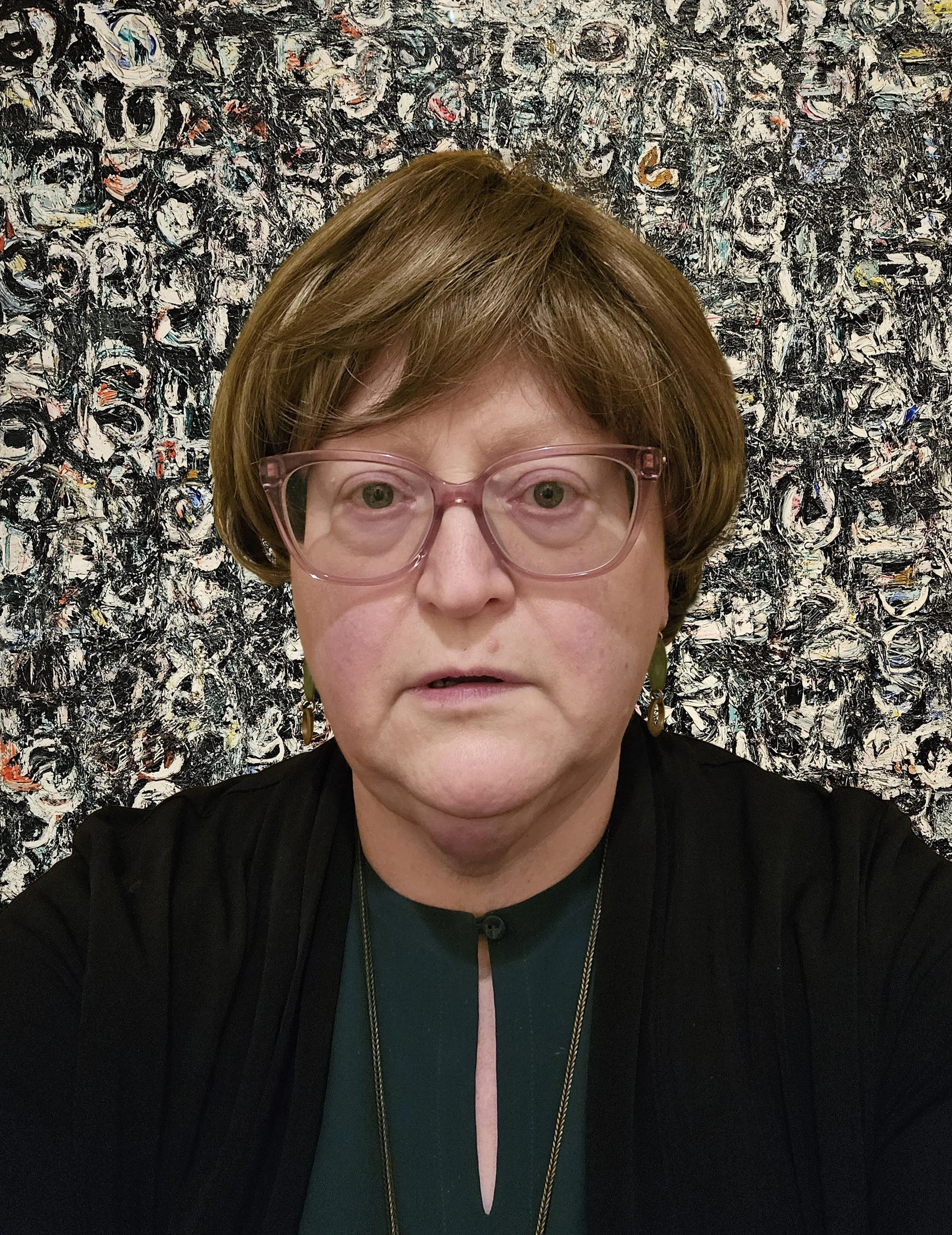
BIO: Barbara Krasner holds an MFA from the Vermont College of Fine Arts. Her work has been featured in more than seventy literary journals, including nonfiction in The Journal of Expressive Writing, Collateral, South 85, The Manifest Station, and Vassar Review. A multiple Pushcart Prize nominee, she lives and teaches in New Jersey. IG: @barbarakrasner FB: @barbara.krasner