
From the Rat’s Throat
by Itto and Mekiya Outini
I’m running out of stories I can tell my son, so I ask him if he knows that rats eat eyes. He’s in the booth across from me, trying to stir his milkshake with a shoestring fry: a losing battle, but his jaw’s set. He’s determined.
“That’s not true,” he says.
“You calling me a liar, little man?”
His face locks up, and he wriggles around as if he’s one big itch in need of scratching, his windbreaker squeaking on the red Naugahyde. He’s nine years old. He needs to know about these things.
“They sneak into your room at night,” I say. “They eat whatever they can find. I’ve seen it. Listen.” The sky is gray. The streets are edged with dirty snow. Hot chocolate would’ve made more sense, but he didn’t want hot chocolate. I hunch across the table toward him, putting my face close to his. “Do you know about karma?”
He drives the fry into the shake. Too stiff. It folds.
“What goes around comes around,” I tell him. “That’s karma. I’ve seen it. That rat, he got what he deserved.”
It was on the floor when I arrived at 1003, legs in the air, dead already. Clive, the tenant, was sitting on the edge of his bed, staring. I’d seen him around the apartments, a puffy, derelict, red-haired mountain of a man, but I’d never spoken to him. Like his pipes never burst, or the pilot light under his water heater never went out, or his Insinkerator never clogged. Or maybe he just fixed those things. But he wasn’t looking self-sufficient now: pale as a ghost in his Snoopy pajamas, his left eye bulging enough to make up for the other one being a bloody hole.
“Damn thing got me,” he said.
“Looks like you got him, too,” I observed, standing over the rat, feeling sick to my stomach, but at the same time almost good, as if as I’d had a hand in its destruction.
“Nope.” He shook his head. “Not me.”
“Not you?”
“Choked,” he said.
“On what?”
“Oh,” he said, pointing to his bloody socket. “He didn’t get the real one. The real one’s in Afghanistan.”
If I hadn’t still been half-asleep, if it hadn’t been 2:00 in the morning, I probably wouldn’t have asked him, “What’s it doing there?”
He fixed me with a look that would’ve been scary enough with both eyes. His was not the sort of body that I personally would’ve thought of sending into combat, but that look went a long way toward convincing me that he had indeed been in Afghanistan. Logistics, maybe.
“You want me to call 911 or something?” I asked, feeling hollow and a little embarrassed, like I ought to know more about first aid.
“Nah.” He shrugged. “No need.”
“No insurance?”
He made a noise in his throat. “None to speak of.”
“Okay,” I said, anxious to solve this puzzle of how I, the maintenance man, might be of service. “Then should I get you some peroxide?”
“I’ll wash it out.” He rose from the mattress, setting off a chorus of creaking springs. Blood was leaking down his cheeks, but he sounded nonchalant when he added, “What you could do, I guess, is get my eye back.”
“Excuse me?”
“Get it out,” he said, gesturing vaguely at the rat on the floor. “It’s in there somewhere.”
He disappeared into the bathroom.
That the rat might be diseased had occurred to me, and I had no desire to get up close and personal with it, but then again, Clive had called me—not 911, not pest control, not even one of his old army buddies, but me—and that meant he thought me the very best man for the job. And he was a hero. Who was I to question his judgment?
Luckily, I had my Swiss army knife on me. I thought I might try prying open the rodent’s jaws and plucking the eye from its throat with the tweezers, but then I discovered that the tweezers were missing. All I managed was to nick a finger on its teeth.
It had been dead for long enough that it didn’t bleed much when I opened its throat. Just oozed a little as I worked the knife around, and then the eye was in my hand. Contrary to my expectations, it was not a ball. It was shaped more like a miniature saddle, light and slippery and warm. On the back was the letter R, meaning right, I guess; and when I turned it over, I became confused.
“What is this?” I asked, raising my eyes to Clive, who was back from the bathroom.
“That,” he said, “is the Eye of Sauron.”
If it had been painted to look like a real eye instead of the blazing iris of that big bad, I might not have known the difference. That’s how realistic it was.
“You like it?” he asked.
I wasn’t about to say no.
“Come here,” he said. “Let me show you something.”
Obediently, I rose, leaving the rat where it was, and crossed the room. There wasn’t much light, but up close, I saw that Clive’s eyelid was ragged, but the rest of his face was unharmed. He had a set of drawers beside the bathroom door, and he pulled open the topmost one, making a gesture like, feast your eyes.
In I peered.
There, in the drawer, was a tray of prostheses. One of them looked exactly like a real eye, the same greenish shade as his own. One of them was star-spangled, an American flag. One of them was emblazoned with the US Airforce seal. And one of them, in place of an iris, had an Arkansas Razorback, the mascot of the football team.
“I’ve got a guy down in Little Rock,” he said. “He’s a real artist. He’s been doing it since he was twelve.”
“Okay,” I said. “But hold on. You had backups?”
“These,” he said, indignant, rounding on me, “are not backups. This is my collection.”
“Okay, but…okay.” I held up the Eye of Sauron, slick with blood. “But do you need this?”
“Hell yes, I need it. I paid $6,500 for it.”
“And you didn’t want me to call 911?”
“For what?” he demanded. “What are they going to do? Take my money? The hell with that. I’m saving for the next one. Why do you think I live here, anyway? You think I can’t do better? I used to have my own place up in Springdale. Sold it so I could get these little guys, and now I’m saving for the next one, and I’ll be damned if I let some stinking rat set me back. Give me that.” He snatched the Eye of Sauron and vanished back into the bathroom.
“You’re not seriously putting that back in,” I called after him, over the sound of running water, “are you?”
“Of course, I am.”
He did, too. Disinfected it with rubbing alcohol, washed it with baby shampoo, and when he came back out, he had it in his head: one of the worst things I’ve ever seen, and that’s without accounting for the fact that I’d just trached a rat to make it happen. It was starting to make some sense why he’d been sent to fight the Taliban. Same reason the Vikings had Berserkers.
“Why are you still here?” he wanted to know.
All I could think to say was, “Would you like me to clean up your rat?”
He looked at the rat on the floor, belly-up and open, like a sacrifice, studying it long and hard, the way you’d study ancient runes. “Nah,” he said after a while. “Leave it.”
Then he got back in bed, snapped a black patch over his good eye—his version of a sleep mask, I guess; which was maybe why the rat had gone for his prosthesis—and then he pulled the covers up to his neck and rolled over to face the wall, not even bothering to say, “Goodnight.”
Outside, I broke the ice on a mud puddle and rinsed the rat juice from my hands. Then I lit a cigarette and walked for a while, thinking. I asked myself who was worse, me or Clive. I decided that I was. Then I asked myself who had reasons. I decided that I had mine, and Clive had his, but what really hurts is that it’s plain as day what his are, anyone can see, and no one’s going to judge him for it, but mine are things that no one sees.
The story goes on telling itself in my head even after I’m done telling it to my son, getting louder and louder as I watch him put his mouth around his fry like it’s a straw.
“Wild,” I say after a minute, probing. “Ain’t it?”
“Not really.”
“Why not?”
“Because you made it up,” he says.
“What makes you say that?” I ask him, arms still folded, grave. “What makes you think I made it up?”
“You make up a lot of things.” He shrugs. “Mom says.”
“You think your mother never makes anything up?” I ask. I’ve changed my mind: a shake would make more sense now, cool against the insides of my burning cheeks. But all I’ve got is the hot chocolate that I ordered. It’s not like my son is drinking, but I’m not about to steal a spoonful.
“She doesn’t tell stories like you do,” he says. “She just talks about real things.”
“There’s a lot your mother doesn’t know,” I say. “There’s a lot she’s never seen.”
“Your problem, she says,” he says, reciting, “is that you have an overactive imagination. That’s why I can only see you on Tuesdays and Thursdays.”
“What would it take for you to believe me?”
He bites off the end of his French fry. He chews.
“Come on, little man.” I rap my knuckles on the table, hard. “You’re throwing down the gauntlet here, right? You want evidence? Fine. Just tell me, how do you want me to prove it? What’s it going to take?”
“Well,” he says. “I’d have to know you’re not lying.”
“Yes,” I say. “I understand. But how do you want me to prove it?”
He says nothing.
“If I bring you one of those eyes,” I say, “would you believe me?”
He swallows. Sits there for a while, thinking. Then delivers his verdict: “Maybe.”
“Okay,” I say. “Okay.” Digging in my pocket for loose bills, I rise. “Come on. Let’s make this happen, little man. Your mother doesn’t have to know. It’s our adventure. I wouldn’t lie to you. Do you believe me? Are you going to believe me? Yes, you are. You’ll see.”
My son is cupping the shake in his hands, staring up at me with big, round, startled eyes. I throw a couple of dollars on the table. Click my fob. Outside, my truck unlocks.
Yes, I know when Clive is home and when he isn’t.
Yes, I do have keys.
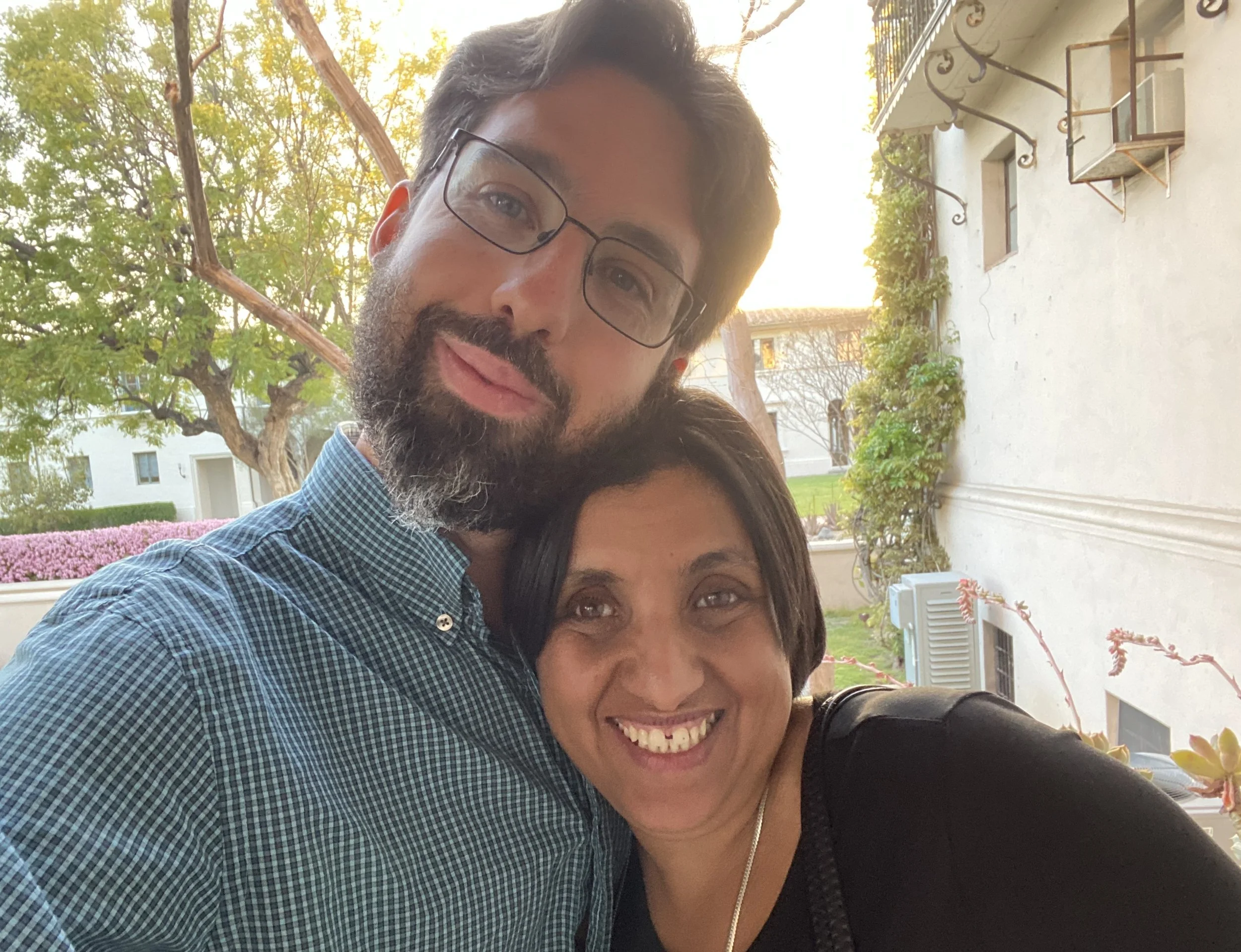
BIO: Itto and Mekiya Outini write about America, Morocco, and all those caught in between. They’ve published in The North American Review, Modern Literature, Fourth Genre, The Good River Review, MQR, Hobart, Lunch Ticket, CommuterLit, Chautauqua, The Stonecoast Review, The Brussels Review, New Contrast, Eunoia Review, ExPat Press, Lotus-Eater, Gargoyle Magazine, and elsewhere. Their work has received support from the MacDowell Foundation, the Steinbeck Fellowship Program, the Edward F. Albee Foundation, the New York Mills Cultural Center, and the Fulbright Program. They’re collaborating on several books, running The DateKeepers, an author support platform, and co-hosting the podcast Let’s Have a Renaissance.