
The Cordon
by Rissa Pappas
The gaggle of nosy neighbors, reporters, and podcasters gave with surprising ease as Bishop and Carletti punctured their loose cell wall. A dozen little glares giving way to surprise giving way to solemn assistance, pushing others out of the way and guiding them through the restless throng. Bishop could hear maybe some trouble up front: a squabbling between a jaded beat journalist and an evenly jaded beat cop.
“Yes, it does need to be this far away, Mr. Eude,” the cop was saying. “If you so much as sneeze in her direction, and the scene is compromised—”
“I would never dare! You known me now 12 years, De La Cruz! When have I ever—”
Bishop was glad to interrupt. Once the two women hit the barricade, they handed their bags over first, then were helped over by the uniforms standing on the other side. If the squabble continued after that, she tuned it out.
Past the lights of the squad cars that acted as a backup barricade, there was a sudden inkiness, a void. Bishop hadn’t been able to gauge just how far back the barricade was. She understood now why the reporter was complaining. It took a moment of squinting for her to see the lights of the perimeter of the scene proper, crushed down in all that black of winter night. She felt Carletti looking at her.
“Flashlight,” Carletti said.
Even with the frozen ground and frozen grass and frozen dirt road, their boots barely made a sound. The wind blew some, for they could feel the cold as an active bitterness trying to attack, but without much bite, like a poltergeist being slowly forgotten by time. It was a long, lonely walk toward the little circle of light out there in the dark, but neither of them tried to break the silence.
As their little flashlight beams finally joined the perimeter lights, the silence continued. Five cops guarded the scene and the little ripple in the earth at its center, too many for such a task. Those closest regarded their approach and gave Bishop and Carletti small nods but no words. One cop was on his haunches looking at the body, still but for tears silently ribboning his face.
No one seemed to be in charge of the scene. No one stepped forward to give them a report. But of course, no one really needed to. They were briefed on the way. And they knew who this was. They thought they knew, anyway. The whole country thought they knew, and needed it to be who they thought it to be.
Carletti turned on her headlamp and secured her flashlight to a loop on her jacket. Bishop began to do the same. They opened their bags and put gloves on. Neither wanted to be the first to speak, but they had to speak to each other and to record their findings. Bishop shifted her recorder higher up toward her collar and turned it on.
Finally, she turned her beams and her eyes to the barely perceptible lump on the ground. Time outside had been passing hard on the body. If there weren’t clothes that would take decades to disappear wrapped around her, it would be so easy to mistake her for part of the landscape. Rocks, branches, dirt, vegetation, some hazy blend of it all. Maybe some old piece of carrion. A person? No.
Not anymore, anyway.
But this had been her. And although police and volunteers had been searching for months, and rewards had been offered, and hundreds of leads had been investigated, it was immediately apparent to Bishop and Carletti that all the while, she’d been outside, dead. If this was her.
She waved to get Carletti’s attention and then made a square with her hands. “File?” she mouthed.
Carletti nodded and turned, rummaging in her bag until she pulled out a manila folder. She flipped through pages until she found the page she wanted, and then gave the page to Bishop.
Bishop knew the description already, but she wanted to see the words again, to read them one more time so she knew they hadn’t warped in her mind over time. She gave the sheet back to Carletti, who also looked at the page once more, then returned the page to the file, the file to the bag.
Gently, Bishop reached out and pulled on the shirt. At first, it didn’t move. The fats in the body had no doubt begun melting before frost set in, seeping into the fabric, gluing it in place. She scoped the shirt for folds, anywhere it wasn’t pressed directly against the body. Up by the clavicle was a bit of a fold and Bishop gripped it with thumb and pointer finger, lifting it gingerly. This time, much of the shirt lifted freely.
Carletti could see it without the cutting shadows. “Nike,” she whispered.
Bishop ducked her head towards Carletti’s and saw it, too. On the left breast area where a pocket would be: a Nike swoosh on what they could now tell was originally a lilac-colored shirt. The elements had washed and bleached it gray, but within the folds were still pockets of light purple.
The cop who had been silently crying had evidently heard all the confirmation he needed. He stood and whirled around to face the night. The other cops all faced outward as well, as if sentinels, as if defying her killer to return. They couldn’t save her life; they would protect her in death.
Bishop and Carletti were glad for the privacy, and even the protection, although they knew nothing was coming. The evil had already come and gone long ago.
Quietly, Bishop told her recorder, “Victim appears to have been killed at this location or placed here very soon after death. Victim is wearing a light purple sweatshirt with Nike logo on upper left chest.”
She was barely aware of her eyes drifting up to where the girl’s eyes were, somewhere in the miasma of her face. The elements, but violence, too, had changed the shape of her head, made of her face an abstract painting on earthen canvas.
She caught her breath, shook her head. To her recorder, and to the ears of Carletti, she relayed, “The ground around the head and shoulder area is indented…” She stood to hover her light down to see better. “Actually, the whole body seems to be laying in a slight dugout. Could explain why it was harder to see the body from a distance.” Bishop squatted down again, focusing her light around the girl’s legs. Carletti’s light joined hers. “Seeing what look like dig marks. With a small object, like a garden trowel, but probably not that. Probably something improvised.”
She stopped the recorder again, and looked back up at the girl’s head.
Bishop switched the recorder back on. “Victim looks to be between 12 and 17 years old, would have weighed no more than 150 pounds. Cranial trauma consistent with blunt force, possibly from an object. Chest and abdomen area show what appear to be multiple stab wounds…”
On and on she went, speaking as quietly as she could and still be picked up by the recorder. Certainly not the most violent body, not the most advanced state of decay, not the worst combination of the two, that she had seen. Certainly not. Even so…
She spoke low to Carletti. “Going to do a sweep. You ready?”
“Sure.”
Then, Carletti was pulling numbers out of her bag, prepping to take photos of the scene. Bishop stood up and stretched her legs, watching Carletti work.
Carletti was already a pace away, dropping a number down next to something Bishop hadn’t even seen. She cautiously picked her way around in a wide arc to get closer as Carletti readied her camera. Bishop squinted, then leaned in toward her recorder.
“Number One: Found in situ about a meter to the right of the victim: folded pair of what look like leggings.”
Carletti took photos of the pants, another item that matched the description of the missing girl.
It went on that way for a little while, with Carletti taking the lead. She would drop a number and take a photo while Bishop would record their finding. Keychain, watch, impossibly delicate necklace. Everything matched the descriptions. A scavenger hunt.
And other things. Rope, underwear, scrunchie, Coke bottle, visible stab wounds. They cataloged it all. Bishop felt the night was a library of the dead the size of the world.
Eventually, she heard the sound of a truck in the distance, carefully crushing its way through the field around the barricade and the dwindling crowd, closing the gap between them and the world and all the living things in it, all the things that must be done. The cops seemed to know the end was coming, too, shifting on the dark’s edge like spooked horses.
Stupidly, Bishop found her mind searching for a reason why they couldn’t have Mina, knowing there wasn’t a good one. There were only reasons that wouldn’t make sense to the coroner’s transport driving up just now: because this has been one long, held breath and we aren’t ready to exhale. Because once you have her, then anyone else in the world may wind up with her instead of Carletti and me. Because we’ve all been so quiet and no one will be this quiet for her again. Because even though it’s cold and she’s unrecognizable, she’s still whole, and once you take her, you’re going to cut her to pieces. Because we’ve been looking for her for months and she’s right here and as long as she’s here, I know exactly where she is. Because there’s seven of us out here with her, and you’re going to put her in a drawer tonight, all alone, until morning.
She wiped away the tears that were starting to fall before Carletti could see them, but Carletti could still see her wiping at her face. Carletti started to speak, but Bishop interrupted.
“Keep taking photos, alright? I’m going to buy us a few more minutes.”
Carletti nodded.
Bishop stepped out of the perimeter and it felt like breaking a holy seal. The men were climbing out of the coroner’s van too loudly. Everything suddenly felt loud and different.
She made her way close to them before speaking in a loud whisper. “Hi, fellas. We’re just finishing up. Be a few more minutes.”
They leaned in to hear her, shifting their eyes at each other, then back to her.
“Sure,” said the taller of the two.
But the shorter one couldn’t contain himself. “Is it her?” he asked.
She sighed.
“Yes,” she said, “so we need to make sure we get this right.”
The two men’s eyes grew wide. Suddenly, they grew more still, more quiet.
“Just a few more minutes,” Bishop said.
The taller one nodded. The shorter one did too, after he saw the taller one do it.
She turned and headed back into the sanctity of the circle of light.
Carletti was taking unnecessary pictures. “You alright?” she asked quietly.
“Yeah,” Bishop said. “I just…”
“What you want to do?” asked Carletti.
“I don’t know. I just wanted more time.”
“Well,” Carletti said slowly, turning her emotions to thoughts, her thoughts from Italian to English, “I’d like maybe to say goodbye, I think. You like to say goodbye?”
“Yeah, I think maybe that’s it.”
Carletti looked at the cops who still surrounded them. “Officers?” she said, louder than anyone had spoken in the circle all night. “Would you a like to say goodbye to Mina?”
The men turned, some just at the hips and some turning all the way around. All of them quietly agreed.
Bishop looked at Carletti in shock. Carletti noticed, but carried on. “Okay, one by one, you gonna step into the circle, and you gonna stand right here,” she said, stepping a safe distance away from the body and planting her feet firmly. She dug her feet in a bit to make a mark in the dirt.
“Don’t get any closer, okay? And the rest of us, we gonna stay outside the circle. Everybody get to say goodbye, okay? One person at a time only.” They all nodded.
This was highly irregular. Bishop recognized that she was already wrong for stalling, but allowing everyone to take a moment was pushing it. Carletti took her arm and led her out to the edge of the circle, then turned them both outward.
Bishop leaned in to whisper her protest, but Carletti just patted her arm and shook her head. One of the cops had already stepped in and squatted down at the dead girl’s feet.
Bishop held her breath, trying not to look in the direction of the coroner guys and feeling oddly like a bad little girl instead of a professional crime scene analyst within her rights to ask a favor. She could hear the cop murmuring to Mina but not the words he said.
The cops all went, one at a time. They knew how to follow orders, especially orders they all agreed with. When it was Carletti’s turn, she knelt in the dirt. That was all Bishop saw before she turned away to give Carletti her privacy. She willed herself not to listen. All she heard was the hum of some power source, probably acres away. Somewhere out in the distance was a little red light. Bishop fixated on it. Maybe a radio tower.
She knew she was next. She didn’t know what she had to say to the young girl that lay lifeless behind her, only that time was running out with her after it had dragged on for months without her.
There was a tap on her arm and then she was stepping past Carletti into the circle. She sank down to her haunches at Mina’s feet for the last time. “Stupid,” she mumbled, thinking of herself, thinking of everything. “Stupid that you should be dead, and here of all places. Stupid to say we’ll find who did this and bring him to justice. What good does that do for you?”
Bishop choked back frustrated tears. “We all looked for you, Mina. We all wanted to help you. We all loved you and wanted you to be alive. It can’t mean much but, just about everyone in the world wanted to keep you safe and wanted you to be loved and happy. You just happened to meet the one person who didn’t. And that’s so fucking stupid. And I’m so sorry.”
Her tears pattered the dirt at her feet now. She didn’t care. “You’ll be back with your mom and dad soon, okay?”
She rose shakily to her feet, Carletti suddenly at her elbow, guiding her and her bleary eyes out of the circle. Dimly, she could hear a cop following behind, the swish of their bags against his trousers.
They stopped in front of the coroners, who regarded them sadly. “She’s yours now,” said Carletti. “Please treat her kindly.”
“Of course,” said the taller one. “Like she was my daughter.”
The shorter one just gulped.
Carletti wrapped her arm around Bishop and the cop trailed a couple steps behind as they crossed the long black gap to the police cordon. “Wind’s coming up,” observed Carletti. “Help dry your eyes.”
That made Bishop smile a little bit, and she wiped at her face with her sleeve. Only then did she notice she still had gloves on. She pulled them off and turned, beckoning the cop forward.
Sniffling, she finally was able to say, “I’ll take that now, officer. Thank you.”
As he handed her the bag, she was able to see him better in her beams. He was the cop who she had first spotted squatting down when they arrived, tears streaming down his face.
“You sure you got it? I don’t mind, really,” he was saying, his face younger than she had been able to see before. Although the squad car lights cast everyone in sharp fun house shadows, his skin was a darker, chestnut hue, and he looked as though he had stepped into this night world of pestilence as a healthy man to rescue the pale Bishop and Carletti from it.
Suddenly Bishop was aware of how horrid she must look, judging by Carletti’s appearance. Then she wanted to hit herself for thinking about these things in this moment.
“What’s your name, officer?” she asked to fill the silence.
“Fenuku,” he said, in the automatic cop way that meant he was giving his last name.
“Fenuku,” she echoed, trying the foreign name out. “Thank you for escorting us.”
“Thank you both,” he answered, “for letting us say goodbye to Mina.”
*****
The next morning, the five officers and the two crime scene investigators would be put on administrative leave when a video surfaced of them all standing in a circle and then one at a time bowing down in apparent occult worship of the missing girl’s body.
The little red light Bishop had fixated on while Carletti said her goodbyes as well as the accompanying humming sound was that of a drone piloted by an especially conniving and under-credentialed “journalist.” He had sat far out in the field and waited until they were distracted by the coroner’s van to power up and launch the drone, and then hovered it in one spot so the light wouldn’t move.
Releasing the footage on his own accounts, each of which had a few hundred thousand followers, he gained many more. But it was the lack of context in his silent and rather distant footage that left a vacuum begging to be filled.
The occult narrative emerged within minutes, and in a matter of hours, the occult narrative joined the already bloated media saga surrounding the tragic and ongoing coverage of Mina.
In a few hours more, the coroners who watched it all unfold at much closer range and were able to hear what was going on came forward to say that what actually happened had been a spontaneous and heartfelt moment wherein everyone who had been on hand to process and guard the crime scene took time to say goodbye to the little girl who had captured the attention of the nation for the past several months. Soon, it came out that every one of the five officers had spent time both on and off duty in search parties looking for her.
However, in those few hours between the occult narrative and the corrected story about the events of the night Mina’s body was found, both crime scene investigators were doxxed and received numerous death and rape threats. The careers of the “Seven on the Scene,” as they would come to be known in the mainstream press would only be threatened for one business day, as the higher ups, not wanting to risk even more scandals associated with the case, rescinded the administrative leave soon after the coroners’ stories came out.
In fact, it was never publicly stated that the Seven had been put on leave at all, and that information didn’t come to light until it was leaked several months later, by which time the Seven were all saints in the eyes of the nation. Bishop was already Mrs. Bishop-Fenuku, and Carletti was receiving six-figure sums per speaking engagement, telling each audience to “lean on your gut and lean into the moment.”
That blunder by the administration, which the Seven had dutifully signed NDAs regarding, only served to further solidify each of the Seven as being above reproach. Thanks to their moment of humanity put on display, conversations began about cops being people, too. Incidents of police brutality dipped. Incidents of police kindness went up, even though a lot of those incidents were staged or were thought to be staged, which counted as the same thing to many people.
Behind the scenes, new rules were put into place to ensure that no matter how tragic and captivating a murder case was, never could that many officers be on-scene again, never could a cordon be that far from the crime scene again, and the use of drones at crime scenes was made a felony offense. The air space above crime scenes became part of the crime scene and therefore illegal to occupy except by commercial aircraft traveling above 14,000 feet (except under special circumstances such as proximity to airports, airfields, and military bases).
The wannabe journalist who captured the drone footage of the Seven on the Scene that night was brought up on charges of his own, but they carried only a hefty fine and a suspended sentence. He had, after all, created a new set of heroes to distract the nation for several more months.
And they would need it. Bishop and Carletti had done their job exceptionally well, but the evidence they gathered, along with the autopsy results, would yield precious little to go on for investigators. The DNA found at the scene didn’t match anyone in any criminal database, and so investigators had to resort to the privately held databases of the ancestry companies.
There were requests, denials, and lawsuits. Then there was public outrage against the private companies. Then there was public outrage against the public outrage, the proposed invasion of privacy, and the police for proposing it.
Lawmakers scrambled to craft legalese around “extenuating circumstances” for “public safety” and “national welfare.” It was even proposed that this case in particular was causing nationwide ill mental health. No one could argue that, but no one would quite commit to the precedent that would set.
Finally, each private company sent all of their customers a letter asking them for one-time permission to share their DNA with law enforcement for the temporary use of aiding in the solving of this specific crime. Most customers agreed, although in the months after, many lawsuits popped up from customers who felt that saying no would mean they would become suspects. And after that, another round of lawsuits bubbled up from customers who were convinced that access to their records had never been severed by law enforcement because law enforcement simply couldn’t be trusted.
Even after all this, and with the DNA of hundreds of thousands of people at their disposal, it would still take months for law enforcement to find a familial match to the killer, and many more weeks to narrow it down to the man, such as he was.
Crimes of opportunity are almost always disappointing. They feel like dumb luck, and they are. Mina’s killer was a lonely 20 year old who caught her off guard, overpowered her, raped her, and then realized that if she lived, he would experience consequences. So, he killed her with what he had on hand. People were just as angry that he was mediocre as they were that he killed her. It was as though she deserved a murderer of a higher caliber.
The jury seemed to feel the same. He didn’t get the death penalty, although he lived in a place that could have given it to him. Neither did he plea down. His lawyers made an attempt at an insanity defense, saying he was impaired mentally. The judge rolled her eyes. There was no national dialogue around mental health or IQ because of his criminal case. No one wanted to learn a lesson about this boy. Everyone was just over it. “There are plenty of idiots in the world,” said one juror, after finding the killer guilty. “They don’t all go around murdering children.”
Bishop-Fenuku and Carletti watched the trial on TV, often together. They were writing a book about Mina from their perspective as crime scene analysts with access to other professional sources. A version of it would also be used later as Bishop-Fenuku’s thesis; she was back in school pursuing a PhD in forensic psychology, a dream she hadn’t thought she’d ever get around to.
Trying to take the temperature of the nation via social media and news coverage, Bishop-Fenuku worried that no one would buy their book, even with their now-prestigious names on it. The possibility of fatigue over the case was very real, she said.
Carletti reasoned that the people were actually more jaded by the killer and how predictably young, male, and stupid he was. And if her professional engagement calendar were any indication, the voices of the Seven were still very much in demand. Since they still had plenty of time left before their due date, and more before editing, printing, etc., she tried to reassure her friend that all would work out.
But Bishop-Fenuku’s hesitation was more existential. Was it right to profit from Mina? How long had it been since anyone had even thought about Mina? For so long now it had been about that stupid killer, and before that, it was about the drone guy, and the two of them, and Fenuku and the other cops. What about Mina?
Carletti could only smile and put her arm around her friend. “Mina didn’t choose any of this. She would have liked to be a star for her gymnastics. Or to be a famous singer, or maybe a doctor or a scientist. We’ll never know. We are in a post-Mina world, Kara. None of the choices we make now can help or hurt her. All we can do is remember her. We can dedicate the book to her. We can donate the profits to her family. We can make a charity for her. We can do anything you want.”
“Yeah, maybe,” Bishop-Fenuku said.
“We can do any of that. But none of that is going to make that kid not have killed her. None of that will make me not have said goodbye to her. We can’t fly a drone. We did not doxx us. We did not do any of that. You get it? All we can do is make the best choices with whatever happens next.”
Bishop-Fenuku was still unsure, so Carletti continued. “Why do we write this book? It’s going to help you with your degree. It’s going to help you. That’s a good thing. That doesn’t hurt Mina just because it helps you. You get it?”
“Yeah, okay. I know. It feels, I don’t know. Everything feels different though, don’t you think?”
“What you mean?”
“Doesn’t everything feel different since that night?”
Carletti sighed. “Yeah, maybe it does. A little.”
“Doesn’t it feel like everything that happened after is…”
“What?”
“I don’t know. Like, wrong?”
Carletti sighed again. “So what? What you gonna do about that? You gonna feel bad you found your husband? You have people listen what you say? You go back to school that you want to do since I met you? You gonna feel bad about that?”
“No… No, you’re right. I know you’re right. It’s just, isn’t it weird how it all feels? Doesn’t the feeling mean something?”
“Mm. Put it in the book. Hmm? Maybe it’s some psychological phenomenon you can discuss.”
Bishop-Fenuku cocked her head. “You have a point.”
“Of course I do,” said Carletti. “Bestseller, for sure.”
Carletti raised her dripping drive-thru iced coffee cup.
“Cin cin,” said Carletti.
Bishop hesitated, then lifted hers.
“Cin cin,” answered Bishop.
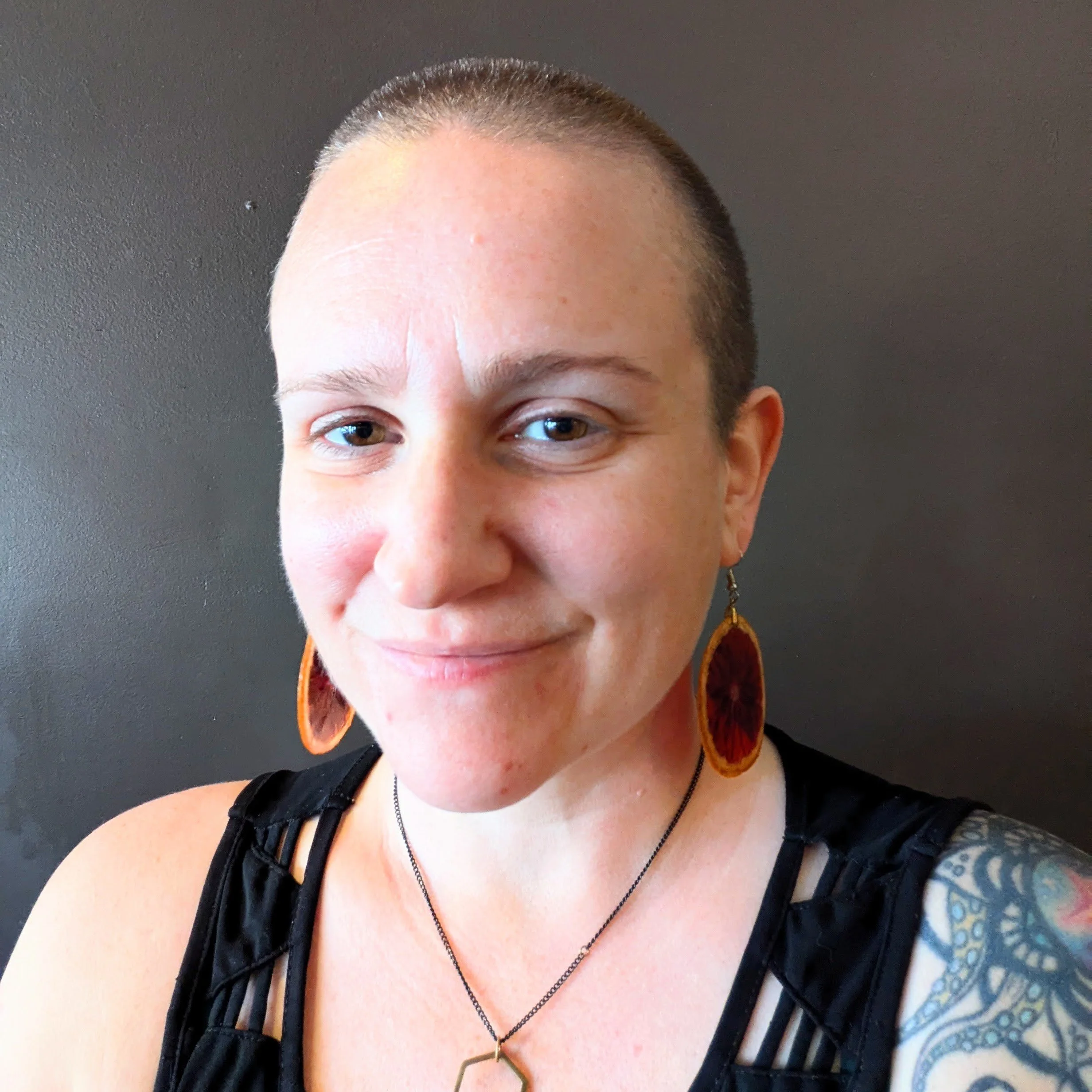
BIO: Rissa Pappas is a writer, editor, and dancer based in the greater Philadelphia area. She earned her MFA in creative writing from Fairleigh Dickinson University. Rissa was a publisher and editor at the now-extinct nonprofit small press Tolsun Books. She once went “viral” for live-tweeting her period. When she's not doing creative things, she transports sick foxes to rehabilitation (despite their chagrin). Her debut chapbook of poetry launched in March 2026 via Cathexis Northwest Press.