
Disconnect
by Jeffrey-Michael Kane
Today, the President announced a cure for autism.
The news followed a flourish of sound. My mother stopped drying her hands. My father increased the volume. On the screen, the President smiled as he conquered defects, erased abnormalities, then thrust them all into the same history as measles.
He fixed me. On television. Behind him, a banner read “The Cure”: A New Day for American Families.
They said it was simple: a mega-dose, then daily capsules that corrected the pathways, restored the signals. Fewer meltdowns. Better sleep. Normal lives.
My mother cried. My father put his hands on her cheeks, kissed her hard, and said, “It’s finally here.” They didn’t look at me when they said it. Lost in each other.
…
Ben went first. His parents signed up on the roll-out day. Within weeks, they got the capsules in a white box with a Presidential seal and a letter thanking them for their bravery. The first dose looked like a miniature dishwasher pod. His mother filmed him swallowing it. There were balloons.
More weeks raced by. Ben stopped lining up his pencils at school. He stopped humming during math. When the teacher called his name, he answered the first time. The faculty said the change was miraculous.
I thought he looked blurry, like I couldn’t focus on him.
…
My mom started watching webinars, scouring AI. “Just imagine,” she said.
My father researched side effects. Said there weren’t any. “It’s just chemistry,” he told me. “You love chemistry.”
That night, they filled out the application form. My name cut into boxes. We filled in small circles, as if it was a test: Does your child experience difficulty maintaining eye contact? Does your child feel distress during loud noises?
“We’ll help you,” my mother said, sealing the envelope. “We just want you to be happy.”
I was happy.
Or something close enough that I never knew there was a difference.
…
Within months, Ben’s mother stopped waving at me. She walked fast, head down, as if chasing something unseen. Ben still rode the bus, sat in the same seat, but he didn’t save the space beside him anymore. When I sat there, he shifted away. Soon, he’d change seats, joined by a girl.
In class, he raised his hand at the right times. He wrote in straight lines. He no longer whispered facts about planets or drew diagrams in the margins. When we got our tests back, his answers were perfect.
Mine weren’t.
The teachers smiled. The principal shook his hand. A photo for the district newsletter—First Success Stories. He didn’t flinch from the flash, barely blinked, kept smiling. Someone raised Ben’s arm. He’d won.
…
At home, my parents followed the trial results. Giddy. We'd see my doctor within a week, they said. Our lives will change, they gleamed. But something in the shade of their voices made me realize they didn't mean mine.
The night before my appointment, I couldn't sleep. I thought about Ben's notebooks—filled with satellite orbits, crayon arcs looping the sun. After the cure, he’d thrown them out.
I dreamed about those notebooks, pages fluttering across an endless landfill, diagrams tearing loose and spinning like wounded birds. When I woke, I could still hear the sound—paper in wind, language trying to reconnect itself.
…
The next morning, they gave me the starter dose. The pretty detergent one. "Aren't you excited?!", mom said. I nodded and closed my hand around it. The surface was smooth, like skin, but sharp at the edges. I sipped the water and pretended to swallow hard. The pill remained in my palm and began to ooze.
That night they watched me at dinner. My mother said, "Feel anything?" I said no. My father frowned. "Maybe it takes time."
…
A month later they called the clinic. They spoke in low voices, words like slow-responder, microdosing, and adjustment period.
Across the street, Ben’s parents were on the phone with the clinic too—but for help of a different kind. They asked if the change could be slowed, reversed. The nurse said no. The medication had already done its work. “It’s permanent,” she said. “Think of it as a hard reset.”
After that, they felt a different kind of hope failing them. Their curtains stayed drawn. Ben went on breathing, laughing, but not being.
My parents watched them from the window. “They’ll get used to it,” my mother said. “He’s better off.”
“Better how?” I asked.
“He doesn’t struggle anymore,” she said. “He’s fixed.”
…
Every night I held out my hand. Pretended to swallow each one. Closed my palm around them as they softened between my fingers like slime. In the bathroom, I'd open my hand revealing a swirling map, different each night, all leading nowhere. I’d rinse them off until the whorl ran clear, leaving nothing to prove I’d refused.
…
Weeks later, Ben's mother called me over. She stood on the porch. Nervous. Twisting a towel.
“Ben’s out with his friends,” she said, “but come in for a minute.”
Inside, the rooms gleamed coolly but the air hung warm and unmoving. Ben's father sat at the kitchen table in pajamas—a dress shirt half tucked, as if he'd started to dress and forgotten how to finish.
He looked up. His eyes moved slowly. There was no light behind them. The quiet scraped.
She cleared her throat, allowed a careful smile. “Ben’s doing so well. Always talking now. Always out with people.” The smile faltered. “The house seems quieter now when he’s not here, right honey?”
The father mumbled, then reached out his hand. I took it. He squeezed mine too tightly. He studied my face as if measuring a memory against it.
Then he stood and pulled me into an embrace, shaking. His breath pushed in short bursts against my neck. He held on. My body went stiff.
The room tilted. I began to rock, slightly at first, then faster, into the rhythm that calms me when people come too near, or sounds get too bright.
""It's all right," she said, stepping forward. Placing her hands between our shoulders, she eased us apart. "It's all right. You’re okay." I didn't know which of us she meant.
The father sat back down, head bowed again. His mother wrung her hands.
“You remind us so much of him,” she said. “You should come more often.”
I nodded. Outside, the sound of distant voices carried down the street—Ben’s laughter, clear and unfamiliar.
…
The sky looked like a bruise when I left their house. The world smelled of cut grass and something sweet beginning to rot.
Ben’s mother watched from the porch. She didn’t wave. Her sad smile made her look farther away, somehow smaller.
Without looking back, I crossed the street and slid open our front door. My mother was at the sink, my father setting out plates. They looked up when I came in, relieved.
“You were with Ben?” my mother asked.
“His parents,” I said, “but I saw Ben down the street.”
My father smiled. “Good,” he said. “It helps for you to see why we’re working so hard.” We.
He handed me my pill. I nodded and went to my room. The sound of their voices followed me down the hall—warm, ordinary, content. It was the sound of people who still believed the world was getting simpler, easier to navigate.
…
As time passed, though, my parents added more words to the foreign language of our home: treatment failure, continued deficit, residual behaviors. They said these words quietly, as if grief used a whispered grammar.
One night my father whispered, “Maybe he’s too far gone.”
My mother said, “No. Doctor Tom said we caught it early. There’s still hope.”
Then, my father, no mirth left: “makes the despair across the street a little ironic, hunh?
I understood, then, that my mom’s hope wasn’t for me, but for them. It was for the child they never had—the easier version who might have existed in a different genetic universe.
They were waiting for ‘him’ to travel in, for me to disappear.
…
The boxes kept arriving. Each stamped with the same cheery slogan: A New Day for American Families.
I never swallowed one. I didn’t want to be Ben. I didn’t want my parents to lose me.
Even if it wasn’t me they wanted.
…
The government stopped sending refills. ‘The Cure’ had entered Phase Two. New subjects. New promises. No mention of the non-responders.
I keep one box under my bed. As proof, not protest. The cardboard softens over time, the Presidential seal fades from gold to tin. Inside, the pills have fused like melted crayons into a single shape. It looks like a weather pattern that doesn’t promise sun. I don’t touch it. Some nights I open the box and listen to its silence. I whisper his name into it and wait for an echo that never comes.
They said the cure made things easier.
But they never said for everyone…
or even who.
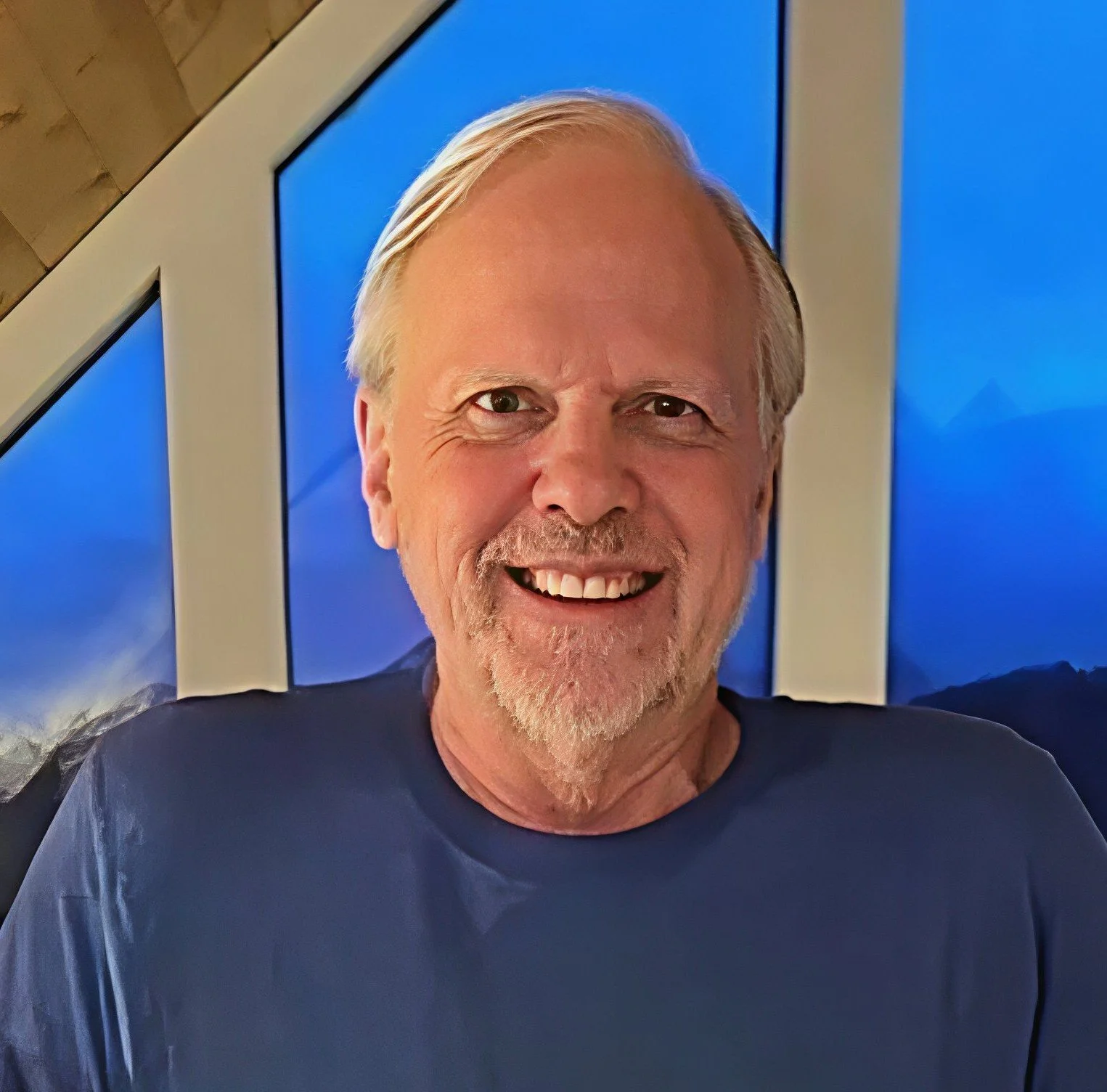
BIO: Jeffrey-Michael Kane writes with surgical precision about loss, language, and the systems we build to make sense of collapse. His work trusts readers to feel what isn't said, finding devastation in the space between observation and explanation. His literary work has appeared in Beyond Words, an international magazine of the arts. He writes with his learned experience as an ASD-Level 1. He lives in New Orleans in a house filled with paintings, dogs, and stories that unfold slowly.