
Accepting the Call
by Marc Frazier
As a child, I heard corn grow and now everything is noise.
Transplants from a less open region, my ancestors could not fathom such endlessness—hypnotized by perpetually open space, wind sounds, the drone of insects, silence. I’ve known a land of corn and soybeans stretching up mile after mile, a land of horizon where someone must prove the world is not flat.
Like my parents, I was born and reared in Illinois, the Prairie State, where less than one percent of original grassland remains. Some has been, and is being, restored, but once an ocean of grasses spread below sky. A world where the red buffalo scorched the land and restored its ecosystem. The wildness of grassland needed to be domesticated: the vastness and solitude were too wide for the inner self to manage. We could not live with it.
My whole brood suffered from prairie madness—a real phenomenon many, mostly women, suffered from in this world without echo. Some lay down with the sheep for company, a salve for the endless isolation. Similar to the once-vast grassland, something in us needed to be domesticated. The Prairie State: a land of land where nothing lives for beauty except wildflowers—glimmers of hope on what is vast and flat—the colors of marigold, daisy, cornflower.
The grasses have long ago been torn from earth. Before corn, there were miles of root structures attached to the grasses and flowers of the tall grass prairie—an ocean of bluegrass, wave upon wave as far as one could see. We made the land habitable. Much of what makes us human is the struggle to understand how we do, or do not, fit in with our environment. Those with prairie madness could not make this space at home in their psyches.
The lack of water in my youth was not my destiny after all. I discovered the great Atlantic and often visited coastal Southeast Florida. Forms like iguanas and manatees replaced miles of green crops. I’d sit on a long deck and watch ships sail by, sleek and contemporary, tall-mast and small, watch the giant drawbridge raise and lower, soak in the heat I longed for in Northern winters. Here they dim or shut off streetlights near the beach during turtle nesting season. On land or water, you can find the concerned.
I shivered with fear on the small plane taking me from Boston to Provincetown for the writers’ workshop in this gay Mecca, settled into my maritime-themed hotel. Water now seemed to lure me with a sense of new possibilities. Each day I walked through town, my habitual life removed. Like Kaspar Hauser or Ishi, I wandered into community with no way to tell my past. The death of my father was fresh. Sexton’s words echoed in my head: Someone is dead. Even the trees know it. I visited little shops along the way, purchased a set of figurines: a mother cat linked by a delicate chain to her kittens. Always the search for that happy family. The shopkeeper was an elderly woman who smiled with empathy, my aloneness, an aura I carried with me.
One afternoon I saw a large placard advertising “Sunset Tours,” a round trip from downtown to the dunes. Just before dusk, the group of strangers and I piled into the Land Rover with our cameras and backpacks. Wind swirled tall grass into circles that repeated in sand. Hypnotized and drawn deep into myself, I experienced an even deeper anomie than I’d already been feeling. The driver, an ancient man from a fable, reminded me of you, Father. This was wide-open sea like the frameless landscape of Illinois. Sun set on the Atlantic as on a sea of corn. I tried to catch its descent, took a picture of fishing poles stuck upright in sand.
It is I who separates this world from the next, clarifies light from dusk, though things seem indistinct as sunset water from sky. Light failed over the Atlantic, water a calm shushing like quiet before a holy service. Lanterns, fires dotted shoreline. I did not want to let you go. I did not know of what the self is capable.
My fellow travelers and I sat silent in the vehicle as if we were always this contemplative. Heading back to town, words and resentments faded like light in this dark version of our trip back.
How it began: the seed stirring like a bird becoming a bird, becoming more like we become this time of year transformed by more light, warmth; the new alignment of planets, the equinox bending our sense of the universe around us. The Rite of Spring describes a holy procession with the wise elders, headed by the Sage…who blesses the earth. It has never needed blessing more—in the air a new threat added to the old ones. A cold spring and damp. It’s easy not to notice the daffodils, red tulips, forsythia as I start out on my daily walk because my most loved, familiar place has turned against me.
The mask heats me up. If I encounter someone without a mask on the sidewalk, I move away if they don’t. Constant vigilance. It’s all too much. Masks, gloves, wiping things down. It’s like living in an operating room. I want to adore the earth. There’s talk of snow flurries. In May. I’m continually disheartened now. Scrolling Facebook will do it. Man’s inhumanity to man, that cliché literature trope. Is human nature human? I wonder sometimes. A man wiped his nose on a store employee because she asked him to wear a mask. Hundreds of stories like this. Thousands.
Angry, armed domestic terrorists storm state capitols. I notice two trees with tight, bright red buds that I want to live to see become leaves. To gather rosebuds while I may but everything feels on hold now. These flowers, these trees frozen in their growth like my soul feels so much of the time now though I meditate twice a day searching for the way. I long for the old ways. In any form. I want to read a long, old-fashioned letter. Or write one. I cross Lombard Avenue heading toward Buzz Cafe for a to-go latte. Everything is to go now. We can’t pause for long, except within the confines of our own walls that grow closer daily. At times I feel like that character in “The Tell-Tale Heart,” hearing the beating, thinking I will be found out for who I am. That kind of claustrophobia.
I note the boarded-up 7-11, another economic casualty. A squirrel dashes up an old oak. I cross over the expressway and walk around Barrie Park. Yellow tape surrounds the playground. A slight mist begins. A group of soccer players kick a ball around the field. They are not supposed to be there. The parks are closed. Do I turn them in? It seems we are always monitoring others’ behavior, weighing whose rights come first.
The mayor sneaked out to get a haircut without a mask. Then she threatened her citizens with arrest if they gather in large groups. So many inconsistencies, questions. I pull up my hood as the mist continues, sip my drink for warmth. In St. Mary’s we were taught to respect our elders. So many are being rolled out on gurneys these days from nursing homes. In Italy, they say the younger generation is now virtually without grandparents. No more than ten spaced-apart mourners can attend such services. “There will be deaths,” say politicians as they panic to reopen the country.
After my three times around the park, I head back home, not just where the heart is but everything. I want that feeling of longing to be back in the warm nest of my home after being away instead of hunkering down in it as my place to shelter. What I need is someone to blame. Besides the President. In ancient Greece, human scapegoats (pharmakos) were used to allay a plague. We need to draw lots like in “The Lottery” and stone someone. Instead, ill winds, a frozen spring.
These are memories of shopping at the start of the pandemic: I tighten my mask over my nose. No pausing over whether to buy generic or the real brand. Grab at what strikes me first. Having a list these days is essential, and going at warp speed, focused, knowing the layout of the store. In and out is the goal. Grab at what strikes me first. No pausing in the pet supplies aisle where I want to linger because I’ve had my cat put down after eighteen years. I must speed this up. I’m on a mission even as I tear up at the thought of the needle in her leg’s vein that ended it all. My petting her with gloves on, how I wanted to really feel her soft, furry head as I said, “It’s okay, Maggie.”
If only I could see someone smile at some small kindness. I would feel buoyed. Do I need mouthwash? Who would I get close enough to for them to notice if I have bad breath? I’m now standing on the blue tape which is spaced on the floor every six feet. I want my life back. I drive through Dunkin Donuts and get an oat milk iced latte before I cruise around town in my new red Volvo with the moon roof open, the radio loud. A new pandemic ritual. I’m a teenager again with no particular place to go.
It's been a year. I vent on Facebook. I got punished for one of my posts, banned by the Facebook censors for twenty-four hours. Feelings are running high. I felt like I’d been sent to my room at the age of sixty-something. I’ve had groceries delivered for months now. I nod at the postman, a weak hello. I wash my hands vigorously after taking in the mail. “Hate has no Home Here” signs stare at me from lawns, an outgrowth of the new political landscape. It’s like we are living in two dystopias now, one political and one public health.
Everyone matters, or is that just a salve for the conscience? What about thinning the herd? I still look out these same windows except now trees have leaves. A vague fear has stalked me room to room, my small world my large world now known intimately in a way I’d never foreseen. I don’t recognize myself though it’s all I have.
Don’t be like me. I’ll fill you with doubt on top of your doubt. This is not a good thing. Woolf once in a while sees good things but mostly not. It is a dark world like the one we live in now—a rare flash of sun on water, one where we must, at all times, keep our distance from one another, where leaves will drop from the trees again like so many of us.
Each place has a spirit—The rain of Vermont turns you green. The Gihon River cascades along old mills of the Green Mountains as maple syrup drowses. The summer children of coastal Maine are perfect shells: polished, sun-warmed, lightly starched. Morning sand for hair, ocean eyes, skin of white violets—here ours has returned slowly after the grave threat that lingers.
Though apprehensive, I risk traveling. Now on my winter hiatus along Florida’s Atlantic, this resort Manhattan Tower is neither a tower nor in Manhattan. But many things make sense the more you think about them. I started writing my memoir beside this cool blue pool and my life began for the first time. Through floor-to-ceiling glass, palms sway as Blue Daze and Lantana creep onto pathways as the sun rises. I listen to the green parrot stuck on his one complaint, call seashells by name: flamingo tongue, baby’s ear, thracia.
Palms sway, swooshing pollen, gnats. Coleus throbs, its red deepening as trade winds hurry boats along the Intercoastal. Nothing will change if we name everything, everyone differently. Here are yellow birds and pink birds. My feet spoil the sand and this is now. Ocean splash creates new canvases, and I wonder if I have ever been who I said I was or always a cliché—a truth but not the whole truth.
Anonymous tourists slather on sunscreen as the scents of the tropics reach us. Back outside for the lush tropical evening, the smell of chlorine lingers as I doze over my journal poolside. Listening to others laugh during happy hour, I keep to myself. The stray calico cries into dusk. Luxury cars cruise oceanfront along A1A. Lifeguards fight dozing off. Orchids cling. Surfboards and beach chairs are stacked. Beachwear peels from bodies as skin stings with burn all over Florida.
Now living in Fort Lauderdale, I stroll down Los Olas Boulevard listening to the sounds of music from many different cultures. The palms and resting parrots listen as well. I decide it’s time to head back for the night, pass tourists sipping wine at white tablecloth restaurants open to the outside. Boisterous laughter comes from those enjoying the ambiance of a perfect evening in the brightly-lit-up evening, desiring nothing more. I look down and see a peeled orange on the sidewalk. Nothing surprises me in this place. In this warm hum.
A place seeps into your core and if you’re enlightened enough, you take stock. It’s easy to see where someone else is on their plot line. Not so easy with our own. Once we reach the denouement, it’s over. We all know this, but can we recognize this point in our own story? The ground does not rise to meet us. We slide through the rest of the falling action and fini.
As I begin to acquire an endeared place as a new home, inside and out, I seek out intuitives like Cynthia the psychic who asks: You’re one of the watched ones. How have you gotten this far with one oar? In her ballet slippers she dances in the airy loft between readings, the ocean a blue dream within reach. My life remains narrowed by what I can’t accept. I dream spring, a long life, fear I will be loved, fear who is watching. Some try harder than others to believe in themselves. Some never recover from surviving as a second choice. Numb and confused, I’ve never thought until this late about the overwhelming bird beating in the palm of my hand each morning.
When I discovered, like Juan Ponce de Leon, the fountain of youth here, I was saved. The ocean drew me like nothing ever had, and I discovered I could escape the dark fields of my early life, that I was not magnetically held to the earth of the Midwest. I’ve accepted the Atlantic’s call and have moved here to be near the nesting turtles in sand along Fort Lauderdale Beach, near the shirtless, young volleyball players eager to be seen as they stretch every muscle to the sound of construction rigs in wind.
I thought I’d be sure of so much by the time I was this old. I’ll put off pondering that now—hypnotized by the curl of waves, blue sky, and white-building haze. How much time is left to make my words matter? Will they live on after my plot-line resolution. And what about us? We all matter. Don’t we?
I pray I’ve not been mistaken all this time.
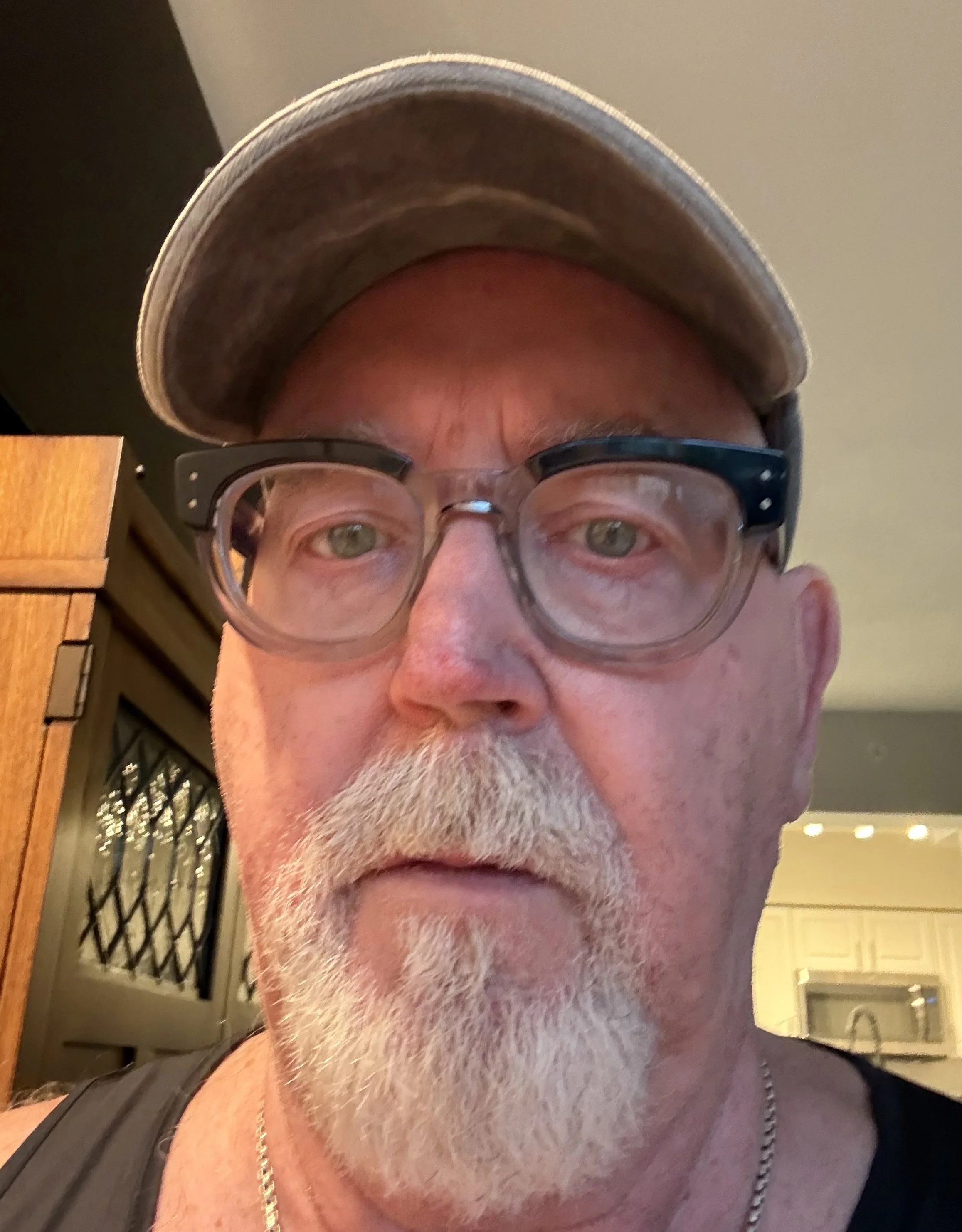
BIO: Marc Frazier is a recipient of an Illinois Arts Council Award for poetry. He has also been nominated for two Pushcart Prizes and two “Best of the Nets.” His four books are available on Amazon. His latest poetry book If It Comes To That recently won Silver in the Florida Writers Association Royal Palm Literary Awards contest. Marc has published poetry in nearly one hundred fifty literary journals including South Dakota Review, The Mackinaw, Poet Lore, The Tampa Review, RHINO, Gargoyle, and West Trade Review. He has also published a great deal of flash fiction, essays, memoir pieces and photography. Marc is a transplant from Chicago who lives and writes near the ocean in Fort Lauderdale.