
On Sticking a Middle Finger: One Girl’s Journey to Finding Out Who She Is
by Karyna Saifudinova
That Polish je ne sais quoi
In Ukrainian, I am a misfit — too east for the west, too west for the east, but not quite north or south.
In English, I am woke and a bit confused — my fairly American accent sharing the wheel with the autumns and pavements I held onto for dear life ever since going to high school that promised to teach us the British way but taught us nothing at all.
In Spanish, I am ever so Chilean, the I baked in the theater school that screamed communism before it did any acting, and dentity — in a family that couldn’t have been less communist even if they tried — which they did.
In Polish, I am undeniably Ukrainian, half of my vocabulary smuggled in from across the border, only slightly patched up to give it that Polish je ne sais quoi.
In Brazilian Portuguese, I am a try-hard, only what I am trying so hard to achieve is turning into the new age hippie living on an island with a bunch of people who have serious weed addictions and, arguably, even greater trouble recognizing it for what it is.
In the Portuguese Portuguese, the one from the old land, I am a nuisance, because all I ever use it for is paying my bills and fighting through the nine circles of hell, otherwise known as the public healthcare system.
In Slovenian, I am quiet and gracious — the two things I usually am not, because thanks is the only word I felt confident enough to throw around.
In Chinese, I am equal parts foolish, entitled, and desperate, because who in their right mind thinks doing an interview in a language you just started learning (on Duolingo, of all places) is a reasonable decision — let alone a good one?
And in russian — in russian, I no longer am, because the first language I ever spoke is the same language they use to kill everything I was or will be — and I have it easy at that.
A nauseating merry-go-round
My mom did many things right and many things wrong. I can quickly turn this into a soggy tirade of every way she fell short as a parent (I’ve been known to do that in times past), but she’s not the one on trial here. In fact, granted you believe in god, she went through hers already — so I will only focus on the sins relevant to today’s matter. That being the ineptness she felt towards her own national identity and what it meant for me, a very confused seven-year-old.
A kid of many worries, I wasn’t the kind to cause trouble. As a matter of fact, I only stood up to my mother twice. One, I didn’t want to join a Sunday school (god and I — we were never buddies). Two, I refused to believe my face did lookabout ninety-nine-point-nine percent russian, even if my dad’s red passport confirmed her outrageous claim.
Those might not have been her exact words, but the message was loud and clear regardless. I was anything but Ukrainian, because being one wasn’t quite good enough — according to her, of course.
Blaming my mother for passing down this massive inferiority complex she couldn’t see past will not take me far, but looking for a why has since sent me on a merry-go-round, which — while nauseating — has taught me a thing or two about identity, belonging, and the importance of not giving a fuck as to what anyone else has to say about who you can or cannot be. Unless, of course, I claim to be good at math, in which case, please check in with my emergency contact, because I’m clearly losing a grip on reality. Wouldn’t be the first time, but more on that later.
A textbook definition of abuse
I love the American South, I do. And no, I’m not looking at you, the US of A; you were the one who laid claim to the name that wasn’t entirely yours to take, so now deal with the consequences. I mean the South that should have understood me, but somehow largely missed the point — or maybe even a few.
In my early twenties, I parted ways with the person I was — to become the person I am today. A one-way ticket to Brazil led to a five-year-long separate life I never imagined living; Chile, in particular, became the harbour for all my aches and pains. When the war began a few years later, the support was overwhelming. But so was the doubt. And so was the blame-shifting. Nazi was the word I came across one too many times. I wondered, how do you not get it? Having lived through what you have lived through, how do you not see the writing that’s all over the walls and ceilings? How do you look at a colonizer and yet mistake him for a savior?
Time after time, I did what the liberals taught me not to — I did the homework for those who weren’t always willing to learn. Fruitful or not, I’ll repeat it once more, for the passengers in the rear, before we keep on driving any further. I did grow up speaking russian, but none of it was out of my own volition. Others’ lack of direction was also hardly their fault. Systemic, centuries-long agenda, a war on the nation’s very essence – not a preference, or a proof, or a plea. Colonization, at its finest; a textbook definition of abuse.
Are we russian or are we dumb?
Growing up, I loved The Nanny. Every night, at seven or eight pm, I’d rush through my dinner to watch the episodes I must have already seen roughly a thousand times. Only instead of Queens, the Nanny I admired came from Mariupol and worked for a wealthy, highly educated family in Moscow.
Lo and behold, the russian dupe was nowhere near wholesome. The premise was, otherwise, simple: Ukrainians sucked rat’s ass. Call me ill-mannered, but that summed it up pretty nicely. An eight-year-old with a poster of The Nanny on my bedroom wall — a birthday gift from my older siblings, I laughed at her uncultured ways, not knowing I was meant to be laughing at myself, too.
I would like to live in a world where no further explanations are required and everyone’s heart comes apart at the seams the second they hear of Mariupol, but that’s neither realistic nor sustainable. The Ukrainian city of half a million people became one of the primary targets in the early invasion back in 2022 and has been attacked so fiercely it’s now hardly a city at all.
Unless you spent the past couple of years living under a rock (then please scoop over and make some room for me), you must have heard the main pretense of the russian war on Ukraine was the saviour narrative. For all intents and purposes, they came to protect their own. And Mariupol was one of the places — they claimed — needed saving. That makes me think — so which one is it? Are we russian or are we dumb? You can’t choose both and act as though the math is doing whatever the math has to do. It doesn’t add up, plain and simple; even I can count that far.
I might come across as a bit nitpicky and certainly very biased, but rest assured: The Nanny wasn’t a standalone instance of xenophobia, only meant to represent the views of two or three spiteful individuals shooting scene after scene on a shoestring budget. The hate was a standard practice. Language, culture, or politics — it was all-encompassing.
Now, with a lot more context and a far more developed cortex, I can see through the mockery, through the coercion. I know my mom didn’t choose this — all she did was cave in. And while I, not unlike her, allowed them to sway me in the wrong direction (an eight-year-old can only understand so much), I didn’t let them erase my entire identity. Which, given how hard they tried, was nothing short of a miracle.
An unprecedented thought and a big fat feeling
The last year of school was a time to start over. I had a real chance to redefine the person I was growing into and I wasn’t about to mess that up. My living situation was, by and large, a disaster, so while many of my classmates wanted to get into a good school, I depended on it.
A sixteen-year-old with rather poor academic records and practically no self-esteem, I may have gone a bit overboard in this endeavour (I’ve been known to do that, too), which is why for the next year every breath I took centered on learning all I’d failed to in the past ten. But no matter how far I bent over backwards to turn my life around, I knew I wasn’t quite cut out for engineering or computer science, so I landed on journalism instead. And while that meant I could fail math all I wanted (which was part of the reason why I chose the profession in the first place), language, literature, and history — these were non-negotiable.
Learning the ins and outs of Ukrainian, the language I realized was meant to be my own, I suddenly saw the answer to the dreaded equation. I put two and two together and an unprecedented thought came to mind — I might as well speak it.
I need a good grade, but that’s all. There’s nothing to it, I promise.
This decision was totally unrelated to the revolution that just ended and the war that just began. As far as everyone was concerned, of course. In all actuality, I had a perfect excuse to switch gears and go relatively unnoticed. This was a way I could balance both — the need to fit in that inevitably comes with being sixteen and the big fat feeling that the way I grew up wasn’t normal. That those who fought and died for my freedom to speak that very language, those who were dying still — they couldn’t have done it in vain.
At first, I kept it out the door. School and friends — that was the limit. There I could be vulnerable, more than at home, anyway. Because at home I had no space to be anything, whether a loud rebel or a quiet no one. Because at home I watched my older brother — a brother I quit speaking to for this and other, unrelated reasons — put up a flag of russia in the room we both called mine.
And so I kept the two lives separate, afraid of being perceived as too far-reaching, too foreign, too radical. What’s so radical about speaking a language — any language, for that matter — but most of all, your own? Nothing. It isn’t radical. But that’s not how it felt way back when. That’s not how russia sees it to this very day.
A teacher’s pet in the best of times, now I basically became a legend. Within the walls of a school for less than three hundred students, but a legend nonetheless. Brave was what the teachers would go with, and yet I wasn’t here fighting no war.
This newfound sense of fame was soothing to my otherwise tender ego, but it didn’t help me, an unpopular kid to begin with, get any more accepted within the group that mattered most — a bunch of judgmental teenagers.
It’s not that I’m against it; it’s just, why? — seemed to be the agreement across the board.
You sound funny.
You sound wrong.
And yet, I did sound. I made some noise. Whether I believed in the idea or simply wished to prove my mother wrong — that I can’t say for certain. It was likely a bit of both. But no matter the real reason, I stayed true to whatever was calling. And never, not once, had regrets.
On sticking a middle finger
I could have left it at that, a linear tale about reclaiming one’s own identity — look, I did it, and so can you — but I’m not in the mood for lying. Although I swore by this decision in the first few years, ultimately I didn’t follow through. For the foreseeable future, I switched back and forth, depending on who I talked to.
It’s easy to scrutinize my reasoning and dismiss my efforts as a simple attention grab. While I do not agree with the notion that seeking attention equals a personal failure (isn’t being seen a basic human need?), let's not beat around the bush here either. I did conveniently give up on my dedication only a year or so after I moved to the city where Ukrainian was a day-to-day occurrence, not a once-in-a-blue-moon miracle. And to that, I say: maybe. I was a mentally unstable teenager, after all — not the kind of demographic you’d expect to follow a strict and predetermined set of values, with no deviations and for all the right reasons. People aren’t perfect. And I was anything but.
Another explanation that comes to mind — and yes, I can pull my own logic to pieces until the crack of doom and then some — is the post-revolution blues. The war was taking its course, and seeing it play out the way it did — the way wars do — was a gut-punching blow to my already fragile belief that I — or anything I did or didn’t do — had any value.
However, no matter what served as a detonator or what eventually put a stop to it, one thing is certain: I cracked the spell wide open and laid the groundwork for future growth. Languages are there to be spoken. Empires will want to keep you small and docile, to make you believe what they taught you is all you are, but there’s hardly anything quite as satisfying as sticking the middle finger to your abuser and saying — I’ll take it from here, see you never, goodbye.
Both not able and not willing
Once I gave up on journalism (which I now realize happened more so because of self-doubt than actual incompatibility), I was left to fend for myself in the world where I am is always followed by what you do, not what really defines you. And for a while, I did nothing and, thus, I was no one. Traveling the world with hardly any money entertained me for about seven months, but there came a point when hitchhiking, crashing people’s couches, and eating plain rice with discarded produce — whatever was available the day of — became a bit repetitive. I needed a change — and a change I was given. The pandemic entrapped me in Chile — broke, stunted, and unstable, both not able and not willing to call it quits and go back home.
Explaining how I ended up back on my feet, though evidently crazier and thinner, would take about a lifetime, so I won’t burden you with all the nonessential details.
What matters is that, a year later, I started working towards a degree in theater. Although I told the admission committee I barely spoke any Spanish and was — for all practical purposes — very illegal and very immigrant, they didn’t seem to mind. Pity or talent — you go figure, but the point still stood: no one was no more.
The Chilean me was a handful. I learned the language surprisingly fast and I wasn’t afraid to use it. This, however, also required a lot of acting. Research, observation. Listening and adapting. In English, I strove for perfection, but here I looked for the messy bits, for the everyday. And I managed, I really did. Switching languages, voices, identities, I couldn’t rid myself of the pressing question: should I keep what I didn’t choose?
Soft power is power
I was twenty-three when russia went totally mental. Not to say it was perfectly balanced in years prior — that would be nuts — but this, this was evil redefined.
At the time, I was still living about fourteen thousand kilometers away from most of my friends and family — the fact that would soon come to haunt me in the shape of guilt-ridden, people are dying every day and here I am paying three times as much for a soy beverage cause I think milk is cruel kind of depression. I was crumbling at a dangerous speed and, though it wasn’t a never-before-seen occurrence, this time nothing could convince me otherwise — I was undeniably useless, unlike a multitude of truly remarkable individuals who actually made a difference.
All three dimensions of time turned on me in a joint effort. Thoughts, words, and actions — each grew darker than the last, which meant I could either give up and die or push through and do what seemed doable. The language, I therefore decided, was a very doable step. Unlike my previous attempt that lacked certainty, now the intention was cut-and-dried: simply hearing russian made me physically ill; speaking it seemed just about unthinkable. I no longer cared about being apologetic; I did what I saw fit. And if that is radical in your book — I decided — then, well, I don’t want to read it.
Before you throw me out of the moving vehicle and call it a day — I’m more than aware that this isn’t the only right way to resist. Being so far removed from the reality of the war and having a few other languages under my belt to use and cherish, I had an advantage most went without. However, soft power is power. And I didn’t want them to have any over me.
Are these “bad russians” in the room with us right now?
Here’s what I learned after years of living here, there, and everywhere: the russian narrative might seem laughable, but it’s working. People eat it up and ask for more. The number of times I came face-to-face with someone who downright believed russia was a socialist paradise is beyond me. And even if what I really wanted to do was to bang my head against the wall — because data doesn’t lie, people, come on now — I had to retrieve and regroup instead. I asked myself: what did they do so right for it to go so wrong? And this is where it hit me.
They are very intentional. While it’s easy to dismiss language, culture, and religion as marginal and inoffensive — it is actually that deep. They didn’t force russian on me and others alike simply for kicks and giggles. They needed a reason to claim us. It wasn’t a two-for-one type of deal either, but rather a good old marketing trick: return to me what’s broken, what’s invalid — and I’ll give you the new shiny thing.
The second you slip up and let it slide — it’s just a movie, for god’s sake, it must be harmless — that’s when they feed you a spoon or two of shit you can’t quite taste, unless you have a very developed palate. And we, after centuries’ worth of having been fed pure junk, happen to feel the notes most people don’t pick up on. Slowly but very steadily playing into the fascination with the mysterious russian soul, they gain supporters and plant the seeds of doubt.
Having talked about it more times than I can count with people from all walks of life, I know the knee-jerk response:
She's a bit of a wacko, but can you blame her?
She’s misled, she’s angry — she can’t be trusted.
Let there be no mistake: despite the doubts, I did receive support. Many people asked, and some even listened, but rarely did I feel my words held any water.
So, tell me, dear, are these “bad russians” in the room with us right now?
How is that any different from your run-of-the-mill, interpersonal gaslighting, only now on a more global scale? I’ll spare you some time and effort — they are the same picture.
Chekhov is dead — get over it
A few months into the war, right about the time the photos from Bucha came out, I burst out yelling at the people who could make or break my career in theater. Yes, Santiago is a large metropolitan city, but people sure talk. And actors do so even more.
A fellow theater company was in trouble. They were set to premiere a play — a revival of Chekhov’s classic — when it was suddenly postponed. The Ukrainian community in Chile reached out to the municipal authorities and asked to reconsider the idea of promoting the russian author, given the current state of affairs back at home — a decision I easily got behind. They emphasized: nobody has anything against Chekhov, but this is not the right time.
The topic soon emerged at a rehearsal for the play my school was working on. I didn’t bring it up, but someone else must have — so strongly they felt about it. The news was met with nothing but resistance. The narrative hasn’t changed: it’s just a play, for crying out loud. Chekhov is dead — get over it.
A friend once told me I could easily pass as Greta. I didn’t see much resemblance, with her being Swedish and, you know, a teenager — at the time, anyway — but never have I ever felt as close as when I asked — How dare you? How dare you tell me it doesn’t matter?
The morning of, I opened my phone to see the charred remains of people I could barely recognize as such blasted all over my social media — not the first time and certainly not the last. The everyday folks were being tortured and murdered as we spoke — scratch that — as I yelled. I yelled and cried — the ugly kind — until they all went quiet. Chekhov's play was ultimately postponed, but so was my career in theater. I had to walk away from my studies to pursue a healthier me — a venture I might have succeeded in, had it not been for what happened next.
Pain, at large
I’m prone to losing my voice. It’s happened countless times throughout my life and, for the most part, it’s never been a significant bother. I’d push through it and say what I needed to say regardless because, you best believe, shutting me up is a tall order. In October of 2023 — one of the few times when what I had to say truly mattered, unlike most of my endless ramblings — I was forced into silence so sudden and so isolating it made me want to wail.
A year prior, I received a call.
Nothing’s decided yet, but we want to write something about what’s going on.
War-related, you mean?
Yes, about the war, and a bit about you, too. Like a testimony. We need something personal, to put things into perspective.
When I initially received the offer to work on this play, my mental health was living on borrowed time, and stepping into a spotlight, albeit a humble one, meant compromising my personal journey out the bottomless pit I found myself bound in. But I couldn’t refuse a chance to speak up when someone — for once — was eager to listen. I had to go all in; there were no two ways about it.
One car crash, one knee reconstruction, and one heart surgery later, we were ready to take off. As ready as we could be, given the circumstances. What started as simply putting things into perspective grew into here’s everything that’s ever happened to me and how all these things deeply messed me up, each in its own distinct way. The play was still about the war first and foremost, but also about pain at large — the sticky, overbearing sort.
The first few shows went perfectly fine. Trauma-dumping and criticizing russia is all I ever do anyway, so to me it felt like a regular Wednesday night chatting away with a friend or two. I was, however, the minority. The play was weighing heavily on the faces of those I could barely see through the blinding light. At first, I didn’t fully understand the reaction. The story wasn’t warm and fuzzy by any stretch of the imagination — that much I was aware of — but it couldn’t have been all that awful either, of course it couldn’t, because what would that mean for me?
After only a couple shows, my voice decided it’d had enough. I could not speak — and heaven knows I tried. It’s easy to blame the lack of experience, and probably that’s all it was. But to be robbed of the ability to speak, when what I had to say was urgent, was of the essence, felt as though I was betrayed, my body and mind being the Judas in question.
I couldn’t let my own unprocessed sorrow stand in the way of what had to be yelled from the rooftops, not whispered on an offbeat stage for just a select few to hear. Because whatever happened to me was simply things put in perspective, a few broad strokes to paint the bigger picture. That picture being — russia was killing people. And much as I pushed myself far and beyond the limit and screamed from the stage — I despise the language I grew up speaking, here, take it, someone, please, take it away — russia still is.
I loved you, Mom, but boy, were you horribly wrong
- How do you guard that authenticity within you?
I asked a Ukrainian writer on a summer Saturday afternoon in Porto’s biggest public library. He’d lived in France for well over a decade — all of his adult life — but didn’t seem to doubt his ability to write things through a Ukrainian lens — which, to be fair, he had every right to do. And while I can’t recall his answer to the letter, the advice he gave me was rather simple: the editor, he said, was a real game-changer. Just get yourself a skillful one — and you will be good to go.
At twenty-six, I found myself back in Europe. Taking advantage of this temporary transition, for the first time in five years, ever since I left, I booked a ticket to see my friends and family. Excitement, however, was on par with fear. Everything else aside, coming back meant facing all that I’d left behind, and this — on its own, with no war in motion — would have been enough and to spare.
Language became a point of contention, too. While living in this voluntary exile, I rarely — if ever — used it in the day-to-day. No wonder the words came out equally sharp and uneven, the jokes didn’t land, and the stuff I would normally tell a street vendor — so open and honest I have become in the past few years, suddenly felt too real, too mine to share.
A former zero-waster (which is a whole other conversation), I am a very plastic person. Except for a couple of habits and a midsize list of values, I move and shift with ease. This, I reckoned, was both a blessing and a curse. No longer confined by what was preordained for me, I feared I might have ventured a great distance. While I managed to fit in places I wasn’t supposed to even be near, the Ukrainian me halted at exactly where I left it. Forget that loaded longevity dude and his son’s blood transfusions — though not on purpose, I remained forever twenty-one.
Having a tendency to give everything a second thought and a deeper meaning, I know it might seem as though I’m splitting hairs. Five years is a negligible sample, I’m aware, but considering I had to face a major life event give or take every five business days within this time frame, I had no choice but to grow and adapt.
Not stating anything new here either, but war too changes people. In ways I — an outsider in this regard — can’t even begin to imagine. Feeling stuck in the in-between, I realized I’d made a mistake, treating my most important identity as the factory setting, as an uninterrupted, unbreakable given. Because having tried the attire I thought would always suit me regardless, I knew right away that it didn’t quite fit — and this, my friend, is one shitty feeling, let me tell you that much for free.
An editor, I thought, so that’s what I was missing. Even writing this to me has been a back-and-forth. What are my credentials exactly; who the hell am I to say what’s right or wrong? How nice would it be, then — to have someone curate you back to the roots you forgot to nurture and water till they dried out, half-decomposed.
But feelings and fears aside — which, of course, is easier said than done, I know I can reverse the damage. I’ve done it before and I can do it again. The curse, after all, is already broken. I know at the very core I’ve got that Ukrainian je ne sais quoi, that shared experience, that understanding — maybe not so much the present, but the past. And that, well, that’s something. It’s certainly a place to start.
In the face of oppression, in times such as these, guarding one’s identity is an act of resistance in and of itself. And doing so, I deem, is not a can, but ashould — or maybe even a must. Hence why I’ll state it loud and clear, for god himself to hear me: I loved you Mom, but boy, were you horribly wrong. I am, first and foremost, Ukrainian — and nothing can ever change that. Not you, not russia, not me, not anyone. Some things are simply set in stone.
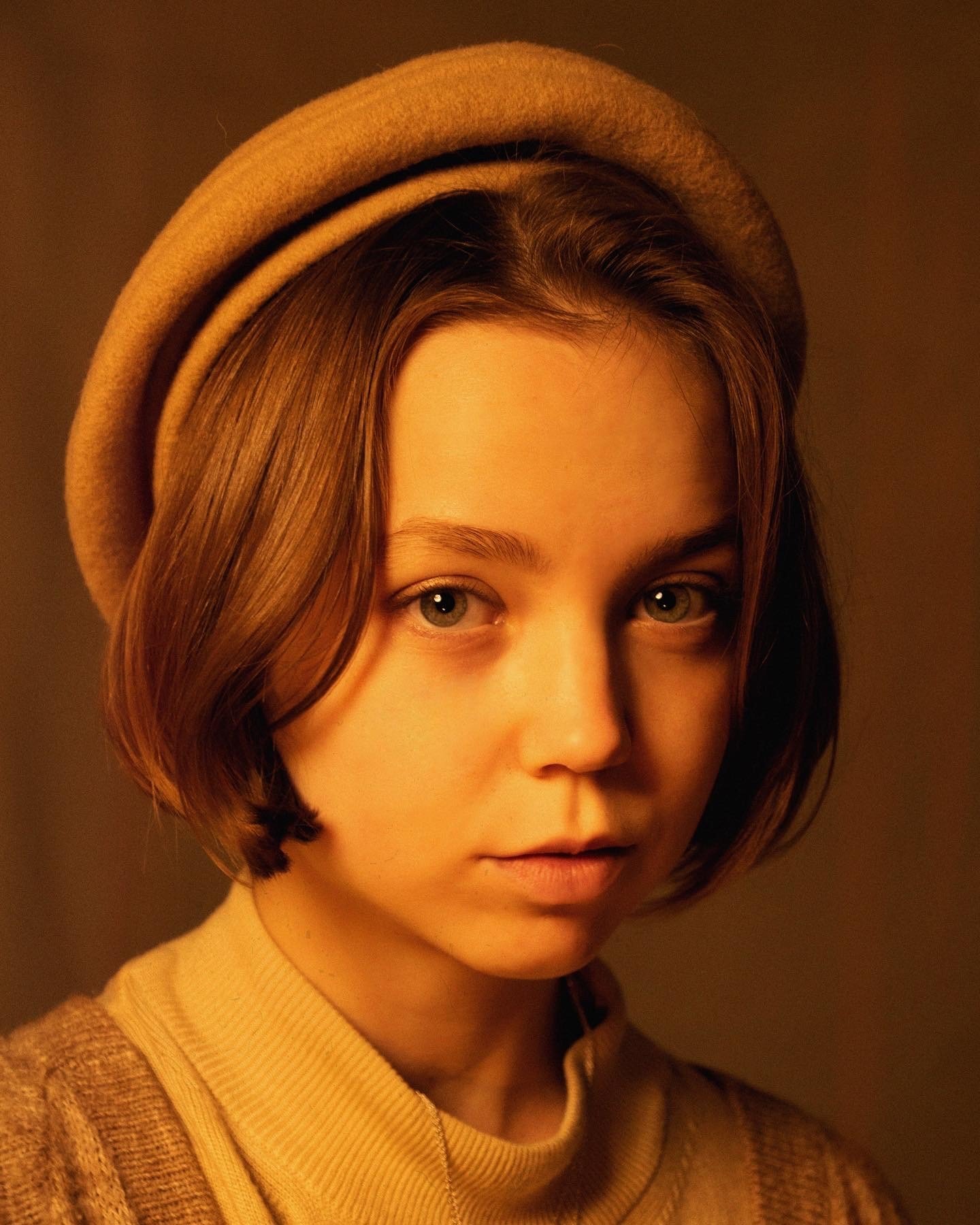
BIO: Karyna Saifudinova is an independent writer with a Bachelor’s Degree in Journalism. Currently, she is working toward her Master’s Degree in British and American Literature and writing her second novel. Instagram: @i.don.t.kari