
Unmoving, Untroubled
by Seth Frame
I had wanted to see this place since boyhood, had carried its image for decades: bones emerging from stone, time made visible. The boys pressed their hands to the fossils, fingers tracing the curve of femurs and vertebrae in the rock. The day's heat had climbed past a hundred degrees and settled there.
The older one walked ahead, his pace quick and determined even in his fatigue, facts about the Morrison Formation trailing behind him like dust. The younger one lagged, stopping to watch the shadows of lizards in the brush, asking questions about things we'd already discussed.
At the truck, the older one wanted the hotel pool. He had been learning that summer, and he wanted to practice. I told them we were going, and they followed, water bottles in hand.
The trail climbed through red sand, sun-baked steps cut into the slope. Junipers twisted out of the stone like old bones, and brittle sprays of Mormon tea brushed our legs. A late wind funneled between the walls, carrying the resin of pine and the rasp of cicadas. In the shadow of the rock, the heat eased, though the air remained thick and heavy.
Each boy carried his own emblem, the older one's bottle painted with a desert sun, the younger's with a full moon over a mountain. They knocked them against the rocks from time to time, metallic notes breaking the hush. Mark led the way up the trail, moving with that quiet competence I'd known since childhood, his breathing steady, his pace unfaltering. The older one stayed close behind him, his competitive edge driving him forward even when his legs were tired. The younger one took his time, pausing at a twisted juniper, at insects in the sand, at nothing I could see. I brought up the rear, making sure they stayed on the right path. We didn't stop until we reached the first petroglyph panel.
The younger one asked where we were going. When I reminded him, he said, "Oh yeaahh," as if the information were surfacing from somewhere deep and distant. I pointed to a faint lizard carved high in the stone. I told him it had been made long ago by people whose stories still lived in this place. Something shifted in his face. His eyes brightened. His pace quickened—no longer the dragging, heat-stunned shuffle but a purposeful stride toward the rock wall. He said he had learned about Native Americans at camp, and his words came faster, eager. He had made a dreamcatcher there, he told me, a paper plate with yarn woven through it that now hung in his room.
At the base of the cliff, the canyon spread wide. We saw the dusty ribbon of road below, the parking area with the truck tucked in its curve. Beyond that, a line of cottonwoods traced Cub Creek, a sharp slash of life in the arid land. Farther out, juniper slopes rose toward yellow sandstone bluffs, their edges burned by sun and time. Above it all, the sky stretched deep and clear.
I made them sit in the shade and drink water, even when they said they'd had enough. Drink when you're thirsty, I told them, and when you're no longer thirsty, drink even more. They sat side by side, the older one dark-featured as I had been at his age and the younger one fair, his dirty blond hair catching the light.
The stone crawled with figures. Lizards multiplied across the surface, their bodies carved in profile, legs splayed as if frozen mid-climb. Human shapes emerged with raised arms—dancing, praying, I couldn't say which. Lines and circles tangled across the wall in patterns that might have been maps or stories or prayers or all three at once. Off to the side, a kokopelli bent into his staff, playing to the silence. The younger one asked if the people who made them were still here, and I told him no, but their marks were. I explained the difference between pictographs and petroglyphs, painting and carving. I could see he wanted to reach out and touch the drawings. I warned him against it, telling him how fragile they were.
I asked Mark to scout ahead along the cliff base, to see if there were more panels hidden among the rocks and overhangs farther on. He nodded and continued, his figure growing smaller against the canyon wall.
Mark called back from farther along the trail, and we climbed to where he stood. Below us, in a green patch at the canyon's base, a single bighorn sheep grazed. A ram, his horns curled full and heavy, his coat the same color as the stone behind him. He looked healthy, content, as if he had always been there. Mark pointed without speaking, and we stood still.
I told the boys to walk softly, and they did. They whispered, as though the air itself deserved reverence. The trail descended past the animal, and we would pass within fifty yards of him. The older one held his water bottle loosely, nearly forgetting it, his lips parted in awe. His usual urgency had vanished. Even his footsteps were careful, each one placed with a precision I rarely saw in him. The younger one stopped asking questions. He simply watched.
The sheep did not stir. He grazed as we passed, his massive head lowering to the grass, lifting again, unbothered by our proximity. We moved through his space as if through a held breath, and when we reached the bottom of the trail and looked back, he was there, unmoving, untroubled. The boys stood beside me in the dust, their water bottles hanging loose in their hands, still watching. The sheep lifted his head once more, then returned to grazing, and we turned toward the truck.
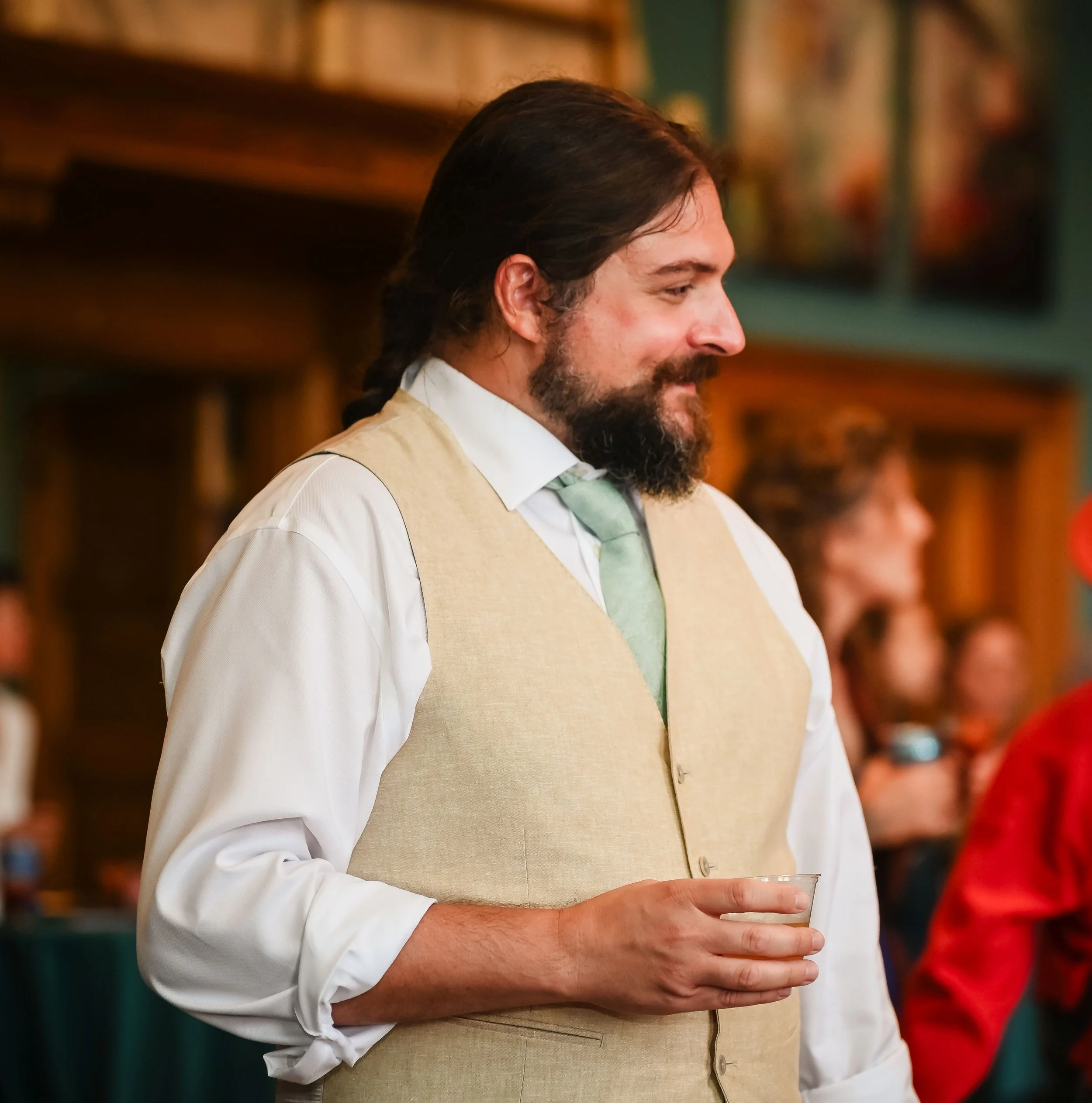
BIO: Seth Frame's work has appeared or is forthcoming in Blood+Honey, The Argyle, Sky Island Journal, Great Lakes Review, and Thomasonian. He is a writer based in Schenectady, New York. His creative nonfiction explores themes of place, memory, and human connection, drawing on his background in archaeology and his years living in the American West.