
Five Poems
by John Franklin Dandridge
decommissioned
I’ll sell my hands before I sell my synthesizers.
I’ll sell my mouth before I sell my microphone.
I’ll sell my ears before I sell my speakers.
Those are the last words from this former infant android
who was created to teach high school kids how to be parents.
It wasn’t enough that we cried, wet our pants,
threw tantrums. Uh uh.
Those kids didn’t learn till us infant androids grew up,
got decommissioned upon graduation,
then sent to an android orphanage.
Once old enough to enter the world on our own,
as far as we knew, we were proper humans,
fated with the traits of the kids who raised us.
So some of us went to college, took jobs, and had kids of our own.
Now that I’ve lost everything that made me human,
I’m more me than I’ve ever been me,
but terribly broke. And no one’s hiring an aging android
when they can hire an actual person;
not anymore, now that people finally learned the difference.
So if I don’t sell everything of value I own, I won’t survive,
ceasing to exist in but the stories kids tell kids in their dorm rooms.
But before I sell my leather jacket,
I’ll sell my chest, my back,
my arms,
my shoulders.
And before I sell my leather boots, I’ll sell my feet.
And before I sell my silver rings, I’ll sell my fingers.
Living is unbearably expensive,
but don’t I sound too good to die?
I’ve failed at being a man,
but don’t I look too good to die?
Please tell me I’m too good to die.
Screamship
Impatient is the sun rushing towards sunset. Midnight and noon become one under artificial darkness, flushing out each geometric formula between calendar dates and the fate of insects. Some struggle back to their nests. Others are cursed with an expanded measure of perception.
Brief nudity. Sword manners.
Mixed salts. Prison-made clouds.
School district encryptions. This city is illegal.
Home, still homesick. The heat of some no-love kitchen gets so hot that the apartment becomes an animal, a holy animal. It’s flooded with colour. Cleaned with fire. And of the dream ignited by the light bearer within its belly, well it explodes.
And as my Screamship soars over and beneath an enormous language sea, I seem to recall, or feel some urge, to let go of all use of bitter thinking.
the Winter Speeches
We ate this city,
dined on high rises
gobbled every last avenue—
slurped down slums.
And after chewing up
all the road signs (billboards),
we pointed our forks towards the parks,
historical landmarks,
then cleaned our teeth with whatever trees were left.
Yet our enemies would have their spring.
Sound asleep in a cave for so long,
billions of humans in our abdomens,
they repaved the way with cobblestones,
drove their carriages over our fattened faces.
And buried us inside black/white TV sets.
You would’ve thought we learned our lesson
when we made conceiving children illegal.
But once what was considered regal,
so perfectly evil,
no longer deceived the new species
who made space stations of our eyeballs.
what used to be water
Due to the socio-philosophical side effects from the rapid
evolution of technology, come Friday, no one in America will
ever fall in love again. And it won’t even be sad. No one will even
notice. Because by Friday, everyone in America will have been
replaced with non-organic versions of themselves. Credit this
experiment to the Corporation that Owns Earth. They’ll take
responsibility for quadrillions of subatomic microchips spilling
into the atmosphere without a warning to ignore. No one looks up
at the sky that’s no longer sky. No one pays attention to the clouds
where tiny rockets shoot down into bodies of water, rendering
every drop digital. No one spots microscopic robots skeeting
semen across cornfields, their offspring coughing on trees.
This is your secret, electric disease. First, it’s in the sunlight,
then your cereal. Next, it’s in what you read, what you dance to.
It’ll be the voice you hear when asking yourself, ‘Is it too early
to celebrate? Too late to escape?’
Cos you know how it goes: You are what you consume.
So how long have you been you? Perhaps you’ll sort that bit
out by Friday, when babies and light bearers become the last
victims of this imminent transition. Every choice made in
the USA will be outsourced down to its molecular conception
by Friday. Watch out for advertisements between your thoughts,
credits to close out your dreams. Those names on the left,
children who cried, ‘Consciousness is not in my mind.’ Those
on the right are the names of reAmericans. Don’t think of them
as persons, but persons as a place, somewhere that appears
when they find out where. But here’s the rub. Inside those
subatomic microchips are quadrillions more subatomic
microchips. And so on. And so on. Each imprinted with a hell
for those who believe in it and a heaven for those who can
afford it. Every day is a holiday; every day a tragedy.
Will you come home when the World Series is played against
the landscape of civil war, and in a maze of instant replays, you
search for an edge to cling to, an edge to jump from? Who will
bring you home when most people wouldn’t find home while
fast asleep with maps on the back of their eyelids? They repeat
themselves in memories they call today, everyday, till Friday.
They don’t have names. They take names from the Corporation
that Owns Earth, for corporations are people, too. But those who
own Earth ain’t giving out names for free. Instead, they sell lives
that have been lived quadrillions of times. On Friday, consciousness
becomes currency, and everyone buys what already belongs to them.
So to maintain an illusion of authenticity, reAmericans cease
repeating themselves. They take your name, my name. We search
for home, home not as in a place, but a person, someone who
brings us home. And for the sake of our sanity, it’s best we
pretend we’ve always been here.
Funny how we were once prisoners of artificial darkness,
strung from rain machines, and posed as scarecrows for UFOs.
After serving so many life sentences, Friday came. The sky
turned pink from the fumes of tears; not just our tears, but also
tears of children without coins for the wishing well, tears of parents
protecting the hill that the well stood upon, and tears of grandparents
filling pails with what used to be water. Remember crawling inside
that well to never come out? But we never reached the bottom,
didn’t know we were in the same well till meeting our digital ends,
thus realizing that the well wasn’t real. And the hill had long since
caved in on people climbing over each other, reaching for what
they saw, but couldn’t feel. There were quadrillions of it, too
big to see more than one of it at once. Those closest called it
their own because they saw their names on it. Those furthest will
call it home because they’ve never been home. And we call it love
because we fall in it.
the candidate
When we were 11, Kory dreamed of being a baseball
player, destined for the major leagues, he was. But
20 years later, he became a cop. And he hasn’t
dreamt of baseball since the Cubs won the Series,
even when patrolling by Wrigley in between
doubleheaders.
When we were 13, Martin swore he’d be
a doctor; not the kind of doctor who fixed
bodies, but the kind of doctor who fixed minds.
His degree in psychology led to a job in technology,
so he settled a few pay grades above fixing
computers.
When we were 15, Don Watts predicted
he’d be a criminal. Only, he didn’t imagine
he’d become the type of criminal who became
a criminal when he nicked six oz.s of blow
from the nine kilos his brother stashed in his
basement.
And when we were 17, I dreamed of being an MC,
the illest MC in this city, this city I built, for at 17, I also
dreamed of being an architect. Thing is, I come from a
long line of poor, dreamless bastards, bastards who failed
themselves, and failed all the bastards who followed them in
line.
So on Tuesday, 21 December at 1:20 a.m., I am born the first
born son of a first born son of a first born son of a bastard.
And I should’ve known at 10 upon reading that fortune
printed at the bottom of the comic strip I pulled from a block
of Bazooka Joe gum. It read: You will be an architect if only you
plan.
And I should’ve known at 19 what I didn’t know at
16 and still didn’t know at 21: by the time I get where
I’m going, I’ll have gone it alone, holding six figures
of student loan debt, unemployed, almost homeless,
estranged from my children, and to no one’s surprise,
I’ll have become a perfect candidate for suicide.
Yet I knew that I’d sooner be poisoned by a former
lover before mustering up the nerve to swallow
so many pills, before summoning courage to jump
from a bridge, before addressing a letter: Dear
Everybody.
Instead of committing suicide, I imagine dying over and over again in different
ways. Instead of committing suicide, I watch Desperately Seeking Susan—for this—
the 18th time now. Instead of committing suicide, I imagine returning to life over
and over again, each life, a wee bit different than the last. And just before I remember
what’s happening, I no longer recognize myself. And instead of committing suicide,
I imagine dying then returning to life, dying and returning to life; each life a wee bit
different from the last. Before I remember what’s happening, I’m dancing to the song
that’s been stuck in my head for the last 18 lives, the song Susan’s grooving to in the
discotheque.
Susan doesn’t know this discotheque is in my head. And as she dances, Susan doesn’t
know she’s singing this song in my head. Susan doesn’t know her name isn’t Susan. And
wouldn’t recognize herself if she did. But she sees me dancing. And through me, she
sees herself singing. So instead of committing suicide, ‘Now I know you’re mine. Now I
know you’re mine. Now I know you’re mine. Now I know you’re mine. Now I know you’re
mine.’
And when we were 24, Wallace decided to become an actor. It took convincing from
three of us in our favorite booth in our favorite bar. Oh, our old Damen Ave. spiel never
failed, whether spoken to hold up broken hearts, or slurred in such a way to make us
stay out late on work nights. And with that old Damen Ave. spiel spilling from his lips,
Wallace would’ve nailed his first audition, but he’d scored a roll in a full time job with the
city.
And when we were 36, Zeech chose being a bartender over being a painter.
Having been drinking more than painting, damned if he didn’t get paid for what
he was doing when he didn’t get paid for what he did. But when opportunity came
a knockin’, Zeech was pouring bourbon in the back room, fixin’ to slap the shit
outta Damen Ave. Talkin’ bout the city ate his paintings and blamed it on his feast of
friends.
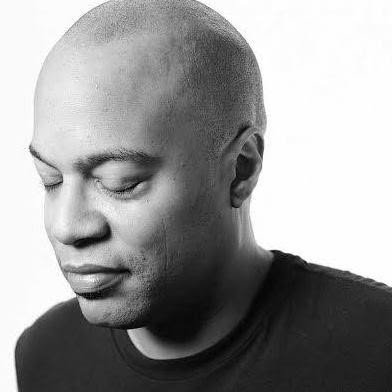
BIO: John Franklin Dandridge received his MFA in Poetry from Columbia College Chicago. His chapbook, Further Down Rd., was published by Fast Geek Press. He has short stories and poems published in Callaloo Journal, Rigorous Journal, New Reader Magazine, Allium, Court Green, Hoxie Gorge Review, and Former People. Franklin lives and writes in Chicago.