
At the Speed of Sound
by Sheldon Lee Compton
The boy peddled hard and went faster. Later in life he would stand in awe at the foot of the steep hill on High Street where he would speed like this into the blind curve at the top of the hill. Today, he wore his plastic Chicago Bears helmet and watched the new speedometer his stepdad installed between the handle bars the day before.
It was 1986, the year Top Gun hit theaters, and the boy was trying to reach thirty miles an hour and break the sound barrier. The older boys in Virgie laughed when he told them. Maverick don’t break no sound barrier in Top Gun, they said. What the hell, they said.
New graph - After trying all day and never getting to the thirty mark the boy asked his grandfather that night about the sound barrier. Where had he heard about it?
That’s what Chuck Yeager broke way back, he told the boy. It actually did happen. He told the boy he must have heard his dad talk about it before he died. Your dad was a big fan of Yeager, his grandfather said.
The way his grandfather’s face looked when he said his dad died was how the boy figured his face must look when he thought about him at all. He did remember all the talk about Chuck (that’s how his dad said it, never the last name). The boy never heard anybody else talk about Chuck so he thought it was a military thing. His dad served in Vietnam. He was sick when he got home, years before the boy was born, so he never saw those early years.
He pedaled faster the more he thought about his dad. The speedometer was ticking just under thirty down the hill but leveled back off to nothing as he glided into Virgie Baptist parking lot.
Four older boys were playing basketball on the iron goal one of the church members put up the summer before, the back board torch cut and wielded together from a huge slab of tipple steel. They had taken a break and two of them were behind the church but right at the edge enough the boy could see them. They handed a bottle back and forth. One having a short drink from it then other, doing this fast, and laughing.
It was strange, he thought. Had the feel of something darker, more fun, than just drinking pop because it was hot and they’d been playing basketball. And, besides, who ever laughed so much without saying anything? Unless something funny happened before he got there.
Winter now, years later, and the man felt how the bright energy of those days had disintegrated to a monochromatic wash. The hillside behind the old basketball goal (only the pole left now, the metal slab who knows where and who knows how) is gray and off-white, the bushes and vines and grass no longer green but light gray, the ground beneath visible as randomly sized squares and rectangles the opposing color of old bandages. The mountain looked sickly.
He stood with his hands in the pockets of a thin jacket. In the rings of his nostrils caked, blue powder moved in and out as he breathed, sadly studied the tiny area behind the church were the older boys had been drinking then. He thought he would feel different standing in the same spot years later; he’d been sure he would be capable of seeing through a more mature lens, that it would give him some kind of peace, even a little would have done fine. But the place only made him feel as if he was also fading to the grainy black and white of one of the old shows he watched growing up — the Stooges, The Munsters, The Honeymooners. It was always the old shows back then.
The old shows brought back the boy; the gray and dingy white rose again into full color. The four older boys, two of them drinking behind the church. The boy had decided it was beer but wasn’t entirely sure; the bottle was big and cubed and clear so he could see the liquid inside, brown as creek water but clear too with thin bright yellow slivers winking in and out in the sunlight.
The taller of the two boys drinking bent double all of a sudden and threw up. It wasn’t like when they threw up after football practice. All that came up from him was the beer or whatever was in the bottle. After he was done, he fell more than sat against the hillside and groaned. The other three laughed for a long time and then he threw up again. This time it was something else, and the boy turned away, beginning to sick seeing it.
It seemed the others noticed him for the first time then. After they’d forced him to drink what was left in the bottle, which amounted to roughly four or five tablespoons full, he threw up too and went home. He went to bed and wasn’t awake again until morning, late and panicked, forgetting it wasn’t a school day.
The man pulled his coat tighter around his waist. It was on his mind that it might have started that day. It was as good a theory as any other. He wished now he would have had a worse reaction than only throwing up, getting teased a little, then essentially sleeping it off until morning. The routine. It didn’t change much over the years, and it took strength to survive it. But there were casualties. Not everyone counts living through something as having survived it.
He walked the parking lot back to his truck. Behind the wheel he pulled his cap down tighter onto his head and rolled the windows down. Three rapid, frigid breezes cruised through the cab of the truck. He popped into reverse, backed, slammed it into drive, and drove slowly to the top of the hill. He swung a sharp U-turn in the first driveway he came to and sat idling. He adjusted his hat again and pulled out fast; forty would be no problem today. Not everyone counts having died as having escaped.
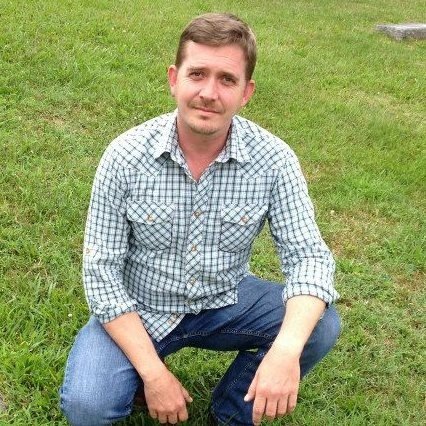
BIO: Sheldon Lee Compton is a short story writer and novelist from Kentucky. His novel, Oblivion Angels, is currently nominated for both the Chaffin Fiction Award and the Weatherford Award. The Independent Fiction Alliance named his novel, Alice, a 2023 Best Book of the Year. His collection, Fallujah Boy and Other Stories, is set for publication in May 2026.