
Three Poems
by Phillip McGough
Lemuria
Preamble: In the Roman calendar, the Lemuria was held on May 9, 11, and 13.
It was not a festival of honoured ancestors, but of the restless dead—
the lemures, vengeful, unappeased, unappeasable.
The head of the household walked through the house at midnight,
casting black beans into darkness, reciting the old formulae,
striking bronze to drive the shades away.
They were not easily driven.
Not the good dead—
those remembered with violets,
garlands hung on cracked urns—
but the others, the nameless,
the children uncarried to full term,
the women drowned in Tiber-mud.
Black beans.
Nine whispered phrases.
The paterfamilias, barefoot,
mouth bitter with pine seeds,
bronze clashing like small thunder.
Shadows coil at the lintel.
They do not leave.
Ovid says they hunger, like us:
for bread, wine, oil.
But what they ask is stranger:
a name restored,
a face re-entered into the marble.
Hear them now.
Hear the rustle of reeds at Ostia,
a cough in the Subura,
the rattle of slave-chains
still warm on the wrist of the century.
No single voice.
They are chorus, palimpsest,
the unquiet syllables of world-empire:
“Remember us—
the debt unpaid, the line uncarved.”
Bronze rings the atrium.
Still, still, those dead remain.
Samhain
The doors of the sídhe, opened.
The groan of the hinge in the year.
I went down to the fire meadow at nightfall,
because I knew you would be there.
I carried a lantern carved from turnip flesh.
No wind, but the wick spat:
it smelled of tallow and earth.
Behind me, cows locked against spirits,
bellowing as if flayed.
Crows, tearing at the thatch.
The air, ripe with blood, copper.
You were waiting—not pale, not ruined, just as you were.
But a crowd came with you, and I knew:
you were of their court now.
Banshees keening like kettles.
The Dullahan, headless,
riding a black mare that bled sparks.
Infants, unbaptized, paler than wax.
The host pressed around you
like thorns guarding a blossom.
I called your name, the banshee echoed it back,
wrong, split down the middle. The horse stamped flame.
You raised a hand—
and my lantern split in two, worms pouring from its skin.
The crowd of spirits pressed nearer.
Children with hollow faces licked at shadows.
Tiny hands tugged at my sleeve.
I reached for you, your fingers brushed mine—
and I thought: the door is wide, I can take you back.
But you drew away. Not dragged. Not forced.
You turned of your own will
to follow them
back into the hollow of the dark.
When I woke it was morning.
The lantern gone, the field empty.
Only my wrist, marked with your handprint,
black, burned,
and the stench of turnip flesh
rotting sweetly in the frost.
The Ghost at Christmas
It was not the ghost of Scrooge’s ledger,
or a child wrapped in the chains of a dream,
but a tall man in an ordinary coat,
standing by the door as the lamps were lit.
He had the face of someone
who once believed the world orderly—
that bread and wages were won by reason,
that candles burned
because God permitted them to do so.
Now his eyes contained a vast vacancy,
like a cathedral locked for centuries.
At first the household mistook him for a visitor,
an uncle delayed by snow,
a neighbour with seasonal tidings.
We set a chair for him at table, poured a little wine.
He sat, but lifted nothing, spoke nothing.
Later, when the bells began to sound,
he walked to the hearth.
He touched the fire but did not burn.
He touched the manger, and the figures seemed to bow,
not to the Christ-child, but to him—
to what he represented:
the broken parts of all the old stories
that refuse completion.
At midnight, he turned to go.
Snow swirled through the doorway
though the door had not opened.
He left no footprints. The wine remained half-drunk.
The children asked,
Was he real?
And the elders whispered,
Perhaps more real than us.
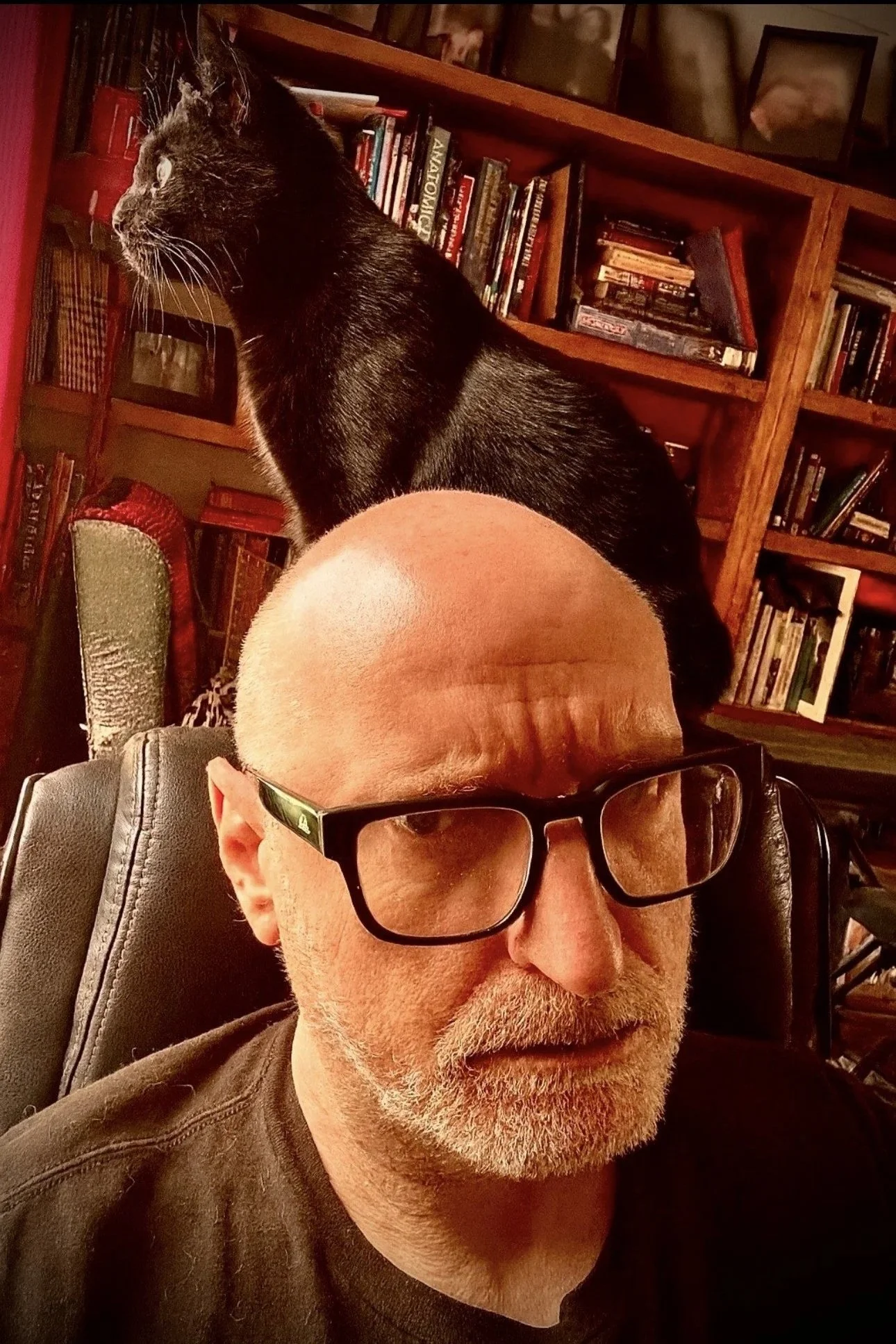
BIO: Phillip McGough is a UK-based freelance writer and poet with a growing following on Instagram under @manifest_gothic. Thusfar, he as been published in Azarao Literary Journal, Wildscape Literary Magazine, Poetic Reveries Magazine, and Paper Moths online poetry zine. Two poems forthcoming in refugee-themed anthologies (2026).