
The Lobstermen
by Thomas Belton
The lobsterman, like his prey, is no less changeable and predatory in his behavior. Typically, a church-going and family man ashore, once on the water he will do anything to get his pots set, lobsters in the hold, and products to market. “Katy, bar the door” should anyone get in his way, for in the past years there have been repeated shootings on the grounds with disputes over unspoken rights to ancestral sets, resulting in shotgun blasts across gunnels and waters stained red with boatman’s blood. I didn’t know any lobstermen when I was growing up in Jersey City, a wayward sliver of land across from New York City, except possibly for those I’d seen at the Clam Broth House in Hoboken as they chowed down after a long trip offshore. The Clam Broth House was a favorite among the locals, a place where lobstermen, longshoremen, and local politicians all rubbed elbows on the shell-strewn bar loudly discussing sea currents, stevedoring, and crime bills in the legislature.
It wasn’t until Governor Kean signed his dioxin Emergency Order that I was introduced to this fiercely competitive world of seamen. Back then, I’d only been employed for a few years as a marine biologist and an environmental scientist for the New Jersey Department of Environmental Protection when he made this announcement. Governor Kean may have a patrician accent and a lisp that Cary Grant would have envied, but it belied his sixth sense for saying the right thing to the working men and women of New Jersey. He knew that in such a small and built-out state that environmental protection was not only good sense but good politics. He also believed in the personal touch and was never nervous about mingling with the public to explain his policies. Thus, when we briefed him about dioxin in lobsters, and the possible linkage with ocean dumping, he insisted that we hold a meeting with the Lobstermen’s Association before he alerted the public. He also insisted that we do it on their turf at a closed fish factory on Sandy Hook Bay and without any state police protection. He felt that the presence of uniforms would send the wrong signal. A call was then made on shortwave for the lobstermen on the water and those ashore to come in for the meeting.
My boss, Tom Burke, and I then drove across the state to the factory unescorted to talk toxicology and risk assessment with a collection of salt-hardened men. We were nervous because we knew they would be angry, because the lobster advisories would negatively affect their industry, their pocketbooks, and probably take food out of their children’s mouths. The lobstermen came in like irate locusts from their offshore sets and gathered on the top floor of the factory in a wood-paneled conference room. We could hear them before we could see them as we looked up, the building’s only light casting shadows onto the window of the hundred men that pressed into the wood-paneled room. As we drove up the driveway, the darkened Belford fish factory looked penitential and threatening to me like a shadowed cathedral filled with drowned fishermen. Across the bay, we could see the glittering lights of the Verrazano Bridge in the gathering dusk, the skyscrapers of New York City barely visible through the bridge’s pylons. This added to the surreal nature of our mission as the distant city looked like a toy snow-globe of a child’s bookcase. The fish factory stink was overwhelming, as we walked into the silent building, wandering amongst the fish oil rendering equipment and troughs filled with depurating clams.
The only way into the meeting room was through a door clogged with men in faded yellow rain slickers and black rubber boots. We pressed in through in the bodies sideways, passing men in flannel shirts and watch caps, their hard looks a harbinger to “talk straight” and “keep it simple” or don’t talk at all. We edged into the front of the room single file and turned to meet their gaze. Introduced by a lawyer who represented the Lobstermen’s Association, I suddenly realized that the only way out of that room was back though the angry crowd of men. Not a good beginning!
What ensued then was an extraordinary bit of rhetoric on Tom Burke’s part. He tap-danced his way through the details of what our dioxin data showed and how we only wanted to alert the public in an “advisory capacity” and that we were not there to shut down their fishery. What followed was a lot of shouting and ugly looks until someone shouted, “Bullshit!” Burke took up this challenge with a quick riposte and said, “I know a friend of mine who spent some time in Vietnam wouldn’t think so.” He told them about “Operation Ranch Hand” and the veterans who waded through denuded jungles sprayed with Agent Orange and the debilitating health effects that experienced when they got home. Then, he added that the factory that made the pesticide was the one that might have contaminated their lobsters.
This caused a galvanic shift in the demeanor of the men, a stiffening of their bodies and a more intense gaze. I surmised that many of them were probably Vietnam-era veterans. And the more Tom talked, the more their anger deflated, as heads began to nod and a less vehement stare came from under their watch caps. What followed was less shouting, more questions, and eventually a begrudging conversation about the health of their own children who ate more of the contaminated seafood than anyone else in New Jersey.
A few minutes later, we pressed through the body of men and out into the darkened factory to our car. It had snowed while we were inside, covering the shoreline with a scarf of white and a slick of ice on the dirt road that sent our car skidding onto the highway. So icy was the road that we decided to stop and wait it out at a local diner. It was then I noticed it was Valentine’s Day as the menu had sweetheart specials scrawled in chalk on a board as we sat down. Bruce Ruppel mused that he felt terrible, like we’d just delivered our own version of Al Capone’s “Saint Valentine’s Day Massacre,” lining the lobsterman up against a wall and shooting them all down. I agreed but suggested it was still the right thing to do.
I just hated being the messenger!
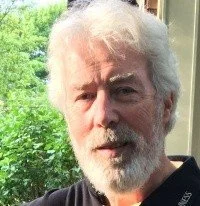
BIO: Thomas Belton is an author with extensive publications in fiction, poetry, non-fiction, magazine feature writing, science writing, and journalism. He is a marine biologist, an environmental scientist, and a public health official for the State of New Jersey. His professional memoir, “Protecting New Jersey’s Environment: From Cancer Alley to the New Garden State” (Rutgers University Press) won “Best Book in Science Writing for the General Public” by the New Jersey Council for the Humanities. https://www.rutgersuniversitypress.org/protecting-new-jerseys-environment/9780813548876