
Jergen’s Ears
by William Brasse
Jergen was a middle-aged man with glasses that he called spectacles. He was far from handsome, and some people thought he looked like something out of a horror movie. The spectacles were not responsible for this. His face, unspectacled, appeared to have been put together haphazardly. The spectacles just made him look like a monster who wanted to learn to read. His ears were a match to his face: protruding and unattractive. When he was a child, his mother had often stood behind him at the breakfast table and put her hands over his ears, clamping them tightly to his head in the hope of suppressing their indiscriminate growth, but this home remedy had not worked. When people first saw him, they stared as one might stare on first seeing a portobello mushroom. Surely, they thought, this is a freak or a mistake.
Jergen had been married and divorced. His wife had learned early that he would give her little basis for leaving him, but that he would likewise give her little reason to want to stay. She stayed until the children were teenagers, then abruptly packed up and left the bunch of them to fend for themselves. The children missed her dreadfully and never adjusted to having only the one parent, and that one rather misshapen and uninteresting. Jergen coped as best he could with their upbringing. He didn’t miss his wife. He wished she was there to deal with the incessant teenage problems, but otherwise rarely noticed that she was gone. On the few occasions that his son appeared at the breakfast table, Jergen wanted to go and stand behind him and press his ears to his head. Not because the boy's ears were large, but simply as a gesture of affection and concern, of showing that he wanted to do something to protect the boy from the problems of manhood and the offhand cruelty of the larger world.
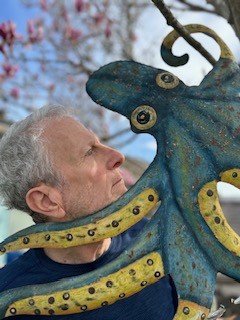
BIO: William Brasse continuously slogs through the jungle of literature. He has written plays, novels, short stories; comedy, drama, history, biography, myth. He has even ventured into essays but freely admits that poetry is beyond him.