
The Crack
by Annemarie Neary
Late summer in the fleeting dark, and the road outside as still as winter. Anna is in the room that overlooks the Common. She is up too late, unable to tear herself away from more alluring lives, trawling the web for other people’s colours. When she hears the crack, her laptop tells her it is 03.52. At the window, she squints beyond the long dark garden, seeking out the boys who colonise the bus stop, the coming-home crowd arsing about and breaking things.
Out there, there will be watchers, waiters, skulkers, seekers. Desperados and lunatics. Ordinary loners. Even now a girl is moving through the Common, spotlit then lost then spotlit again. Each time the girl vanishes, Anna grieves for her. Those new streetlights, they do not make her safer. They pick her out. You should do as I do, Anna thinks. You should stick to the dark. As for the crack, Anna searches the flat for something fallen. But there is only her.
Next morning, she wakes to a world rinsed clean. As she rushes out the gate, already late, a woman with a clipboard boxes her in between the bus shelter and the front wall of next door’s garden. With a smug little smile, she flicks her Met ID.
‘You must be from Flat Two.’ she says. ‘Anna, right? Hear anything odd last night, Anna? Anything unusual?’ She fixes Anna with a look both casual and anything but.
Anna says no, of course. Always no. No and no and no. Move on.
But the woman is walking in lockstep with her now.
‘I know you’ve probably got work to get to, but this will only take a couple of minutes of your time.’
Anna doesn’t do officialdom. She doesn’t do forms and clipboards. She doesn’t do police. What if they can smell fear, these people? What if they’ve been trained to sniff it out?
‘Last night,’ the policewoman says. ‘A shot was fired.’
‘You mean, a gun?’
Not the sharpest tack, the copper’s face is saying. ‘Unusual calibre bullet. Nobody was hurt, thank goodness. But if you did hear anything...’
‘I heard a crack.’
‘A crack?’ The policewoman writes that down, a little dubiously, and asks what time.
‘Three fifty-two.’
Too precise. Too scarily precise. Anna glances up at the next-door windows and, quick as a flash, the policewoman reads her mind.
‘Oh, you won’t see anything. Not from here. No shattering, you see. Not with this type of bullet…’ The policewoman seems momentarily entranced by the apparently intact windows, and then it’s back to brisk. ‘That’s all for now, Anna. You see? That didn’t take long, did it? If you have any more thoughts, you can contact me on this.’ She hands Anna a slip of paper. ‘Call me Alice. I’m the investigating officer. And that’s my direct line. OK? And if I have any questions… well, you’re on my list.’
Her list? Anna is not on the electoral roll and the NHS has forgotten she exists. But now she’s on a list? She enters the number on her phone, just in case — Alice (cop) — discards the slip of paper.
Anna froths her way through the morning rush. Around eleven, the school drop-offs depart, and the new mums arrive, angling their buggies through the tightly packed tables. Anna is fascinated by these women with their mastery of burps and shits and sleep cycles. Does she envy them? Well, no but… if things had happened differently.
For now, though, Anna coos at their babies, presses their panini, slides tall slices of cake from their pre-cut positions. And eavesdrops on their conversation. She picks through the usual stuff for any mention of the crack, the shot, whatever. But there is nothing at all. She doesn’t trust herself to broach the subject, and an unusual calibre bullet settles deep inside her chest.
The baby-barista who’s on with her today allows a queue to form just as the workers from the IT place start to arrive. Anna snaps at him, which she hardly ever does. When he recoils, she feels as if she’s whipped a puppy. Is she the bully now, is that it? Or can she blame the bullet?”
Sometimes, Anna wakes to the certainty that she is dying. Because she might indeed be dying. She hasn’t had the vaccines they recommend, the check-ups and the tests. When she considers all the drugs He made her do, she can almost feel a timebomb ticking in her blood. And now, on top of that, the bullet. An intimation. An inevitability. By the time the lunch run ends, apprehension is weighing on Anna’s chest like a sleeping dog. Familiar and unshiftable.
To give herself a breather, she sends the baby-barista off around the corner for a smoke. Take your time. She decides to make herself a tea, something virtuous, grassy, green. She reaches for a paper cup, runs her finger across the child-drawn house that is the café’s logo. Four windows, one door. A chimney with a curl of smoke. We’ve all drawn such houses, even those of us brought up in tower blocks. Dropping a used cup into the bin, she notices a speck on one of the drawn-on windows. She scratches at it with her finger, but it doesn’t budge. Like a bullet hole in a pane of glass. Each cup she uses after that, she draws on a tiny dot, an act of personal voodoo against the thing that terrifies her. Him.
She tries not to think of him, because he poisons every day he occupies. But it is his style, all right, the long-range pop. No blood, no whites of her eyes. As for an unusual calibre bullet, she doesn’t doubt that he could rustle up something bespoke. Could he have found her though? Really? She looks to her fences.
The café job has been ideal. No National Insurance number, nothing like that. Zero hours, cash-in-hand. There is no link between Anna and the girl she was before. She is a blank page, a cipher. Her room is a sub-let of a sub-let of a sub. She pays cash in an envelope once a month to the weirdo out the back. She keeps it tight. She doesn’t even know who lives next door, though she has seen two new women recently walking arm-in-arm. One in jeans, the other in a floral dress. As Anna wipes down the machine, stacks the cups for tomorrow, she realises she has seen one of those women at the window of the equivalent flat to hers. Maybe that bullet was meant for them.
After work, Anna goes visiting. She brings round ridiculous biscuits from the café’s ‘premium range’ — lemon, bergamot, lavender. The girl who answers the door, the floral one, still has her coat on, a messenger bag slung across her body. She looks askance at Anna, then at the fussy little bow on the cellophane bag.
‘I’m Anna. From next door...’ Anna nudges the biscuits towards the girl. ‘I came because I heard about the shot.’
Miss Floral gives a practised little shrug. ‘What the hell, right? We figure it must have happened after —’
‘It was three fifty-two.’
‘Really? Wow.’ Done it again. Way too precise. Miss Floral glances up at something on the wall above Anna’s head.
‘I was awake, you see,’ Anna says. ‘Last night. I was at my desk.’ There is an awkward pause. ‘I’m sorry to barge in. You’re probably about to eat.’
‘Actually, we are but.. Look, come and meet my girlfriend. I’m Hattie, by the way.’
Their front living-room is Anna’s bedsit in reverse. Sparser, though, as if they haven’t quite unpacked yet. There is a piano that she’s never heard played, shoved right up against the party wall. Perhaps it belongs to the landlord, she thinks, a permanent unplayed fixture. It’s only now that she notices the girlfriend sitting in the bay window. You wouldn’t find me sitting at that window, Anna thinks.
‘Our neighbour,’ Hattie says, handing the ridiculous biscuits to her girlfriend. ‘Anna. She heard the shot.’
‘Hi Anna,’ says the girlfriend, her face indecipherable in the gloom. ‘I’m Fern.’ Her accent is pronounced, but difficult to place. Not quite Polish, but somewhere close. Fern can’t be her real name, surely. Not with that accent. Unless it’s something else, spelt something other.
‘Please,’ says Hattie. ‘Have a seat’
Short of perching herself next to the girlfriend, there is only the piano stool, so that’s where Anna sits.
‘Don’t tell me you’re going to play for us?’ Fern laughs unpleasantly, and now Anna feels like the interview candidate when it was supposed to be the other way round. ‘You’ve come about the window, Anna?’ She makes it sound as if Anna has come to replace the pane.
‘You were very lucky,’ Anna says.
‘Not really,’ says Fern. ‘We were in bed.’
She is the older of the two. A bit of a know-all, Anna thinks. The type who likes to wrap her wit in something sour.
‘Aren’t you worried, though?’ Anna says. A small retaliation.
‘Why should I be worried?’ Fern gazes out at the Common, her occupation of that sofa so assured it’s impossible to believe it was ever occupied by someone else. ‘You’ve come to swap theories, Anna? Go ahead then. You first.’
‘It was probably just some kids,’ Anna says, that being the most favourable scenario for them all.
‘Kids?’ Fern almost snorts the word. ‘What kind of kids? I don’t think so. Did you not listen to a word she said?’
‘The policewoman,’ Hattie says. ‘She said it was a sniper’s bullet.’
‘She said unusual calibre,’ Anna corrects her.
‘Perhaps she didn’t elaborate with you,’ Fern says. ‘But that’s what she told us. Sniper’s bullet, for sure.’
`I don’t know what that means,’ Anna says. ‘Do you know what that means?’
‘I imagine it means the guy was a sniper,’ Fern says. ‘Don’t you? And to be clear, we have zero criminal connections. We know nothing of that world. I provide online editorial services, and Hattie teaches at a local primary. But you, Anna. You look perturbed. You come in here and spread anxiety. Why is that? Are you afraid that bullet was meant for you?’
Silence.
‘That was probably a bit direct,’ Hattie says mildly, glancing over at Fern.
Fern shrugs. ‘Forget the kids. Anna. Just tell us what you really think.’
And then the floodgates open. Theories stream out of her. Stalkers and gun weirdos. Drug barons, rappers, far-righters. Anyone but him. Anna can see that they want her to shut up, but she can’t bring herself to leave that room, so like her own but somehow safer. Talking is a warm bath. Talking is sweet surrender. She winds up with a flourish. ‘Why would it be a sniper? Snipers don’t miss.’ As if she knew.
‘Indeed,’ Fern nods. She seems deep in thought. ‘They do not.’
Hattie, still lurking in the doorway, is plainly not a philosopher. ‘Well, it’s over now and no harm done,’ she says, chewing at her pearly-pink lip.
Fern, though. Fern is still fixed on Anna. ‘If you have concerns,’ she says. ‘Why not take them to the police? That woman—'
‘Alice,’ Hattie says.
‘Alice, whatever — the blonde with the clipboard. Best talk to her.’ Fern turns to the window, to the Common. And, just like that, Anna is dismissed.
Hattie shows Anna out, closing the living-room door carefully behind her.
‘I picked a bad time,’ Anna says.
‘Not at all. It’s just… none of this is easy for Fern. You weren’t to know.’
Lucky Fern, Anna thinks, having her own interpreter.
‘To have lived through a war, you see... it leaves a mark.’
Now we’re getting somewhere. A history. Spilt blood. Anna’s first thought is Ukraine.
‘The violence is over now, of course.’
So, not Ukraine.
‘But such terrible times. Such atrocities. Her father…’ Hattie shakes her lovely head. ‘There will always be those who want revenge.’
‘And the war?’
‘Bosnia.’
‘Ah.’ Anna feels buoyed by that. Shamefully so. A neighbour with a past.
Returning from work the following evening, Anna is sure she smells cigar smoke. Her reaction is immediate, a sudden spike of fear. Behind his back, they liked to take the piss. Those cigars. Fuck’s sake. Always trading up. Anna recognises the fear and puts it in its place. It’s a Pavlovian response, that’s all. There will be some innocent explanation. Chimneys, old houses. Just the weirdo out the back, burning something.
But although it won’t be him, she already knows that’s not impossible. A year ago, she spotted one of his mates in a Tesco Metro near Camden Town Tube. London is like that. Years of anonymity and then a sudden shock encounter. And so, she extracted herself. She moved south of the river and began again from scratch. There are people who know where she lives, of course — her mother, sisters, her three or four best friends from uni — but she brings no one back here. They only ever socialise up West, impersonal places where everyone is a stranger.
Clubs, railway arches, commodities. That was his world. She was a girl in a tennis skirt. A cliché before she was a joke before she was an asset. His asset. She left him when he began to hit her. Hard. When he began to offer her to his mates. When he began pile on the drugs then ration them in return for favours that escalated beyond what she could bear. She left him, and he’d have hated that. Worse still, though, she took his money. An orange plastic Sainsbury’s bag he kept under the bed. His stash. She figured she was owed it, but he won’t agree. And so, she fears his Furies like some ancient Greek.
She pictures him ordering her bullet — something bespoke from some hobbyist old lag. She imagines him peeling off used notes, cigar clamped between his teeth. A handshake in a pub carpark. These imaginings corrugate her brain until she is too jittery to sleep. Like a condemned woman, she goes to her laptop and waits for 03:52 to come around again. When she is still there, bullet-free, at 04:00, she goes back to bed. And this time she sleeps.
At dawn, a storm rips through the Common. It fells old trees that had looked invincible, tears off awnings, sweeps a shopping trolley into the duck pond. When Anna leaves the house, she is on high alert for strange anomalies. A thick lip of fungus on a lopped-off tree trunk. A discarded glove lying rat-like on the pavement. As the early-morning brigade advances, she notes the logos on their coffee cups — siren, leaf, sun. She is pin-sharp in search of messages. Is there significance in the Lime bike left ticking over at the corner? In its single winking eye?
Returning later, she notices it right away. Next door’s blinds have gone, and with them Fern’s high-backed sofa. She knocks on their door. No answer. Peering through the letterbox, she can see right through the vacant hallway to the Common. There is nothing in there but the piano. Hattie and Fern, whoever they were, are gone. Anna retreats down the outside steps and onto the street. By the time she rounds the corner towards the Common, her apprehension has been replaced by a surge of joy. It’s that zero-sum game again. If the neighbours have been frightened off, then that bullet wasn’t meant for her.
As she enters the Common, an asterisk of contrails marks the sky above the bandstand. She goes to the café there and orders a coffee someone else will make. Their baby-barista grins at Anna and tops her cappuccino with a powdered chocolate heart. Lightheaded with reprieve, Anna sits facing the bandstand, surveying with benevolence the passers-by — dog-walker, gilet-woman, stay-at-home dad. A blue-haired girl in Docs smiles at her and she allows herself to believe that it is over. The underpasses and the lockups, the trackie-and trainer accomplices, the thug with the cigar. Yesterday’s nightmare. By now, even he will have other fish to fry.
Opening the door of her flat, she switches on the radio. Evan Davis, calm as a priest, tells her it is five o’clock. Because that’s who she is now. The kind of woman who listens to that kind of man. The evening ahead is full of ordinary pleasures — the Wordle, a microwave curry, more mindless stuff on Netflix.
Inside the kitchenette, though, she senses something out of place. It’s that smell again. More pungent this time. Anna fixes her gaze on the closed door of the bathroom. Something pulses in her head, at her throat. She considers the knife rack, the corkscrew in the kitchen drawer. And then she sees it, still burning on a side-plate, his cigar.
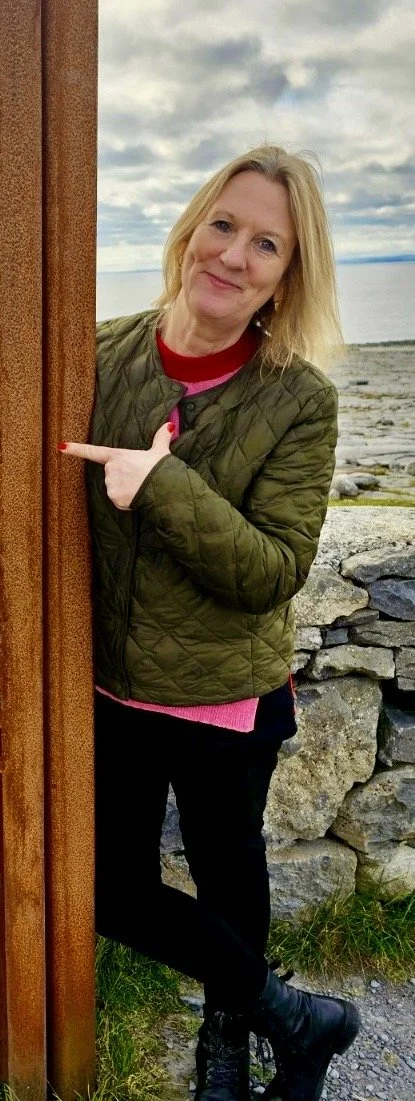
BIO: Annemarie Neary is an Irish-born, London-based short story writer and author of three published novels, two of which (Siren and The Orphans) were published by Hutchinson Heinemann in the UK. Recent stories have appeared in 2025 editions of New Ohio Review and The Westchester Review with older work published in journals such as The Stinging Fly and in several anthologies including The Glass Shore, an award-winning collection of stories by women writers from the North of Ireland. Prizes for short fiction include the Columbia Journal, Bryan MacMahon and Michael McLaverty short story awards. Most recently, she was a 2025 CRAFT short story finalist.