
The Return of the Shrew
by A. D. Canareira
For Nerea
All is lost, save memory.
Fitzgerald
I always carry a book. Right now, I can recall visiting the dentist or lying on a Pontevedra beach, both in the company of a good book. Though, now I come to think of it, that’s not entirely true. I never took a book to meet Clara. Throughout our lives, we all find a way to feel safe and comforted in the face of initial disappointments, fears, anxieties and regrets. The dummy that helps us drift off to sleep, the shelter of a mattress, the murmur of a parent reading or singing a lullaby. On prematurely becoming a teenager, I found myself able to recognize which moments would become transcendental. One of my father’s first lessons was that memory, besides loyalty, is the only undying aspect of our lives. So, I always gave her my full attention. It wasn’t just that I enjoyed every minute we met, I also didn’t want to miss a thing. I wanted to remember each scrap of our conversations, to enjoy her every gesture, with no suggestion of sensuality. To me, the fact she smoothed her hair with her right hand was as significant as Galileo pointing to the earth with his foot while being tried by the Inquisition. Now, having been offered the Spanish and English Literature teaching position at a Waldorf School in Silicon Valley, I found myself filling half my suitcase with favorite books, plus the odd new acquisition. As my flight from Spain to California was going to take around nineteen hours, including a connection in Dallas, I picked out three to travel with me in my hand-luggage, including My Lost City. Personal Essays, 1920-1940 by F. Scott Fitzgerald, published by Cambridge University Press. I’d read a few of his essays, including The Crack-Up as a teenager. Back then, I could only admire the perspicacity of his aphorisms on American life. Now, overflying the Atlantic, I was deeply affected by his writing, as my life too had fallen apart early on, albeit differently to the sensitive writer from St Paul, who unlike his idol Ring Lardner, was fortunately capable of expressing everything in his heart. No-one ever got over my father’s death in my family. And my dog’s disappearance added to my loss of Clara only a few months earlier, had left me utterly dejected. I had an utterly disturbing revelation during the flight. Struggling to discover the past with unprecedented conviction and daring, the author of Handle with Care noted desperately that “A clean break is something you cannot come back from, [it] is irretrievable because it makes the past cease to exist”. I’d rather be tortured by the Inquisition than accept such immolation.
As we approached the Pacific coast, I was forced to stop reading. A great storm lashed Yosemite Valley, tossing the plane virulently around. If the stewardesses hadn’t warned us to fasten our seatbelts, we’d have all been thrown about like puppets.
“Winter storms going on too long this year.”
I’d been sharing a row with this middle-aged lady since Dallas. Despite the fact we were separated by an empty seat and she sat aisle-side, she scanned the horizon through my window and kept her eyes on the view as she spoke. I took this as a sign of respect for me and my quiet reading. Taking the opportunity to sip a little water, I couldn’t help noticing she’d been reading Science magazine most of the way.
“So much rain must be good after all the droughts these past few years.”
Although North America’s first English settlers had experienced the devastation wrought by some of the worst droughts in the past 800 years in Roanoke and Virginia, California’s recent wildfires, had become really Dante-esque, just like the increasingly common and so personally devastating wildfires in Spain. I regretted my comment. It was too obvious and imprecise. Whereas she always seemed to speak accurately.
“Global warming’s resulting in increased atmospheric water levels.”
She was very concerned by the real possibility of the rain on snow phenomena, which would drastically increase immediate runoff rates. Like anyone who loves what they do and doesn’t need to brag about it on social media, she was never pedantic. I loved the beauty of her expressions. And I understood the danger in what she was saying.
We touched down on one of Mammoth Yosemite Airport’s runways on time. The weather was terrible. Those of us foolish enough to open an umbrella immediately found ourselves in need a new one, as the wind thrashing the Golden State bent the spokes like grass. Driven by the wind, the horizontal rain soaked my face in any case. My silent and educated travel companion was the only one to accept the situation without batting an eyelid. Getting soaked was the only option. She can’t have been American.
Once through passport control, I spotted one of the school’s support teachers waiting for me, holding up a sign with my name on. John came from Baltimore and was 27 years old. He’d read, or said he’d read, several of my father’s books. Fortunately, he didn’t mention my stories, because I’d always written under a pseudonym in the hope of escaping my father’s literary shadow. I used an acronym based on the first half of my father’s surname and the second half of my mother’s. And to date, I’d only ever published a few short stories in relatively unimportant magazines in the US - I was pretty much unknown.
En route to the apartment found by the school, John complimented my decision to arrive some time in advance having to start working with the offspring of the four hundred. I asked what he meant.
“Most of the students are the offspring of tech supremos.”
“And there’s four hundred of them? The US may be a republic, but right now one sector’s in charge.”
“That’s right, and their kids are enrolled at the school.”
He handed me a list of my future pupils. It included surnames like: Astor, Goelet, Livingston, Van Rensselaer, Byrd, Lee, Randolph, Carter... The establishment had banned digital technology from its classrooms. I still believe I got the job because I left the section on my social media accounts in the application form blank. They’d caused John a lot of trouble. The school superintendent told me he’d published several posts satirizing the ban on teaching evolution in some states. His mercilessly clever photomontages of the people leading this retrograde curriculum change received so much attention that various creationist politicians took him to court. I certainly hadn’t been expecting my pupils to be the offspring of the tech magnates flooding the world’s schools with tablets and interactive white boards.
“What are you planning to do until school starts?”
“I was thinking about visiting Concord. There’s an old bookshop selling a 1965 copy of the magazine featuring Hapworth 16, 1924.”
He hesitated about asking who it was by, but preferred not to admit his own ignorance, quickly revealing the kind of person he was.
“I guess old magazines are pretty pricey.”
“They’re asking $150.”
“Can’t you get it for free online?”
I decided not to answer and rejected his offer to accompany me to Concord, because I knew that, despite his courtesy, travelling with someone like him would ruin my weekend.
“Hey, by the way! I nearly forgot. You got a letter yesterday.” — It was from my sister. I stowed it safely in my pocket to read when I got home.
The apartment was barely 10 miles from the school, that was nothing in California. It reminded me of the motel rooms that peopled 20th century American culture. Impersonal places full of shabby furniture and horrible prints. Being there was as depressing as being stuck in a Hopper painting. John offered to show me around, but I wanted to be on my own and escape the flat, so I told him I needed to settle in first. As soon as I managed to get rid of him, I called a taxi and headed straight for the bus station. I’d be in Concord in just over two and a half hours, giving me enough time to grab lunch before entering Night End Books. The passengers piled up in the bus shelter out of the persistent rain. It hadn’t eased up in nearly a month.
Although the bus was half-empty, I was sat next to a middle-aged man who looked straight out of a Western. He wore spurs on his boots and deerskin gaiters. A beige bandana was knotted in a triangle round his neck and his fringed suede jacket was topped with a red MAGA baseball cap. He could well have been with Jacob Chansley in the gang who stormed the US Congress on January 6, 2021, some kind of contemporary, rudderless Queequeg. He didn’t seem like someone you could talk to unless you agreed with everything he said. He wouldn’t even be like the Chiltons of Arizona, a Republican couple who installed 29 drinking fountains for immigrants crossing their ranch, despite voting for Trump. Aware of and regretting my prejudice, but feeling ill-inclined to behave as properly as I should, I turned my back on him and seized the opportunity to read my sister’s letter. I’d been putting it off. I swore that even if the Trumpist sheriff did speak a little Spanish, he’d turn up his nose at anything not written in Holy English, and this thought gave me the feeling of sufficient privacy to start reading.
Ashley, I simply can’t believe you left the country without coming to say goodbye. Mum and I know what our family’s men are like (well, all men in general), but this time you’ve really exceeded our worst expectations, even after your behavior over the past few months. I’m not going to beat about the bush. I hope you come to your senses and at the very least reconnect your mobile so Mum can call. I’m sure your running away again is your way of dealing with the fact you were unable to sustain your stable “friendship” with Clara. I’ve told you once, and I’ll say it again: if you keep building castles in the air, one day they’re going collapse taking you with them. I’m really sorry for you, but I won’t let you drag us down with you and I won’t let you hurt Mum again.
I hope all the suffering you're causing bears fruit in the form of an outstanding short story... Obviously, you believe it’s a price worth paying.
Her letter didn’t catch me off-guard, but reading it made me feel like one of the unsheltered bald eagles in the snowy landscape outside the bus window, observing the merciless storm lower across California, whiting out most vegetation, as the boll weevil wiped out entire cotton plantations after the American Civil War. I had behaved badly, but not inexcusably. I left Spain so my mother didn’t have to see the same look she saw in her husband’s eyes the last day we saw him in me. I was trying to find a different way of escaping than my Dad. I still don’t understand. It doesn’t matter how many times I read his books or try and dust off memories of my childhood, every year my memories of him abandon me, as if my filial brain were a sieve and all those moments were sand. He had it all, and I have nothing.
My sister’s letter reminded me of Clara. The most honest thing I could say of her face, was that I had seen her eyes after really knowing her, fortunately not the other way round, as that would have meant falling on the Achilles heel of all relationships doomed from the start. Months after we met, I gazed into her eyes, as if for the first time, and realized that they were disproportionately large and beautiful to me. I would have had to use a fine stroke of White Lead paint like an eyeliner to even begin to convey the depth of her gaze. I wouldn’t have cared one bit if they bulged out like a Caravaggio, were almond-shaped. Or perhaps rather I suppose they would have ended up reflecting the serene beauty that enveloped everything about her. In any case, seeing her qualities in the way she looked had allowed me to discover a new and wonderful world.
I can’t remember that much about the bookshop, except that I entered anxiously, worried someone else might have already bought the magazine. But I immediately spotted the review enshrined in a glass cabinet, sparkling like Sirius, the sky’s brightest star. I read the story in one sitting in the first spot I could find - directly opposite the bookshop. It was ironic and painfully symbolic, hearing the authentic voice of one of America’s great writers, while sprawling on a spurious American lawn. I jotted a few quotes down in my notebook. Such was my ecstasy, I decided to go out and celebrate on my return to Los Altos tomorrow night.
I hadn’t had a drop of alcohol since landing in the US. My father had indoctrinated me in a kind of fervent adoration of character so extreme it bordered on idolatry. Abandoning myself to dissipation was inconceivable. Escaping reality, when that implied any kind of separation from the self, was an ignoble and vulgar hypocrisy. He’d constructed my moral code. His suicide was unbearable: he’d taught me how to be. It took me years to understand all our weaknesses result from desperation, a realization that brought me a degree of peace.
I entered a cocktail bar and ordered a margarita. It was crammed with young people intensely looking to enjoy life. Although they looked much happier than I was, it felt as if they weren’t sure how to go about living. I wobbled out of there and headed for the Milky Way, the main drag in Los Altos, and an area flanked by crystal palaces. A group of young men performed some kind of tribal dance around an electric fountain topped by the statue of a Togva Native American, hands joined, praying for rain; imploring the inclement indifference shown by any divinity from the middle of a paved city square. Barefoot, bare-chested despite the cold and the incessant downpour, they looked a bit like savages dancing wildly, never-ending. They were surrounded by a circle of drummers. Every time the beat reached a climax, they screamed old slogans in dead and unknown languages. Fluctuat et mergitur!
Rained on and very cold, I stepped inside a piano bar. A melancholy, awkward figure sat at the bar drinking mojitos, a Yorkshire terrier sitting on his lap. It was hands joined too much, so I went to sit at a table by the piano. I must still have been half-drunk. Yet I managed to take sporadic notes for my new story. I was happy. This rare feeling wouldn’t last long. I jotted things down in notebooks and made all the necessary rounds of corrections before typing things up on my Freewrite. This portable typewriter was light enough to carry. I pulled it out of my bag and seized the opportunity to read the story I’d written so far. It starred an expat. And only now did I realize it was all about abandonment. Once I’d finished that, I felt for the copy of Leaves of Grass in my canary-yellow fisherman’s jacket.
“First time I’ve seen someone read in a bar.”
Annoyed, I remembered Graham Greene had said Oxford was the only place in the world where you could read a good book in a pub without people thinking you were mad. But when I looked up, I realized she hadn’t wanted to bother me. Tammy told me she’d only just turned 30. The way young men reacted to her around here suggested she had the reputation of being something of a knock-out. We hit it off immediately, because unlike most kids, she didn’t waste time playing a part in a fake romance.
She sat down at my table and ordered sparkling water. She was my opposite - a social animal. In just under five minutes, she gave me her potted history: she came from a county in Mahoning Valley: rust belt ground zero. She’d only been in town for a week. Following the closure of the clinic where she worked as a psychologist, she’d moved West with all her savings in search of her “last shot”. I think she was trying, with every means at her disposal, to escape the inertia of her home city. The closure of Youngstown’s steel plants triggered a decline that was tough for its natives to swallow. It wreaked havoc on people’s mental health. The extent to which the valley emptied was comparable only to America’s dizzying colonization over the past 500 years. Although obviously this time things were moving in the other direction. Anyone who stayed faced daily house fires: it cost more to demolish them, and then there were the ravages of the opium epidemic, spreading like wildfire through the large numbers of unemployed people swelling dole queues as the Midwest brutally de-industrialized and forests reclaimed the land, advancing back steadily day by day. She still dreamed of a better future in the West and had set off on her own quest to find El Dorado.
I started work the next Monday. It was painful at first. The school did have zero electronic devices, except in the office area, which was out of bounds to students, but where we were allowed to use our mobile phones. It felt like I was back at school myself. I kept wondering if it really was possible to turn back time. The parents didn't seem particularly nostalgic. They were simply protecting their children from the screens addiction sweeping the country. While flogging their tech to schools and homes all over the planet, they made sure the police kept fentanyl addicts in ghettos away from their Californian mansions and established a school with a clear and simple creed for their own children: it was designed to allow them to prosper in a safe and healthy environment, surrounded by their kin, with uncensored access to the greatest exponents of universal culture, including authors who ridiculed the American way of life. The compulsory and voluntary reading lists for high school students included volumes by Emerson, Thoreau, Whitman, Melville, Tolstoy, Edith Wharton, Katharine Mansfield, Sappho, Rilke, Rimbaud, Eliot, Orwell, Henry James, Virginia Woolf, the Bronte sisters, Jane Austen, Dorothy Parker, Emily Dickinson, etc. This term they were rehearsing works by Shakespeare, Lorca, Tennessee Williams and Arthur Miller. The walls were filled with songs like Strange Fruit, by Abel Meeropol and Billie Holiday and although it may sound incredible, Here’s to You, Nicola and Bart. The corridors were hung not with class photos, but reproductions of America’s best paintings: Agrippina Landing at Brundisium with the Ashes of Germanicus and Penn’s Treaty with the Indians by Benjamin West, Gilbert Stuart’s portraits of the founding fathers, Cole’s The Course of Empire, seascapes by Winslow Homer, The Race Track (Death on a Pale Horse) by Ryder alongside works by Rothko, Pollock, Whistler and Prendergast that my sister would have loved. The library organized matinee screenings of the classics alongside some of the best films by more recent big name US directors, sometimes even projecting 35 mm versions of works by Tod Browning, Hitchcock, Elia Kazan, James Grey, Fritz Lang, P.T. Anderson, Sofia Coppola, Jeff Nichols, Peter Weir, Stanley Kubrick and Michael Mann.
Because I had to complete a state course to be able to work as a teacher in California, for the first few weeks I took a taxi to Covington Road every night after class. As it was an intensive course, there were no less than three speakers scheduled that afternoon: the first was a former teacher who requested that we “not use libraries as mere repositories of books in the bad sense of the word.” I looked incredulously around the room at my fellow students, but no-one registered any kind of shock. I must have misheard, because I still can’t comprehend what he was getting at. The second speaker, a professor, asked us to avoid teaching a novel by an author I hadn’t read, as the main character was an anti-hero who she claimed fascinated high school girls, and students might be tempted to emulate him. The person sitting in front of me asked if it wouldn’t be better to discuss that character with their students, but the speaker forcefully replied that middle grade readers wouldn’t be capable of understanding this debate. I spoke up, incredulous that they were advising us to apply censorship in schools. So, she reprimanded us for unconsciously adopting patriarchal ideology. I quoted Orwell and Wilde in my defense, but she cut me off, rudely calling for my silence. Worse still, the Director of the Education Committee that supervised the program sat beside her the whole time, suggesting she supported the professor’s absurd argument that we should only select works in which the hero behaved irreproachably, which would leave out the immense majority of literary masterpieces, including Hamlet.
The third speaker asked us to remove encyclopedias, and any books published over 30 years ago from our schools and classrooms and encouraged us to use the fact that most pupils had mobile phones. We were to structure our activities in keeping with modern teen interests. She herself had switched from studying Tom Sawyer to workshops on Instagram and robotics.
I was so upset I semi-consciously followed some of my fellow students into a neighboring bar after class. This established group got on well. Except for one Mexican, most came from middle class Mid-West backgrounds. They didn’t seem to have much of a calling to teach. Apart from two of the women, this was the first dedicated teaching course they’d taken. An engineer, a biologist and an IT professional had all been fired after AI took over their work.
“I studied engineering in Spain,” I answered when they asked me about my academic background after a pause in the conversation. I was trying to decide whether it would be a bad idea to drink alcohol to try and forget all the nonsense I’d had to listen to. “It didn’t go well. It didn’t take long for me to realize I’d made a terrible decision. One of the Latin teachers interrupted class to say that he’d had the biggest surprise of his career that day, on discovering well into month four, that his most assiduous student, was not only not studying Latin, he wasn’t even studying philology.” They burst out laughing, but I realized immediately that they’d only asked out of courtesy, rather than because they were actually interested. They changed the subject as soon as they could.
“Guys, let’s grab a selfie.”
The IT guy stretched out his (relatively short) arm and everyone brandished their drinks at the camera. I tried to hide behind one of the ladies’ long hair.
“I’m gonna tag everyone. Ashley, what’s your handle?”
“I’m not on social.”
They all turned round as one and stared at me.
“Seriously?”
“Is everyone in Spain like you?”
Frankly, I was happy to give such a good impression of my home nation, even if it was extremely distorted, but back home people always reacted in the same way when I told them I didn’t have a TV, so I held my tongue.
As the others chatted, I noticed that Catrina, a normally very bubbly Mexican lady undaunted by requests to sing Mon Laferte, was staying very silent. Despite barely knowing her, I felt she needed someone to ask if she was alright. I think she noticed I was genuinely concerned and not trying to meddle in her private life. To my surprise, on seeing the others caught up in what looked like a passionate debate about Catherine L’Ecuyer and Maria Montessori, she confessed:
“My husband just called to let me know ICE officers detained Mariana, our neighbor from Venezuela.”
I didn’t know what to say. The only reason they’d want to detain her was to deport her.
“Looks like she’s been taken to a center in Louisiana. At least she hadn’t been sent to Cecot or Alligator Alcatraz.”
Speaking these words was enough to make her burst into tears. I’d only just heard of the new migrant prison in Miami’s Everglades. The US President had visited it and declared that its prisoners (gardeners, servers, scientists, the vast majority respectable people who’d made one of the greatest sacrifices: leaving their homeland to seek a better future for their family in the land of opportunities, and were now members of their respective American communities, all imprisoned by a delinquent without good reason,) would increase their chances of escaping alive by running in a zigzag to avoid the alligators.
“I’ve just called the union. There’s going to be a meeting on Wilshire Avenue tomorrow night. They just passed a law allowing agents to raid schools and churches. My daughter’s three years old. My husband... wants us to make... Father Vidal Rivas her guardian... in case we’re both detained. He’s our parish priest. I don’t know what to do...” Her voice kept breaking.
I’d promised to visit Death Valley with Tammy that weekend. I’d invited her to come with me when she’d asked if I wanted us to see some of the iconic California sights. We travelled 500 miles to the Mojave Desert by bus. Its wipers weren’t fast enough to clear the water off the windscreen. A man sitting with a lady who seemed to be his wife said California’s lowlands were starting to flood. The San Joaquin and Sacramento valleys were swiftly becoming great lakes. I used the journey to read a couple of books and the Spanish newspapers I’d bought at the airport. One article reported dust particles from Israel’s bombs in Gaza had reached Washington and were already becoming part of its asphalt. Another reported a large-scale die-off of trees in Southeast Spain: prolonged drought had led them to close their pores to avoid any further water loss.
Now, after summer, there were no tourists on our bus. Walking through that inhospitable terrain practically alone was daunting. We barely spoke. The wind swept the dunes, creating strange, phantasmagorical shapes. We gazed over Badwater Basin from Dante’s View. The rain had created a lake. A boating entrepreneur was planning to set up a kayak business before the spring warmth evaporated the water. As fishermen know, flocks of shearwater will swoop in to feast on the bounty of wasted catch as soon as the first sardine is tossed into the sea; wherever there’s the tiniest business opportunity, you’ll always find a US entrepreneur.
Back at school, we went to visit the old people’s home next door. I’d been warned what to expect. It was a real learning experience. Immediately on arrival we witnessed the rattles of spent lives. I’d go as far as to say that most of the inmates were near catatonic. Now their sex life was far from full, women who’d suffered decades of lascivious looks, no longer looked at anyone. Crippled men with no family sat fading, the nurses said the luckiest among them received a visitor once a month. They’d been left without hope far too long. The room we entered was full of lost gazes, many turned in on themselves, going over past heartaches no-one could remedy. Only one man seemed capable of standing, even though he’d lost both legs. He was a Native American. A member of the Timbisha community. He wore no buffalo skin tunic, no moccasins or loincloth, but every pore of his being emanated the aura of an old and honorable member of his tribe. We were told he was going to give a speech after the nibbles. So, after trying to establish conversations that became soliloquys or monologues, we sat down silently in a ring around him on the floor.
“Be welcome, distinguished and renewed members of this moribund republic. Contemplate the end of the road, it’s straight out of Soylent Green. At school, you’ll all have heard about: “that democratic dignitywhich, on all hands, radiates without end from God; Himself! The great God absolute!The center and circumference of all democracy! His omnipresence, our divine equality!” The one students are trying to defend on university campuses right now. Despite everything, never forget that a Harvard student can become a Blinken. You’re in Ohlone territory, Mexican territory, on American soil. Bombs bursting in air. We stamp on the remains of an empire destroyed by the greed and oppression of the white man, like snow at the arrival of the summer’s sun. Tecumseh was wise. Men living in log cabins, wearing mapache leather and drinking cider colonized our lands and massacred our people: Fallen Timbers, Sand Creek, the bison massacre, the Trail of Tears. We still live in times of violence, greed and oppression, but for the first time in history, it’s also a time of dehumanization. Yet there are obvious signs the empire is in decline. The land is rebelling, it’s sick, and soon there’ll be a revolution,” he gripped his wheelchair as if he were standing on the quarterdeck and cried Town-Ho “until deep silence returns and the bison will be able to welcome the morning sun with their horns once more. I know which school you come from. I know your ancestry. Over one hundred years ago, the great economist Henry George said progress went hand in hand with poverty in America. Fitzgerald’s cousin claimed we believe in God, when actually we believe in greed and violence.”
We were spellbound. Through the timbre and vigor of his voice, the Timbisha Indian’s outstanding speech transported us to the plains of America before the arrival of Colombus. Then we watched in horror as a fist split his jaw. Various employees rushed us out of the room, while a guard gave him a beating. As we were escorted out of the building, I caught a glimpse of him lying on the floor, his face covered in blood as the thug shouted that all he had to do was get back on his horse or run away if he wanted to stop being kicked.
Still shaken, I told Tammy what had happened. She wasn’t surprised. Two members of her family had died at police roadblocks. Over the course of the following weeks, we visited as much as we could of California. On reaching the coast of New England, we gazed out over the sea from a rocky promontory, until we managed to catch our first glimpse of grey whales. They migrate from the Bering Sea to Baja California to mate and reproduce. I was inundated by a distressing sense of solitude. Watching them swim near the coastline, out of the way of the orcas, I was aware of my lack of purpose, my inability to adapt. I’d become as useless as a second hand turning against the clock. I was born a hundred years’ later than I should have been, just like my sister always said. I was out of time, and out of place, and to top it all, everyone I loved, all those who connected me to this life, had abandoned me. One after another, they died or disappeared. I ran down from the clifftop onto Mendocino beach. It was starting to get dark. I mustn’t have given Tammy any warning, and she didn’t manage to catch up with me until we hit the beach, despite calling after me again and again. She was pretty angry. As soon as my feet touched the sand, I stripped off and swam in Pacific waters for the first time. I was in such a state of shock that my sudden immersion in the chilly waters was like a baptism of release. I felt, in some way, like a US citizen, tormented and unprotected. But I also noticed how the silvery moonlight was turning green, and the greatness underlying existence, in the country where titans had shown me a path to redemption by making my mark on the eternal snows. In the most underrated masterpiece in all American literature, the Colossus from Cornish had left me the certainty that if a sensitive person is to have any chance of surviving, it’s by living an authentic life, not a second, or even third-hand existence. Anyone who lives by imitating others’, no matter how prestigious, will, sooner or later, sink like a dead weight in the ocean.
A few days later, a parent from the school invited us to visit his company. They were developing humanoid prototypes, and he wanted my students to test their capabilities in the lab. Jane, an anxious and extremely shy girl with ash blonde hair, turned up with her dog. After one of the robots played basketball and danced to a couple of songs, Egon, who was ridiculously oddball (unlike the endearing yet worrying stars of Tod Browning’s film) challenged us to ask the robots to do something. Jane stepped forward and asked one of the humanoids to walk her dog. Flash, a four-year old cocker spaniel who’d accompanied Jane all the way from school without once falling out of step, decided to lie down immediately at the sight of the silicone and steel automaton grabbing his lead and starting to pull. The robot wouldn’t give up. I suppose it hoped the dog would get up, but instead Flash just opened all four legs as wide as he could to apply maximum resistance. The entire class burst out laughing as the humanoid succeeded in dragging Jane’s dog about four meters across the floor. Next the class asked another robot to play chess. As we watched the game between the humanoid and one of the kids, we were interrupted by a terrifying short-circuit kind of noise. Flash had peed on his robot’s leg.
Tammy started volunteering at an association fighting drug addiction in Tenderloin, San Francisco. One weekend, I went along to help. She stopped and greeted every addict we crossed on the way. The pavements were filled with tents and shopping trolleys overflowing with belongings pushed by people who’d fallen into the maw of drugs. They were called the living dead, but these people bore no resemblance to the zombies invading American lounges every night. This was too sordid, too real for TV. She introduced me to a middle-aged Canadian who earned a living collecting bottles to be recycled. The lady showed me around her tent with great hospitality, introducing me to a friend who she said had been living with her for several years: a soft toy named Melania. It had a baseball cap and was sitting on the sofa. The lady told us that whenever she took drugs, she felt as if she were receiving a great hug... Tammy explained that most of the people first started taking opiates as pain-killers, but had succumbed to the temptation to keep on using them in order to deal with the traumas of an unbearable life, after childhood abuse, their inability to overcome a separation, or the guilt at having ill-treated someone they loved. These were the main behavioral patterns that resulted in children, grandchildren and mothers consuming fentanyl in these sordid parts. As we arrived at association HQ, two of Tammy’s co-workers were trying to save a young woman, who couldn’t have been much over 20, from the effects of a fentanyl overdose. She was receiving a Narcan nasal spray with an injection. As they fought desperately to revive her, three men of different ages rounded the corner shaking and jerking uncontrollably - a sign they’d just had a hit and were unable to walk without twisting their bodies into strange contortions. I could easily have become one of them, and I wasn’t sure I’d want to come back from the trips. Tammy and I relieved her colleagues once an ambulance had taken Alice away. We spent 8 hours giving out hundreds of needles, tourniquets, tubes, bottles of water, tin foil and Narcan pouches. As if the ravages of opium weren’t enough, many users ended up catching hepatitis or AIDS. We went for a drink after our shift. We were both mentally exhausted.
“Ashley, I need to get out of here. Do you fancy taking a couple of days’ vacation and driving down Route 66?”
“I’d rather go to Greenland.” I really don’t know why I said it.
“Greenland? You know it’s suicide capital over there? I can’t be the first girl to say this, but you know you’re a little weird, don’t you Ashley?” I ignored her remark. One evening in Tenderloin was enough to justify grumpiness.
“You seem to know a lot about it.”
“You’re not the only one who reads books. Greenland has ten times more suicides than the global average.”
“Do you know why?”
“A local sociologist believes it’s because the people who live there were deprived of their identity and culture, but it can’t help that there’s no sun in winter. Could anyone manage such great solitude? So, forget about Greenland, will you. I’m not in the mood. Seriously though Ashley, we could rent a car and stay in motels. What do you think?”
“Tammy, I don’t think it’s a good idea.” I don’t know if it’s the way I said it that hurt her most, or simply the fact that both literally and metaphorically, things weren’t going anywhere between us. She was a very strong character, and I suppose that the fact that life had always been tough meant dealing with any disappointment implied keeping a stiff upper lip. Nor did she resort to any kind of emotional blackmail. Which didn’t prevent me realizing too late that I’d been too caught up in my own troubles to spot a few things that should have been obvious. She spent the rest of the night drinking in silence. We never saw each other again, and I felt like a shit for some time.
At school, we started publishing a weekly newspaper. Different groups took it in turns to write the various sections: literature, art, culture, nature, local, national and international news. We also read and performed Animal Farm and shot a short film version of Hamlet. Surprisingly, I was happy. President’s Day was a public holiday in honor of George Washington, and I used it to visit Muir Woods. It was just over an hour from Los Altos. I had come here for its proximity and because I’d been fascinated by the scene from Vertigo shot there since I was a kid, although this sequoia forest covers more ground than the Redwood National and State Parks, and I was sad to miss the Avenue of the Giants. Incredibly, it stopped raining just as I was leaving the house. It was nevertheless a very windy and very damp bone-chiller of a day, so I had the place to myself. Walking between the solemn, imposing trunks was awe-inspiring. I recalled an Emerson quote, in which he describes trees as “imperfect men”. I sat down and rested against a great tree to carry on writing my short story. I was lacerated by the unbearable pain of loss. I pulled a 90g Clairefontaine Vellum paper notebook out of my backpack, along with a black Pilot pen. Starting to write pushed back my anguish and I managed to soothe my affliction, as if the pen were a straw, the paper a piece of tinfoil and my writing a dose of fentanyl. After a while, I paused and looked up to the canopy, so high up, it was hard to glimpse. Despite their incredible height, these trees gave me the impression that no matter how hard they tried, they’d never achieve the elevation they needed. The thought left me suddenly despondent. If only I wasn’t so unhappy. In a bit, I managed to gather the strength to re-read what I had written. I’d spent thousands of hours on this story, several months’ work. So much time writing and reading, seeking inspiration or doing research, in my room alone, cloistered, trying to listen to everything in my heart. Clara was the only one I wrote for, as anyone who has read the dedication to my story would know. At least I could do this. The thought was the only thing that comforted me. I could spend the entire day, persevering, my only objective to dedicate myself, body and soul to the task, in order to give her the best of me: a story, this time from America. That would always be my prize. Feeling somewhat comforted, I managed to stand up, get home and lie down in my room.
It wasn’t long before things started moving lightning fast. One Tuesday, the long period of violent storms totally flooded 300 miles of the Los Angeles and Orange County coastline. Over 1000 mm precipitation had fallen on the Sierra Nevada in the past 30 days. The State of California suddenly had to move millions of people off the lowlands, but the main transport routes were flooded. Silicon Valley’s great magnates took to their private planes, although Egon’s exploded in an enormous ball of flames mid-flight. The inhabitants of Tenderloin and other ghettoes were left to fend for themselves. The school sent me a message terminating my contract. I wasn’t sure what to do, so I put my books in a backpack along with a couple of bottles of water and several letters from Clara and tried to reach the Santa Cruz mountains, where I thought I might be able to come up with something. Cars were no use, the Internet connection was terrible and chaos reigned. In some areas, the water was already two feet high. It sped down slopes in torrents, taking cars, trees and all kinds of street furniture with it. It was getting dark when I decided to take refuge in an old diner called the New Republic. Four groups of people who looked like families sat inside, disorientated and in shock. I was soaked, freezing cold, and too scared to check if the letters had got wet, although I’d protected them as much as I could. Immediately, I realized everyone was taking an interest in everyone else. A nurse cleansed the wound on an old lady’s leg without asking if she had money or medical insurance. No-one seemed to care if you were black or white, Hispanic or Asian, religious or atheist, man or woman or transexual, married or single; or even if you were desperately, head- over-heels in love with a Galician friend. This diverse crucible was a place where it would have been worth living, partly because you had the same right to be there as anyone else. A lady came over. I didn’t recognize her until she said hello and I realized she was the scientist from my flight. She offered me the hot cup of coffee she’d made on a little gas stove, an olive sandwich and a book she’d already read. Then before returning to her family, she gave me a lasting, warm hug. I couldn’t manage to thank her. I knew I was crying because I couldn’t remember how long it had been since someone had given me a hug, and I really missed it. It reminded me of a time when my Dad experienced American hospitality. He often told me a story of the last New Year’s Eve he’d spent with his dog Anfortas in Paris, when they’d celebrated on the steps of the Opera Garnier. It always made him emotional. At midnight, he’d opened a bottle of champagne while Anfortas sat in his lap. An American woman who must have been around 30 years old came over and praised him for spending New Year in the company of someone he really loved, and they raised a toast. She was visiting Europe with her daughter for the second time and wished him all the best. Unfortunately, my father’s life started falling apart only a few years’ later. From that moment on, whenever he met an American, he looked at them as if they were related to that kind woman from Seattle. As soon as I started feeling a bit better, I began to leaf through the book the kind woman had given me. It didn’t take me long to notice she’d underlined one sentence: The past never dies. It’s not even passed. My head started drooping with tiredness and right there, slumbering and totally depressed, I travelled beyond America’s northern coast to contemplate the blue ice of Greenland. I saw a giant iceberg drifting just off the pier. The current must have carried it across the Smith Sound. I contemplated the pastel colored houses made of European wood inhabited by descendants of Innuits and Danish missionaries and colonialists all along the West coast. I had sledges, ice-skates, snow boots, a boat and a sleeping bag, sun goggles and a methylated spirit burner with two copper cups. Oh, nunarput utoqqarsuanngoravit!
A soaked man rushed exhausted into the restaurant carrying a boy, rousing me from my slumber. On reaching me, he burst out.
“My wife. My wife!” Gasping for breath to carry on, “She got left behind. The water swept her away. I need to go back and find her. Please, look after my son until I get back? I’m begging you.”
“Dad, no! I’m going with you! I’m going with you!” The boy started to cry.
“I’ll be back soon, we’ll be back. I promise.”
I said of course he could stay with me, that although I had no children of my own, I’d treat him like a son until he came back, he wasn’t to worry, I wasn’t going anywhere. I’m not sure if he grasped everything I said, because he ran off as soon as he could.
“What’s your name?”
“Lionel.” He was still crying, and as was to be expected, a little scared.
A young man from Philadelphia came over with a glass of hot milk, a towel and some dry clothes that were only a bit too big, belonging to his son.
“Do you like stories, Lionel?”
“Depends,” my question deserved no better answer.
“Would you like me to tell you a story while we wait for your parents?”
“Do you think they’re coming back?”
“You’ll find out at the end of the story.” He was a clever boy, capable of understanding my comment referred to the story.
He shifted his position on my knees, so he could turn round a little, and gave an imperceptible gesture with his chin, which I took to mean I could begin now I had his full attention.
“On a plain in Southwestern America, many, many years ago, during the Dust Bowl, or perhaps still today, there lived a tiny and very lonely little shrew.”
“What’s a shrew?”
“Oh, I bet you’ve seen one, once. They look like mice, but they’ve got a long nose. Shrews are the world’s tiniest land mammal. Do you know what a mammal is?”
He hesitated a moment, before plucking up the courage to respond.
“Yes, I’m a mammal.”
“That's right, only you’re a bit bigger than the star of this story.”
“Why was he always on his own?”
“Well, that’s a hard question to answer. I suppose he spent too much time in the library. He wasn’t a very sociable little creature.”
“He liked reading? The shrew liked to read?”
“Every single day. And he liked writing too.”
“Who did he write to?”
“Another shrew. Shrews are really very extraordinary creatures.”
“How come?”
“Don’t you think it’s incredible he could read and write? Well, like all members of the Soricomorpha family, shrews’ hearts beat over one thousand times a minute.” (Sometimes I just couldn’t help being a teacher).
“Wow!”
“It’s truly amazing.”
“What happened to the other shrew? Did they get married?”
“No. Despite the fact that they loved each other very much, he soon learned they’d never have that kind of relationship.”
“So what happened next?”
“He had a really hard time. Like every living being on this planet, he suffered.”
Lionel settled down on my knees, gently scratching his left temple, staring at some vague point on the horizon, until he seemed to have found a solution to the problem.
“He didn’t try and find another shrew? One who also loved reading?”
Ha, ha, ha. I couldn’t help it. Blessed boy.
“What do you mean find another shrew? The only time he felt real, was when he thought of her, which he did as often as his portentous heartbeat. Do you think any other living being could make him feel like that again?”
He considered the idea for a moment, then suddenly became sadder.
“No, ‘course not.”
“Do you know something?”
“What?”
“You’re a great kid.”
He accepted my compliment without arrogance or pride, as only a child can.
“So, what happened next?”
“His heart broke.”
“Oh no! Did he die?”
“No, but the pain was unbearable, so he left. He travelled a long way, in the company of five other shrews, who were also no longer happy at home. Three of them were caught by predators along the way: an owl, a snake, a falcon. The fourth died of intoxication while the fifth starved to death. However, our little shrew turned out to be the most resilient of all the travelers. He carried along down the way strewn with corpses, walking over dust and bones for long days in pitiless heat. On several occasions, he nearly died, but he never gave up. Then one day, when he was at the end of his tether, he had an epiphany. Do you know what that means, an epiphany, a revelation?”
“No.”
“It’s when, even though things may be very hard, really tough, you discover your purpose, the meaning of your life.”
“Isn’t that really hard?”
“Practically impossible. It’s the Holy Grail.”
“The what?”
“I’ll tell you about it some time. This next bit’s important. The little shrew felt so wretched, the only thing he could do was leave. He travelled far and wide until he reached a mythical, sacred, place, not unknown to him. Yet even there he found no happiness. He experienced great danger and even considered taking one last trip, during which he’d end his days.”
I stayed quiet for a moment, because I didn’t know how to end this tale. Until suddenly, I remembered my dog. He’d never asked me to return his feelings, and it would have been impossible for me to do so in any case. He’d taught me how to love. He waited for me at the door, lying on the mat in the entrance, waiting for me to return, no matter if this were in half an hour or more than a week’s time. I wished I could be like him for someone else. There could be no better aspiration than this. If you were a mother, a son, a spouse, a dog or a friend. Shortly, I took up my story again:
“But all of a sudden, against all expectations, back against the wall, hopeless - in other words, he saw the light.”
“What did he see?”
“All of a sudden, he knew his journey hadn’t been in vain, as it had taught him many things about life and love. And at that very moment, he knew it was time to go home.”
We nodded off, waking suddenly when his father returned with his wife. Quite rightly, they didn’t even notice me. They collapsed into a family hug, sobbing loudly. They’d managed to find each other beyond the Rio Grande. It was dawn. The morning sun started melting the snow covering the Santa Cruz foothills. So, keeping my eyes on them, I picked up my backpack and left. In the distance, I could make out the wave-beaten, half-flooded city followed by the distant waters of the Pacific, a vibrant, frothy green, touched by the first rays of sun, which sparkled, iridescent, seeming to symbolize the New World’s rebirth. I looked back at Lionel one last time. This mixed race boy was pure American. Just as I did so, taking in his red and white stripy sweater and his star-patched jeans, this vulnerable, innocent boy held my gaze. I wished that one day, like his father and I, he’d find someone to love, and that he would always have the strength you need to keep going.

BIO: Á. D. Canareira has published several stories in magazines like "La Piccioletta Barca", "The Nelligan Review", "Espacio Fronterizo", "El Coloquio de los Perros" and "Bull". Likewise, he has translated into Spanish "A Dog's Tale", by Mark Twain, whose translation he also has published, as well as an essay on the story by the aforementioned North American author, in the book "Semblanza de un perro" and in "Gambito de Papel".
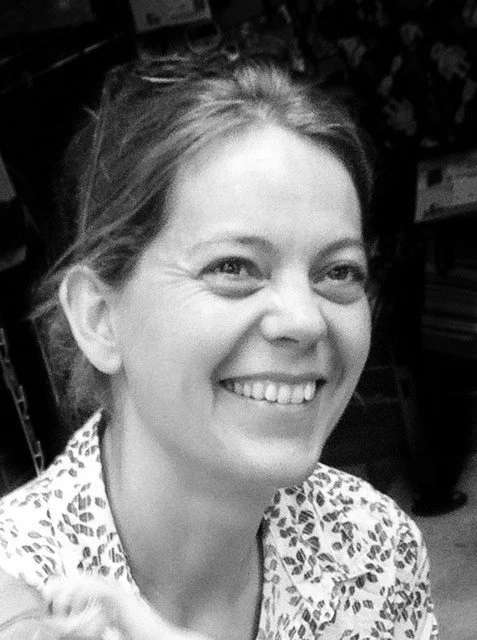
Clare Gaunt has translated several of his stories into English: "The Inner Keep" was published, along with the original in Spanish, in "The Nelligan Review"; "Through the Wasteland" was published in "Bull" and in "The Argyle Literary Magazine", and "La Piccioletta Barca" and "Blood+Honey" published "3442" and "An Indifferent Nape", respectively. Her translation of "An Indifferent Nape" is nominated for this year's Pushcart Prize.