
Windswept
by David Obuchowski
There was no reason not to let her pass.
Nearly two o’clock in the morning, thirty miles outside the last town and just as many from the next. It was only the two of them on the highway. Her in her Honda, him in his big Dodge Ram dually.
He was in the right lane doing fifty five, sixty miles per hour, tops. She was doing seventy five, and when she came within five or six car lengths behind, she hit her blinker and started easing over into the left lane to pass. Before she could make the lane change, he mimicked the move, blocking her way.
She was confused at first, but she also thought it might have been an honest mistake—like those times at work or in stores or on the sidewalk where she would be walking, and some guy would be coming toward her in the opposite direction and no matter what side she stepped toward to walk past him, he’d go the same way, and they’d keep doing that until, inevitably, they’d end up within inches of each other and the guy would say something cute like “thanks for the dance,” and she’d give a courteous little laugh, and then they’d both be on their way.
Maybe it was like that. Maybe he saw her coming up in his rearview, and he was trying to get out of the way.
She was always giving people the benefit of the doubt. Her friends called her “good people”; her family said she had “a good heart.” She never assumed the worst about people. So when he pulled left as she was pulling left, she just sighed and thought to herself, “OK, then, guess I’ll pass you on the right.” So she canceled the indicator, and started pulling back right.
He did the same, blocking her way once more.
There was still this part of her that wanted to believe he was just trying to do the right thing. Like maybe he realized moving left in the first place was thick-headed, so he was just getting out of the way. So she pulled back to the left lane and started to step on it, but in an instant, he was back in front of her again, swerving to the left.
Now she knew the score—he was trying to block her out. She didn’t know why. It’s not like she was tailgating him. She didn’t flash her brights at him. She was just one person on a long, empty highway who wanted to get home after a double shift at the hospital.
Sixteen hours. Change the sheets, serve the meals, gather the soiled gowns; blood and puke and piss everywhere—in the bathrooms, in the beds, on the floors; patients screaming in pain, patients, open-mouthed and drooling, staring at televisions, patients who call you an evil bitch, patients who grope your ass and call you sweetheart, patients who go home with loved ones, patients who die alone.
Sixteen hours, and all she wanted to do was get back to the wind-battered doublewide in the half-vacant trailer park she now called home because her husband gambled away the savings and in the process lost his job at the warehouse because he was too busy playing online poker and blackjack and betting on soccer matches and baseball games to pack boxes and stack pallets, let alone supervise the seasonal workers.
They had never been rich. But they’d had a small two-bedroom bungalow. They used to be able to take a trip to the beach each year—Florida, North Carolina, California. He was supposed to get a promotion. She was supposed to roll back her hours. They were supposed to start a family. They never dreamt of vast fortunes or opulent mansions. Just a kid or two, family vacations, maybe some kind of retirement. But he wanted it the easy way. It started with scratch tickets. Five dollars worth, then ten, then one hundred. He hated losing, but he loved the rush of chance. And the more he played, the more he lusted after the big payout the way other men lust after the fresh-faced intern. But it alluded him, and so he decided that he was going about it all wrong. He liked sports, he knew how to play cards. Why leave it to the lottery when he could simply put his knowledge and skills to use? The grocery money got diverted into online accounts, and he took out credit cards to make up for all the cash he was losing. He’d always been in charge of the finances, so she was oblivious to all of this. But one day, she tried to buy a coffee and danish in the cafeteria, and her bank card was declined. By then, it was too late. He’d succumbed to his sickness. No promotion, no kids, instead they got a foreclosure, bad credit, and she doubled her shifts.
Sure, she wanted to leave him—or more to the point, throw his ass out—but they’d made vows, and that still meant something to her. Good times and bad. Sickness and health. Well, these were the bad times. And gambling was a sickness. Maybe not the kind of sickness that could land a person in a hospital hooked up to an IV, but it was a sickness nonetheless, as far as she was concerned.
“Vows? Now that might be the stupidest thing I’ve ever heard you say,” her father had told her when she told him they were moving to a trailer park.
So much for being “good people.” So much for having “a good heart.” Those things only applied when people agreed with her, she guessed.
She flashed her brights, and he hit his brakes—those blood-red taillights glowing an angry crimson in the pitch black like two evil eyes. She laid on the horn and then tried to swerve around to the right of him, but her little four-cylinder Honda only had so much get-up-and-go, and this guy’s Ram was about as big as a government building, so all he had to do was pull a little right, pull a little left, and he was a rolling roadblock.
She looked down at her gauges and saw that we were now doing all of forty-five miles per hour. She was so tired she felt like she could cry. “What the fuck?!” She screamed into the darkness of her otherwise empty car. “Fucking move!” she yelled. But she might as well have been asking the wind not to blow for all the good her hollering was going to do.
She feinted left and then right again, but his truck was too big and it’s not like she was some kind of professional stunt driver—just an overworked orderly, starving for sleep. The truck bobbed and weaved, yielding her nothing. Not a single inch of space. They were doing less than forty. A sickening fear started to take over. She glanced in her rearview, hoping perhaps some other driver might be on their way, but there was nothing but a black void behind her.
Her cellphone was zipped up in her handbag, and her handbag was on the floor of the passenger-side footwell, invisible in the darkness. She reached for it, anyway, but her fingers swiped through the thin air. They were nearing thirty miles per hour, and that’s when she got an idea to slam on the brakes. She came to a halt, and the truck continued on for a short bit before the driver realized that she’d stopped.
The wind howled across the open, mostly barren land, rocking her Honda and pelting it with dust.
She watched him pull a k-turn. She racked the wheel full-left and put her pedal to the floor and the front tires of her Honda spun out, kicking up dirt and gravel, until they found purchase. The little Honda cleared the width of the two lanes in a single u-turn and now both her and the truck were headed down the highway in the wrong direction. But at least she was the leader.
She kept her foot to the floor. Twenty became thirty. The headlights in her rearview grew, and her car was filled with the cold bluish halogen light of his high beams. It was a big, powerful truck, but it was heavy. So even though her Honda might not be setting any quarter-mile records, she was counting on it having more pick-up than the pickup. Thirty became forty became fifty. The headlights receded. Sixty became seventy, and the headlights in her rearview were growing again, but only gradually. Seventy became eighty, and it seemed as if they might be receding again, though she couldn’t be sure. Eighty became ninety, but now the headlights were definitely getting larger once again. Ninety became ninety five, and the car shuddered. She wondered if she’d ever driven ninety five miles an hour before. The tachometer was pushing 4000 RPM, but that left her almost 3000 RPM more before the redline. She accelerated through one hundred miles per hour, her forearms vibrating violently as she squeezed her steering wheel in an attempt to keep her car pointed dead-straight. The headlights in her rear view were growing, and at one hundred eight miles per hour, the car had reached its limit. Maybe when it had first rolled out of the factory, it could best one hundred twenty, but that was a long time ago; now the car was an old, weathered workhorse commuter.
Up ahead, there was the familiar sign of a Sinclair gas station, glowing green and white like a beacon, like a lighthouse, in the night.
She did her best to take stock of the situation: She was driving well over one hundred miles per hour, and had doubts she’d be able to control the car for very much longer at this speed and in a state of near-panic; she also knew there could be, at any moment, another car traveling in the correct direction on the highway, which would put her at risk of a deadly head-on collision. So, she decided, perhaps best bet was to make a play for the gas station where, at the very least, there would be some employee working the convenience store, and she could take shelter there until the police arrived. The size of the headlights suggested he was about fifteen car lengths behind her. A gust of wind ripped across the highway, pulling her car into the lane beside her, she wrestled it back straight, but it felt as if she could just as easily lose control completely. Yes, that clinched it, she would try for the gas station.
An idea: she killed the lights on her car. And instead of slowing down with her brakes, she took her foot completely off the accelerator so as not to illuminate her brake lights. She lurched forward in her seat as the car’s speed precipitously dropped into the low nineties and then further more into the eighties. At this speed, she could ease her Honda to the left to set her up for a straight shot into the gas station’s exit ramp. The truck’s headlights were far bigger in the rearview, but they didn’t follow her laterally into the right lane. The feeder lane was approaching and she edged the car into that. She had to use her brakes now to slow down enough to navigate the Honda into the Sinclair.
She rocketed into the station. The truck made a sudden lurching move in an attempt to follow, but his speed was too great, and he sailed past. “Oh thank god,” she gasped, and for the first time, she realized she’d been crying.
But her relief was short-lived when she saw that this Sinclair station was no more than four self-service pumps. There was no convenience store in which to shelter, no worker to lock the door and call the police or help protect her. There was only the ghostly glow of light from the recessed fluorescent lights in the underside of the overhead canopy, designed to keep rain and sun off travelers.
She leaned into the darkness of the passenger footwell and found her handbag. She unzipped it, pulled her phone from it. There was no signal.
There was nowhere to hide, no way to call for help, and the driver of that Dodge Ram knew exactly where she was.
She must move, she decided. Sitting there would make no sense whatsoever.
She whipped the Honda around the island of pumps and sped back onto the highway, this time moving in the correct direction.
It didn’t matter that the image in her rearview was one of total blackness. She could not rule out that he was still in her pursuit.
She kept her headlights off, driving blindly. “Please,” she thought to herself, “let there be a state trooper. Please god, let me get pulled over so I can get an escort home.” But the road remained empty both in front of her, and behind her. Eight miles before the edge of the next town, she came to the exit for State Road 31, and she took it. She made a left turn, drove another six miles until she came to the Stillwater RV Community. She navigated her way over the cracked blacktop, and through the tiny neighborhood of empty plots and darkened trailers until she came to their beige and brown doublewide, which was illuminated from within like a lantern.
She killed the engine and sprinted inside.
Her husband was sitting up in bed, looking into his phone. Quite possibly gambling again. He had lapsed more than once since swearing he’d never make another bet.
“Mornin’,” he muttered.
“Turn off that light,” she told him.
“Why—” he started to ask.
“Turn it off!” she hissed.
“OK, shoot,” he said and complied. “The hell’s gotten into you? Why are you breathing so heavy?”
“This guy. This crazy person. He wouldn’t let me pass and then he chased me down—”
“Who?” he asked her, utterly confused.
“How the hell should I know? Some lunatic in a truck!”
“So many lunatics on the road these days, I swear,” he said, as if she’d been describing someone who’d been weaving or just following too closely.
“You’re not hearing me. I had to do a fucking u-turn to try to get away, but even then he followed me, both of us going the wrong way, and I tried to outrun him and then I went to a gas station hoping there might be help but it was all empty, no C-store or anything and I didn’t have any signal on my cell phone so all I could do is drive back,” she said in a breathless rush.
The wind whistled and whooshed, and the trailer yielded to its force, making her feel as if she were on a boat. Dirt and dust blew into the metal side of the trailer and its windows in a thousand tinking sounds.
“Good Christ, this wind tonight. Feels like this place is gonna lift off like a goddamn kite. I hate it here.”
“Are you listening to me?” she pleaded with him, and now she was crying again.
“I’m listening, I’m listening, so you went to a gas station, and what happened there?”
“Nothing. I was only there for a second. I’m sure he doubled back for me, so I got out of there fast as I could.”
“So, wait, did you see him again after that?”
“No,” she said. Then she reconsidered, “Well, I didn’t see him. He could have seen me. Like he could have turned his lights off and have been following me without me knowing.”
“Sounds like some teenagers trying to give you a scare. I remember pulling some stupid shit like that when I was young.”
“Wasn’t like that. Wasn’t a prank. Christ!”
“Don’t get mad at me. I wasn’t the one fuckin’ around on the highway. I’m just trying to say, you don’t need to get all upset. You’re fine now.”
She pulled off her jacket and sweatshirt and jeans in the dark and climbed into the bed, but rolled onto her side facing away from him. “Oh, well then, okay. Jesus, I’m sorry for getting upset for no reason,” she told him, her tone sharper than the blade of a boxcutter.
He let out an exasperated sigh, as if he were the one who’d worked sixteen hours, who was almost chased down by what might have been a homicidal maniac in a three-ton truck. “Honey, you’re tired. That’s all. Get some sleep.” He reached over and patted her ass and gave it a squeeze. It was the third time in the span of twenty four hours someone had done that.
Outside, the wind kicked up again, and she could hear the faint sounds of papers and aluminum cans rustling and skittering across the concrete. The trailer rocked and creaked.
“Not gonna say good night?” he asked her, sounding not only wounded but genuinely confused.
How was it that the man in the truck had seen her, had tracked her every move so closely, when her own husband couldn’t even seem to hear a single word she said or notice the anguish on her face? She squeezed her eyes shut, and felt tears roll down along her cheeks and into the pillow.
“Fine. Go to bed mad at me,” he said, his hurt now nothing more than annoyance. “Have it your way.” He let out another long, exasperated sigh and the sound of it blended seamlessly with that of another gust of wind, which swept across this vast and vacant landscape and that she wished would carry her off to some other life she could no longer even imagine.
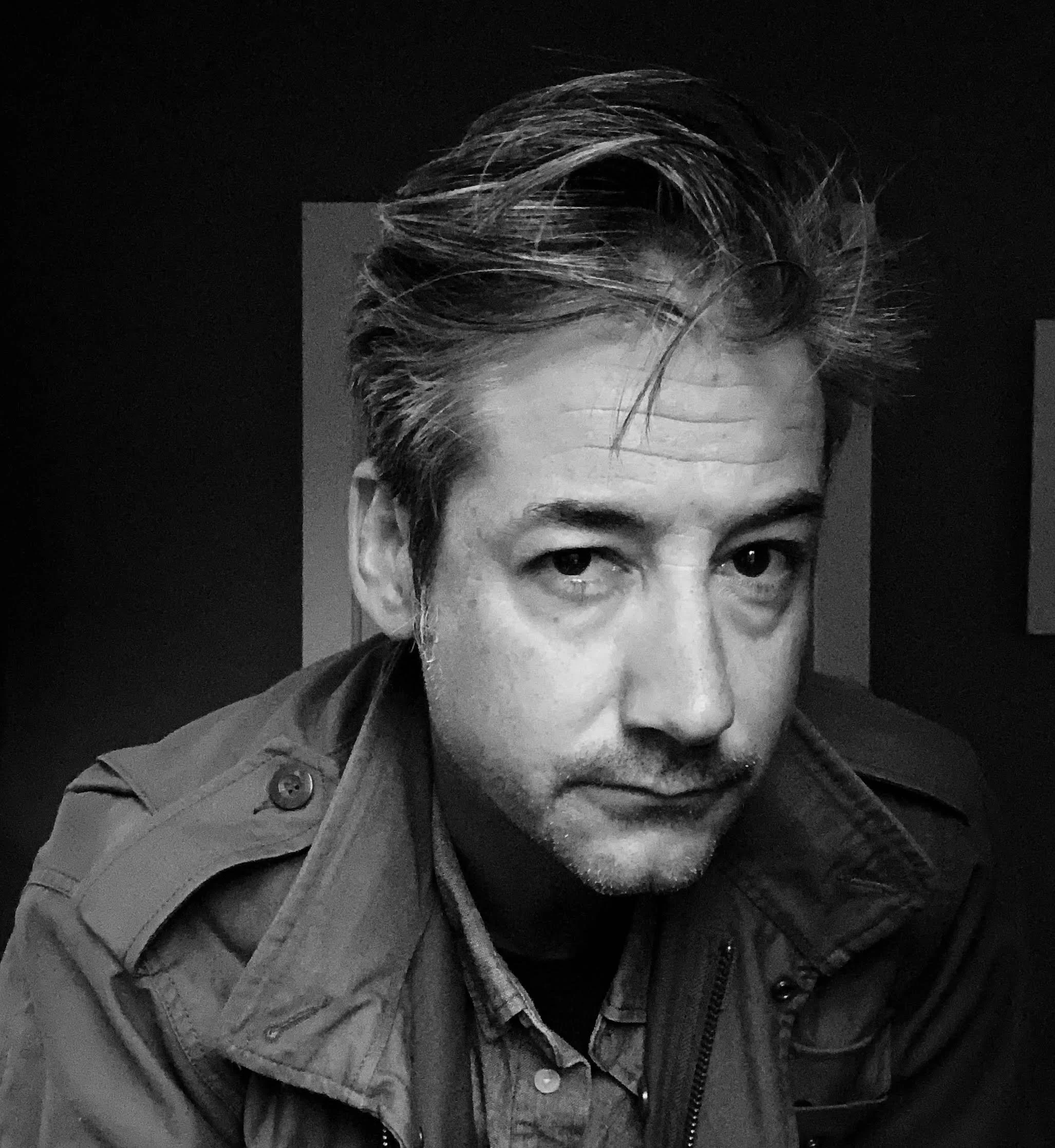
BIO: David Obuchowski is a prolific and awards-winning/nominated writer of fiction as well as longform nonfiction. His fiction has appeared in publications, such as Arcturus Magazine (Chicago Review of Books), Baltimore Review, West Trade Review, and many others. His nonfiction has been adapted for film and television. His debut children’s book, How Birds Sleep (2023, Astra), is a collaboration with Sarah Pedry and collected a number of prestigious honors. www.DavidObuchowski.com