
Go Tell Your Amigos
by Lance Mason
Frostie's was a drive-in burger joint at the north end of town, off A Street and Richland Boulevard, across the tracks from the Sunkist lemon plant. It was the main hangout in town for the paddies, the white dudes, and shared a parking lot with Floyd's Drycleaners. Both buildings were tan stucco with blue, slanted roofs and lots of glass, so you could always see what was going on inside, which wasn't much different from one day to the next. Frostie's cooked your burgers and Floyd's cleaned your clothes, and customers came and went, week in, week out.
Frostie's was one end of the nightly "cruise." You pulled out of there onto the Boulevard and drove south as far as the Blue Onion, or even the Signal station, then turned around and came back up A Street to Frostie's. Then you did it again, and kept on doing it until something happened. If you saw somebody cool you knew along the way, you shouted at each other from car to car, or stopped and bullshitted for a while.
The Union Pacific tracks, those double-strand rails on the east side of the Boulevard, were a steel boundary between Colonia and the rest of town. The chukes—short for pachucos—could use the Fifth Street crossing to drive out of their neighborhood and into the middle of the cruise, check things out, keeping their heads down. They didn't do it much, though I never knew of anybody trying to stop them. Mostly, though, they just cruised Colonia—until they started showing up at Frostie's.
What the cut-rate joints served up wasn't much more than what my old man called a grease spot and a pickle. But Frostie's burgers were huge and juicy, and smelled like toasted bread and rare steak. Even if you were hungry, it took some ambition to get a whole one down you. We bragged a lot about those burgers and didn't think about keeping them to ourselves. So, one Saturday in the PM when three pachuco dudes crossed over and into Frostie's in this bald-off, primer black '48 Merc, no one took much notice. Not until Wayne Pruitt and Fatboy Kevin Fleischer showed up.
Funny thing about patterns and expectations. Some people are curious about change and can even look at it like entertainment, but others get real upset if their rhythm gets thrown off. Wayne Pruitt was the second kind.
Sitting in the Ford at the back of the lot, Gene and I watched the world go by, Roy Orbison on the radio singing Blue Bayou and, thanks to the lemon plant, a sweet-n-sour aroma in the air. The chukes had backed the old Merc into a white-lined parking spot, up against a half-rotten piece of telephone pole laid down to block off the spaces. They'd walked up to the window and ordered some food, and now the three of them were talking the lingo and eating, sprattled on the hood and fenders of the Merc. In its back window hung a Playboys plaque, the local Chicano car club boasting some notable bad-asses, that was for certain.
Just then, Wayne Pruitt turned off Doris Avenue onto A Street in his ’52 Olds coupe with the big ’61 V-8 and Holley four-barrel. When Pruitt saw the Colonia boys parked at Frostie's, eating like they belonged there, he spun that Olds straight into the lot, right across in front of them. He bent forward, staring past Kevin “Fatboy” Fleischer riding shotgun, pinning the invaders with his gray, gunslit eyes, making sure they knew he was looking. Then, he backed into the stall straight across from them, rapping the pipes on the Olds to get everyone's attention.
Wayne stepped easy out of the car, not in a hurry, and Fatboy followed. They walked toward the order window, and Wayne kicked at a piece of steel pipe that held the sections of telephone pole in place. They bought two Cokes, and Wayne looked at these Playboys again, hard and slow and then led Fatboy back to the Olds, leaned on the hood, drinking his drink, and kept glaring at the chukes, waiting for them to glare back. About a dozen people watched from their cars and the order window. Wayne finally took his eyes off the chukes and looked at Fatboy in his usual way, like the dude fit his nickname too well. Pruitt's sour face turned down to his Coke, then back at the chukes.
"You figure they belong here, Kev?"
Fleischer liked being called Kevin or Kev instead of Fatboy. "Fuck no, they don't. They belong across the tracks unless they're in the fields or picking up trash."
"Yeah, that's what I figure." Pruitt looked back at Fleischer. "Why’n't you throw ‘em outa here?"
"Me?" asked Fleischer, getting jumpy and glancing away. "Why should I do it?"
"You just said. They don't belong here."
Fatboy looked offended, with that trying-to-get-me-in-trouble face, but what he said was "It's a free country."
Wayne eyed Fleischer with all the disgust he felt. "Izzat right?" He started shaking his head in a decided way. "Well, that ain't how I see it." Wayne stepped over to the trash barrel and threw in his cup, used an old Zippo to light up a Chesterfield, and kept walking right toward the Chicanos' car. When he got there, he stopped and looked once at each of the Playboys, and they looked at him, wary. Then, Wayne walked slowly around the Merc, looking at it and watching the owners through his cigarette smoke until he was around the front again.
Two of the three chukes were in high school, a lot younger and smaller than Wayne, and the third one was older but not much bigger than his friends. Maybe it wasn't smart for them to have come into Frostie's. They probably weren't there because they were hungry—there were lots of places to eat in Colonia. Maybe they were showing off for each other or somebody else, like they thought they had something to prove. It didn't make any difference to Wayne. He looked them up and down like they'd flunked some kind of human test—not that he was an expert on humans, or on passing tests for that matter.
"What the hell you think you're doing here?" he said. "This ain't no burrito stand." The chukes looked at each other. "What, no comprende? Well, shit, you must be sorry you were born Mexicans."
"We understand," one of them said.
"You do? Well, good, Mr. Beaner. I'm glad you comprende, señor, because your kind don't belong here. You belong"—he pointed east, jabbing his finger toward that part of town—"over there. We don't want you around here. No gusto mucho, get me?"
Now all three Playboys were staring at Wayne, who bent toward them as he said, loud and slow, "This—means—you, tacobender. Get in your nice, clean bean machine and get the fuck out of here before you wish you'd never left Chuke Town."
By then, the three of them had started to move. They fired glances at Wayne as they walked to the doors of the car and got in. The engine gargled to a start, and they pulled slowly out of the parking space, pretending like they were ignoring Wayne standing over them. He kicked the back bumper as they left, like he was kicking an unruly dog.
"And stay out," yelled Fatboy, like the chicken punk he was.
In our town, trouble didn't always seek you out. Some guys went looking for it.
You learn early in the joint that life is all about respect. If you don't have it, you better get it, some kind of it, or you're worse than a victim of the system. You're a target, you're somebody's property, a servant, a slave, a thing. You're dead, at least as a whole human being. Respect is easy to say but hard to come by, and the want of it brings more fighting and killing than anything in history. Without it you’re an exile, so you tell society to take their disrespect and shove it up their ass, and you go your own way, maybe alone or maybe with other people like you. Gangs, prisons, and graveyards are full of people who didn’t have respect or wouldn’t give it. Pruitt was an example of the latter.
Late one night the next week, Wayne stepped into the alley behind Snooker’s, Richland’s old-time pool hall. Neither Gene nor I were there for the details, but I heard some when Pruitt gabbed afterwards about revenge, and later still from dudes I met inside who would have known or seen what happened. Maybe thinking about skinning eleven bucks off Fatboy’s brother Carl shooting 9-ball, he was walking up the redbrick alley toward Fifth Street. Then the lights went out, and stayed out until midnight, about when three cars full of pachucos wove down a dirt path to the river bottom northeast of town. Pruitt came to with a hood over his head, tied up in the trunk of one of the cars. He said later that, from the sound of it, that driver was running a hot-rodded overhead V-8, but not an Olds.
The three cars pulled up along the sandy bank where nobody could see or hear them from the nearest road. Then some of the chukes got out, pulled Pruitt out of the trunk, untied his feet, and walked him twenty yards into the green, loose-growing willows and brown sticker bushes. They were talking the California mixture of Spanish and accented English a lot of the Latin boys used. Wayne Pruitt only heard some of what they said—about being quiet, about how long they’d be there, and that no one else would know shit about what happened until the next day, at least.
No one ever did know—at least didn’t say—everything that went on that night, not exactly, just what the cops would get out of Wayne, what the hospital found when they brought him in, and what he yakked about to his friends after, besides the rumors that flew around.
As he got steered through the sand and brush, Wayne struggled pretty good until somebody jammed something under the hood and into his mouth. It cut up his lips and chipped some of his teeth, and Wayne realized pretty quick he was tasting the business end of a double-barreled twelve-gauge. When he heard and felt somebody pull the hammers back, that’s about when he would’ve quit wrestling around. When your hands are tied behind you and a hood pulled over your head, and somebody shoves a shotgun in your mouth and cocks it, you’re probably not thinking about how tough you are. Hard to know for sure, in fact, what you might be thinking.
Then Pruitt felt the hammers drop, and a shotgun’s throaty boom bounced off the big trees and the low hills across the river. A pain slammed through his head, and the shotgun jerked out of his mouth as he fell to his knees. He couldn’t figure out if he was still alive, or just not dead yet, a dull hum vibrating on and on in his brain. Then, he rolled back on his haunches and shit himself.
As the gun’s echoes faded, someone yanked Wayne to his feet. “How you like that joke, patty boy? I hear you like to joke around with my friends, huh?” The voice was close and really far away at the same time, and only in Pruitt’s right ear.
Wayne Pruitt wasn’t dying, not today. They’d just held the muzzle of a second shotgun on the left of his head, lighting it off the same time as they pulled the triggers on the empty one between his teeth. The noise blew out Wayne’s left eardrum and gave one of his face muscles a permanent twitch.
“You don’t maybe hear so good right now.” The voice came through the hood and into the throbbing confusion in Pruitt’s mind. Even so, he thought he knew the voice. “Well, you listen real good, pendejo, because what I’m going to say you gotta remember and tell your patty boy friends and the rich guys in town, huh? You be like our messenger.
“Things around here gonna change, ése. Us Chicanos—us and our families, our people—we ain’t gonna take no more shit off you white motherfuckers. You get me, patty boy? Things are gonna change. We catch you fucking with our people, fucking with the Playboys or any shit like that, you ain’t gonna be so lucky next time. We ain’t gonna be telling no jokes. Next time, cabrón, that shotgun goes off in your head. You get me?”
Wayne Pruitt must have smelled the fumes of his own shit rising up inside the hood over his head, and tasted blood in his mouth, and chewed on pieces of his broken teeth. He felt his left ear thick and numb, stabbing pains wandering through his brain, and he could barely keep from barfing. Then two strong hands, scaly, workman’s hands, clamped around his throat and the voice was in his ear again, his right ear, his good ear.
“You hear me, pendejo motherfucker? You tell me you hear me.”
Pruitt couldn’t talk. No words would come. He nodded.
“That’s good. Good. And you gonna tell your friends, like I tell you?”
Nod.
“Good, huh? That’s good. We see you around, patty boy.”
They also probably said something to Wayne about having messed his trousers, that he didn’t smell so good, but, if they did, he didn’t repeat it later. He did say he heard some of them shout viva la something before the lights went out again.
When they found Wayne Pruitt near the river the next morning, it was just coming dawn on the county road. He'd woken up with his hands untied and the hood gone and smelling pretty foul. Blood was dried all around his mouth, and in his hair from a scalp cut, his head probably feeling like a bean field plowed by a bow-legged mule. He'd barfed and stumbled and crawled nearly back to the road, and some farm workers found him and got permission from the crew boss to take him to the hospital, but he wouldn't go, wouldn't ride with them. He made them find a phone and call his father. Elroy came with the cops and found Wayne unconscious again, and they took him to the Catholic hospital in Richland.
Pruitt stayed there for nearly a week, the first couple days in a sort of coma. The Richland Press Gazette interviewed Wayne in the hospital and ran a story or two, but then his father kicked them out because Wayne was saying stuff that could get him in more trouble, being short a few cards in the deck now. Eventually, the cops and others got as much of the story as Wayne could remember, and what we didn't hear in gossip and rumor I got later from other dudes like me who were guests of the Golden State.
The heat tried to roust the residents of la Colonia for some names, but got mainly zip. While those polite, respectful, law-abiding folks had their own ideas on law and order, some of the white locals, even ones that knew Pruitt was a dick, were raising hell about his “cruel treatment at the hands of low-life renegades.” Ours being a largely Catholic town, the church preached about it, and the Knights of Columbus had a meeting with a lot of talk, and then retired to the bar.
Author’s Note: A heavily fictionalized memoir of episodes from my youth in a California farm town.
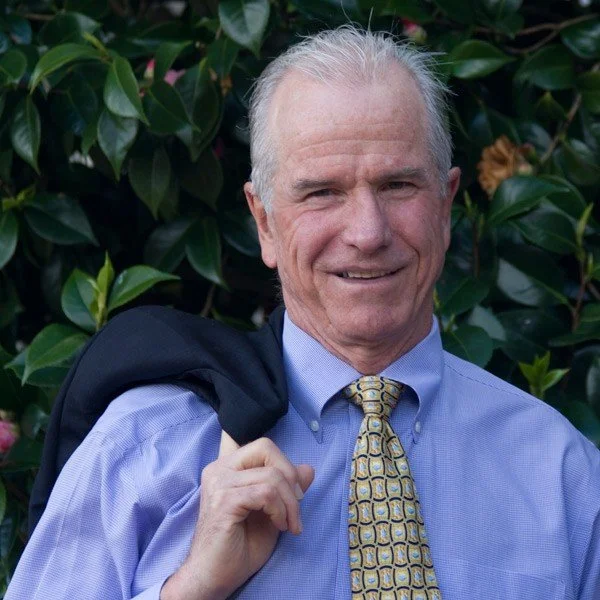
BIO: Lance Mason's writing reflects both his farm-town origins and his extensive travel abroad. He has explored, lived, and worked overseas for decades, traveling the world by foot, bicycle, motorcycle, train, tramp steamer, and dugout canoe, about 15 years of which was spent living in current or former Commonwealth countries. These experiences that have both enhanced and interfered with Mason’s writing life. His work has appeared in 50+ journals, collections, anthologies, etc., was included in Fish Publishing's 2025 Memoir Prize (Ireland), received a Silver and 2 Golds in the 2024 and ’25 Solas Awards, and his fiction recently appeared in ShortStoryStack (Palisatrium), Eerie River's BLADES, and Cowboy Jamboree's PRINE PRIMED.